Charles Dickens - The Pickwick Papers
Здесь есть возможность читать онлайн «Charles Dickens - The Pickwick Papers» весь текст электронной книги совершенно бесплатно (целиком полную версию без сокращений). В некоторых случаях можно слушать аудио, скачать через торрент в формате fb2 и присутствует краткое содержание. Жанр: Классическая проза, Юмористическая проза, на английском языке. Описание произведения, (предисловие) а так же отзывы посетителей доступны на портале библиотеки ЛибКат.
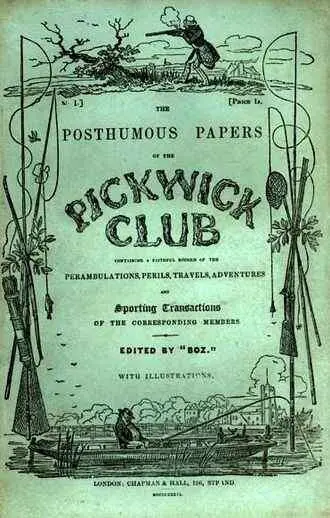
- Название:The Pickwick Papers
- Автор:
- Жанр:
- Год:неизвестен
- ISBN:нет данных
- Рейтинг книги:4 / 5. Голосов: 1
-
Избранное:Добавить в избранное
- Отзывы:
-
Ваша оценка:
The Pickwick Papers: краткое содержание, описание и аннотация
Предлагаем к чтению аннотацию, описание, краткое содержание или предисловие (зависит от того, что написал сам автор книги «The Pickwick Papers»). Если вы не нашли необходимую информацию о книге — напишите в комментариях, мы постараемся отыскать её.
Mr Samuel Pickwick is the founder and chairman of the absurd Pickwick Club which consists of Tupman, Snodgrass and Winkle who go through various amusing and often quite ridiculous adventures that are scantily interconnected and never amount to a complex sequence of events until perhaps Pickwick’s disastrous misunderstanding with Mrs Bardell.
The Pickwick Papers — читать онлайн бесплатно полную книгу (весь текст) целиком
Ниже представлен текст книги, разбитый по страницам. Система сохранения места последней прочитанной страницы, позволяет с удобством читать онлайн бесплатно книгу «The Pickwick Papers», без необходимости каждый раз заново искать на чём Вы остановились. Поставьте закладку, и сможете в любой момент перейти на страницу, на которой закончили чтение.
Интервал:
Закладка:
‘I am particular in describing how my uncle walked up the middle of the street, with his thumbs in his waistcoat pockets, gentlemen, because, as he often used to say (and with great reason too) there is nothing at all extraordinary in this story, unless you distinctly understand at the beginning, that he was not by any means of a marvellous or romantic turn.
‘Gentlemen, my uncle walked on with his thumbs in his waistcoat pockets, taking the middle of the street to himself, and singing, now a verse of a love song, and then a verse of a drinking one, and when he was tired of both, whistling melodiously, until he reached the North Bridge, which, at this point, connects the old and new towns of Edinburgh. Here he stopped for a minute, to look at the strange, irregular clusters of lights piled one above the other, and twinkling afar off so high, that they looked like stars, gleaming from the castle walls on the one side and the Calton Hill on the other, as if they illuminated veritable castles in the air; while the old picturesque town slept heavily on, in gloom and darkness below: its palace and chapel of Holyrood, guarded day and night, as a friend of my uncle’s used to say, by old Arthur’s Seat, towering, surly and dark, like some gruff genius, over the ancient city he has watched so long. I say, gentlemen, my uncle stopped here, for a minute, to look about him; and then, paying a compliment to the weather, which had a little cleared up, though the moon was sinking, walked on again, as royally as before; keeping the middle of the road with great dignity, and looking as if he would very much like to meet with somebody who would dispute possession of it with him. There was nobody at all disposed to contest the point, as it happened; and so, on he went, with his thumbs in his waistcoat pockets, like a lamb.
‘When my uncle reached the end of Leith Walk, he had to cross a pretty large piece of waste ground which separated him from a short street which he had to turn down to go direct to his lodging. Now, in this piece of waste ground, there was, at that time, an enclosure belonging to some wheelwright who contracted with the Post Office for the purchase of old, worn–out mail coaches; and my uncle, being very fond of coaches, old, young, or middle–aged, all at once took it into his head to step out of his road for no other purpose than to peep between the palings at these mails — about a dozen of which he remembered to have seen, crowded together in a very forlorn and dismantled state, inside. My uncle was a very enthusiastic, emphatic sort of person, gentlemen; so, finding that he could not obtain a good peep between the palings he got over them, and sitting himself quietly down on an old axle–tree, began to contemplate the mail coaches with a deal of gravity.
‘There might be a dozen of them, or there might be more — my uncle was never quite certain on this point, and being a man of very scrupulous veracity about numbers, didn’t like to say — but there they stood, all huddled together in the most desolate condition imaginable. The doors had been torn from their hinges and removed; the linings had been stripped off, only a shred hanging here and there by a rusty nail; the lamps were gone, the poles had long since vanished, the ironwork was rusty, the paint was worn away; the wind whistled through the chinks in the bare woodwork; and the rain, which had collected on the roofs, fell, drop by drop, into the insides with a hollow and melancholy sound. They were the decaying skeletons of departed mails, and in that lonely place, at that time of night, they looked chill and dismal.
‘My uncle rested his head upon his hands, and thought of the busy, bustling people who had rattled about, years before, in the old coaches, and were now as silent and changed; he thought of the numbers of people to whom one of these crazy, mouldering vehicles had borne, night after night, for many years, and through all weathers, the anxiously expected intelligence, the eagerly looked–for remittance, the promised assurance of health and safety, the sudden announcement of sickness and death. The merchant, the lover, the wife, the widow, the mother, the school–boy, the very child who tottered to the door at the postman’s knock — how had they all looked forward to the arrival of the old coach. And where were they all now? ‘Gentlemen, my uncle used to say that he thought all this at the time, but I rather suspect he learned it out of some book afterwards, for he distinctly stated that he fell into a kind of doze, as he sat on the old axle–tree looking at the decayed mail coaches, and that he was suddenly awakened by some deep church bell striking two. Now, my uncle was never a fast thinker, and if he had thought all these things, I am quite certain it would have taken him till full half–past two o’clock at the very least. I am, therefore, decidedly of opinion, gentlemen, that my uncle fell into a kind of doze, without having thought about anything at all.
‘Be this as it may, a church bell struck two. My uncle woke, rubbed his eyes, and jumped up in astonishment.
‘In one instant, after the clock struck two, the whole of this deserted and quiet spot had become a scene of most extraordinary life and animation. The mail coach doors were on their hinges, the lining was replaced, the ironwork was as good as new, the paint was restored, the lamps were alight; cushions and greatcoats were on every coach–box, porters were thrusting parcels into every boot, guards were stowing away letter–bags, hostlers were dashing pails of water against the renovated wheels; numbers of men were pushing about, fixing poles into every coach; passengers arrived, portmanteaus were handed up, horses were put to; in short, it was perfectly clear that every mail there, was to be off directly. Gentlemen, my uncle opened his eyes so wide at all this, that, to the very last moment of his life, he used to wonder how it fell out that he had ever been able to shut ’em again.
‘“Now then!” said a voice, as my uncle felt a hand on his shoulder, “you’re booked for one inside. You’d better get in.”
‘“I booked!” said my uncle, turning round.
‘“Yes, certainly.”
‘My uncle, gentlemen, could say nothing, he was so very much astonished. The queerest thing of all was that although there was such a crowd of persons, and although fresh faces were pouring in, every moment, there was no telling where they came from. They seemed to start up, in some strange manner, from the ground, or the air, and disappear in the same way. When a porter had put his luggage in the coach, and received his fare, he turned round and was gone; and before my uncle had well begun to wonder what had become of him, half a dozen fresh ones started up, and staggered along under the weight of parcels, which seemed big enough to crush them. The passengers were all dressed so oddly too! Large, broad–skirted laced coats, with great cuffs and no collars; and wigs, gentlemen — great formal wigs with a tie behind. My uncle could make nothing of it.
‘“Now, are you going to get in?” said the person who had addressed my uncle before. He was dressed as a mail guard, with a wig on his head and most enormous cuffs to his coat, and had a lantern in one hand, and a huge blunderbuss in the other, which he was going to stow away in his little arm–chest. “Are you going to get in, Jack Martin?” said the guard, holding the lantern to my uncle’s face.
‘“Hallo!” said my uncle, falling back a step or two. “That’s familiar!”
‘“It’s so on the way–bill,” said the guard.
‘“Isn’t there a ‘Mister’ before it?” said my uncle. For he felt, gentlemen, that for a guard he didn’t know, to call him Jack Martin, was a liberty which the Post Office wouldn’t have sanctioned if they had known it.
Читать дальшеИнтервал:
Закладка:
Похожие книги на «The Pickwick Papers»
Представляем Вашему вниманию похожие книги на «The Pickwick Papers» списком для выбора. Мы отобрали схожую по названию и смыслу литературу в надежде предоставить читателям больше вариантов отыскать новые, интересные, ещё непрочитанные произведения.







Обсуждение, отзывы о книге «The Pickwick Papers» и просто собственные мнения читателей. Оставьте ваши комментарии, напишите, что Вы думаете о произведении, его смысле или главных героях. Укажите что конкретно понравилось, а что нет, и почему Вы так считаете.