Charles Dickens - The Pickwick Papers
Здесь есть возможность читать онлайн «Charles Dickens - The Pickwick Papers» весь текст электронной книги совершенно бесплатно (целиком полную версию без сокращений). В некоторых случаях можно слушать аудио, скачать через торрент в формате fb2 и присутствует краткое содержание. Жанр: Классическая проза, Юмористическая проза, на английском языке. Описание произведения, (предисловие) а так же отзывы посетителей доступны на портале библиотеки ЛибКат.
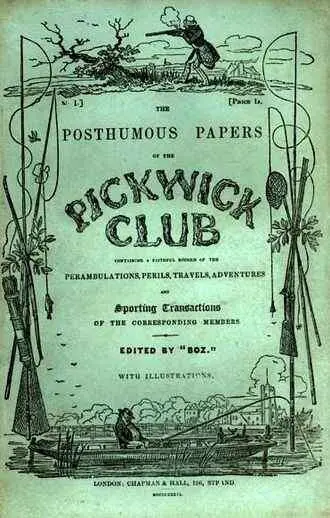
- Название:The Pickwick Papers
- Автор:
- Жанр:
- Год:неизвестен
- ISBN:нет данных
- Рейтинг книги:4 / 5. Голосов: 1
-
Избранное:Добавить в избранное
- Отзывы:
-
Ваша оценка:
The Pickwick Papers: краткое содержание, описание и аннотация
Предлагаем к чтению аннотацию, описание, краткое содержание или предисловие (зависит от того, что написал сам автор книги «The Pickwick Papers»). Если вы не нашли необходимую информацию о книге — напишите в комментариях, мы постараемся отыскать её.
Mr Samuel Pickwick is the founder and chairman of the absurd Pickwick Club which consists of Tupman, Snodgrass and Winkle who go through various amusing and often quite ridiculous adventures that are scantily interconnected and never amount to a complex sequence of events until perhaps Pickwick’s disastrous misunderstanding with Mrs Bardell.
The Pickwick Papers — читать онлайн бесплатно полную книгу (весь текст) целиком
Ниже представлен текст книги, разбитый по страницам. Система сохранения места последней прочитанной страницы, позволяет с удобством читать онлайн бесплатно книгу «The Pickwick Papers», без необходимости каждый раз заново искать на чём Вы остановились. Поставьте закладку, и сможете в любой момент перейти на страницу, на которой закончили чтение.
Интервал:
Закладка:
‘“Lovely creetur I feel myself a damned—”’
‘That ain’t proper,’ said Mr. Weller, taking his pipe from his mouth.
‘No; it ain’t “damned,”’ observed Sam, holding the letter up to the light, ‘it’s “shamed,” there’s a blot there — “I feel myself ashamed.”’
‘Wery good,’ said Mr. Weller. ‘Go on.’
‘“Feel myself ashamed, and completely cir—’ I forget what this here word is,’ said Sam, scratching his head with the pen, in vain attempts to remember.
‘Why don’t you look at it, then?’ inquired Mr. Weller.
‘So I am a–lookin’ at it,’ replied Sam, ‘but there’s another blot. Here’s a “c,” and a “i,” and a “d.”’
‘Circumwented, p’raps,’ suggested Mr. Weller.
‘No, it ain’t that,’ said Sam, ‘“circumscribed”; that’s it.’
‘That ain’t as good a word as “circumwented,” Sammy,’ said Mr. Weller gravely.
‘Think not?’ said Sam.
‘Nothin’ like it,’ replied his father.
‘But don’t you think it means more?’ inquired Sam.
‘Vell p’raps it’s a more tenderer word,’ said Mr. Weller, after a few moments’ reflection. ‘Go on, Sammy.’
‘“Feel myself ashamed and completely circumscribed in a–dressin’ of you, for you are a nice gal and nothin’ but it.”’
‘That’s a wery pretty sentiment,’ said the elder Mr. Weller, removing his pipe to make way for the remark.
‘Yes, I think it is rayther good,’ observed Sam, highly flattered.
‘Wot I like in that ‘ere style of writin’,’ said the elder Mr. Weller, ‘is, that there ain’t no callin’ names in it — no Wenuses, nor nothin’ o’ that kind. Wot’s the good o’ callin’ a young ‘ooman a Wenus or a angel, Sammy?’
‘Ah! what, indeed?’ replied Sam.
‘You might jist as well call her a griffin, or a unicorn, or a king’s arms at once, which is wery well known to be a collection o’ fabulous animals,’ added Mr. Weller.
‘Just as well,’ replied Sam.
‘Drive on, Sammy,’ said Mr. Weller.
Sam complied with the request, and proceeded as follows; his father continuing to smoke, with a mixed expression of wisdom and complacency, which was particularly edifying.
‘“Afore I see you, I thought all women was alike.”’
‘So they are,’ observed the elder Mr. Weller parenthetically.
‘“But now,”’ continued Sam, ‘“now I find what a reg’lar soft–headed, inkred’lous turnip I must ha’ been; for there ain’t nobody like you, though I like you better than nothin’ at all.” I thought it best to make that rayther strong,’ said Sam, looking up.
Mr. Weller nodded approvingly, and Sam resumed.
‘“So I take the privilidge of the day, Mary, my dear — as the gen’l’m’n in difficulties did, ven he valked out of a Sunday — to tell you that the first and only time I see you, your likeness was took on my hart in much quicker time and brighter colours than ever a likeness was took by the profeel macheen (wich p’raps you may have heerd on Mary my dear) altho it does finish a portrait and put the frame and glass on complete, with a hook at the end to hang it up by, and all in two minutes and a quarter.”’
‘I am afeerd that werges on the poetical, Sammy,’ said Mr. Weller dubiously.
‘No, it don’t,’ replied Sam, reading on very quickly, to avoid contesting the point—
‘“Except of me Mary my dear as your walentine and think over what I’ve said. — My dear Mary I will now conclude.” That’s all,’ said Sam.
‘That’s rather a Sudden pull–up, ain’t it, Sammy?’ inquired Mr. Weller.
‘Not a bit on it,’ said Sam; ‘she’ll vish there wos more, and that’s the great art o’ letter–writin’.’
‘Well,’ said Mr. Weller, ‘there’s somethin’ in that; and I wish your mother–in–law ’ud only conduct her conwersation on the same gen–teel principle. Ain’t you a–goin’ to sign it?’
‘That’s the difficulty,’ said Sam; ‘I don’t know what to sign it.’
‘Sign it — “Veller”,’ said the oldest surviving proprietor of that name.
‘Won’t do,’ said Sam. ‘Never sign a walentine with your own name.’
‘Sign it “Pickwick,” then,’ said Mr. Weller; ‘it’s a wery good name, and a easy one to spell.’
‘The wery thing,’ said Sam. ‘I could end with a werse; what do you think?’
‘I don’t like it, Sam,’ rejoined Mr. Weller. ‘I never know’d a respectable coachman as wrote poetry, ‘cept one, as made an affectin’ copy o’ werses the night afore he was hung for a highway robbery; and he wos only a Cambervell man, so even that’s no rule.’
But Sam was not to be dissuaded from the poetical idea that had occurred to him, so he signed the letter—
‘Your love–sick
Pickwick.’
And having folded it, in a very intricate manner, squeezed a downhill direction in one corner: ‘To Mary, Housemaid, at Mr. Nupkins’s, Mayor’s, Ipswich, Suffolk’; and put it into his pocket, wafered, and ready for the general post. This important business having been transacted, Mr. Weller the elder proceeded to open that, on which he had summoned his son.
‘The first matter relates to your governor, Sammy,’ said Mr. Weller. ‘He’s a–goin’ to be tried to–morrow, ain’t he?’
‘The trial’s a–comin’ on,’ replied Sam.
‘Vell,’ said Mr. Weller, ‘Now I s’pose he’ll want to call some witnesses to speak to his character, or p’rhaps to prove a alleybi. I’ve been a–turnin’ the bis’ness over in my mind, and he may make his–self easy, Sammy. I’ve got some friends as’ll do either for him, but my adwice ’ud be this here — never mind the character, and stick to the alleybi. Nothing like a alleybi, Sammy, nothing.’ Mr. Weller looked very profound as he delivered this legal opinion; and burying his nose in his tumbler, winked over the top thereof, at his astonished son. ‘Why, what do you mean?’ said Sam; ‘you don’t think he’s a–goin’ to be tried at the Old Bailey, do you?’
‘That ain’t no part of the present consideration, Sammy,’ replied Mr. Weller. ‘Verever he’s a–goin’ to be tried, my boy, a alleybi’s the thing to get him off. Ve got Tom Vildspark off that ‘ere manslaughter, with a alleybi, ven all the big vigs to a man said as nothing couldn’t save him. And my ‘pinion is, Sammy, that if your governor don’t prove a alleybi, he’ll be what the Italians call reg’larly flummoxed, and that’s all about it.’
As the elder Mr. Weller entertained a firm and unalterable conviction that the Old Bailey was the supreme court of judicature in this country, and that its rules and forms of proceeding regulated and controlled the practice of all other courts of justice whatsoever, he totally disregarded the assurances and arguments of his son, tending to show that the alibi was inadmissible; and vehemently protested that Mr. Pickwick was being ‘wictimised.’ Finding that it was of no use to discuss the matter further, Sam changed the subject, and inquired what the second topic was, on which his revered parent wished to consult him.
‘That’s a pint o’ domestic policy, Sammy,’ said Mr. Weller. ‘This here Stiggins—’
‘Red–nosed man?’ inquired Sam.
‘The wery same,’ replied Mr. Weller. ‘This here red–nosed man, Sammy, wisits your mother–in–law vith a kindness and constancy I never see equalled. He’s sitch a friend o’ the family, Sammy, that wen he’s avay from us, he can’t be comfortable unless he has somethin’ to remember us by.’
‘And I’d give him somethin’ as ’ud turpentine and beeswax his memory for the next ten years or so, if I wos you,’ interposed Sam.
Читать дальшеИнтервал:
Закладка:
Похожие книги на «The Pickwick Papers»
Представляем Вашему вниманию похожие книги на «The Pickwick Papers» списком для выбора. Мы отобрали схожую по названию и смыслу литературу в надежде предоставить читателям больше вариантов отыскать новые, интересные, ещё непрочитанные произведения.




Обсуждение, отзывы о книге «The Pickwick Papers» и просто собственные мнения читателей. Оставьте ваши комментарии, напишите, что Вы думаете о произведении, его смысле или главных героях. Укажите что конкретно понравилось, а что нет, и почему Вы так считаете.