Charles Dickens - The Pickwick Papers
Здесь есть возможность читать онлайн «Charles Dickens - The Pickwick Papers» весь текст электронной книги совершенно бесплатно (целиком полную версию без сокращений). В некоторых случаях можно слушать аудио, скачать через торрент в формате fb2 и присутствует краткое содержание. Жанр: Классическая проза, Юмористическая проза, на английском языке. Описание произведения, (предисловие) а так же отзывы посетителей доступны на портале библиотеки ЛибКат.
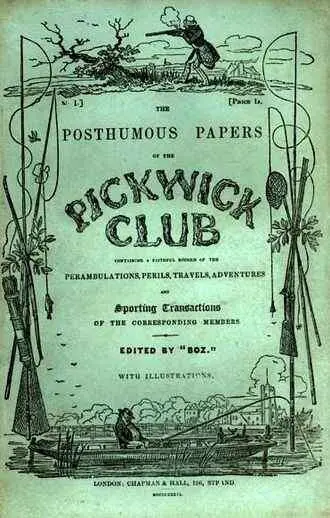
- Название:The Pickwick Papers
- Автор:
- Жанр:
- Год:неизвестен
- ISBN:нет данных
- Рейтинг книги:4 / 5. Голосов: 1
-
Избранное:Добавить в избранное
- Отзывы:
-
Ваша оценка:
The Pickwick Papers: краткое содержание, описание и аннотация
Предлагаем к чтению аннотацию, описание, краткое содержание или предисловие (зависит от того, что написал сам автор книги «The Pickwick Papers»). Если вы не нашли необходимую информацию о книге — напишите в комментариях, мы постараемся отыскать её.
Mr Samuel Pickwick is the founder and chairman of the absurd Pickwick Club which consists of Tupman, Snodgrass and Winkle who go through various amusing and often quite ridiculous adventures that are scantily interconnected and never amount to a complex sequence of events until perhaps Pickwick’s disastrous misunderstanding with Mrs Bardell.
The Pickwick Papers — читать онлайн бесплатно полную книгу (весь текст) целиком
Ниже представлен текст книги, разбитый по страницам. Система сохранения места последней прочитанной страницы, позволяет с удобством читать онлайн бесплатно книгу «The Pickwick Papers», без необходимости каждый раз заново искать на чём Вы остановились. Поставьте закладку, и сможете в любой момент перейти на страницу, на которой закончили чтение.
Интервал:
Закладка:
‘This,’ said Mr. Pickwick, looking round him, ‘this is, indeed, comfort.’
‘Our invariable custom,’ replied Mr. Wardle. ‘Everybody sits down with us on Christmas Eve, as you see them now — servants and all; and here we wait, until the clock strikes twelve, to usher Christmas in, and beguile the time with forfeits and old stories. Trundle, my boy, rake up the fire.’
Up flew the bright sparks in myriads as the logs were stirred. The deep red blaze sent forth a rich glow, that penetrated into the farthest corner of the room, and cast its cheerful tint on every face.
‘Come,’ said Wardle, ‘a song — a Christmas song! I’ll give you one, in default of a better.’
‘Bravo!’ said Mr. Pickwick.
‘Fill up,’ cried Wardle. ‘It will be two hours, good, before you see the bottom of the bowl through the deep rich colour of the wassail; fill up all round, and now for the song.’
Thus saying, the merry old gentleman, in a good, round, sturdy voice, commenced without more ado—
A Christmas Carol
‘I care not for Spring; on his fickle wing
Let the blossoms and buds be borne;
He woos them amain with his treacherous rain,
And he scatters them ere the morn.
An inconstant elf, he knows not himself,
Nor his own changing mind an hour,
He’ll smile in your face, and, with wry grimace,
He’ll wither your youngest flower.
‘Let the Summer sun to his bright home run,
He shall never be sought by me;
When he’s dimmed by a cloud I can laugh aloud
And care not how sulky he be!
For his darling child is the madness wild
That sports in fierce fever’s train;
And when love is too strong, it don’t last long,
As many have found to their pain.
‘A mild harvest night, by the tranquil light
Of the modest and gentle moon,
Has a far sweeter sheen for me, I ween,
Than the broad and unblushing noon.
But every leaf awakens my grief,
As it lieth beneath the tree;
So let Autumn air be never so fair,
It by no means agrees with me.
‘But my song I troll out, for christmas Stout,
The hearty, the true, and the bold;
A bumper I drain, and with might and main
Give three cheers for this Christmas old!
We’ll usher him in with a merry din
That shall gladden his joyous heart,
And we’ll keep him up, while there’s bite or sup,
And in fellowship good, we’ll part.
‘In his fine honest pride, he scorns to hide
One jot of his hard–weather scars;
They’re no disgrace, for there’s much the same trace
On the cheeks of our bravest tars.
Then again I sing till the roof doth ring
And it echoes from wall to wall —
To the stout old wight, fair welcome to–night,
As the King of the Seasons all!’
This song was tumultuously applauded — for friends and dependents make a capital audience — and the poor relations, especially, were in perfect ecstasies of rapture. Again was the fire replenished, and again went the wassail round.
‘How it snows!’ said one of the men, in a low tone.
‘Snows, does it?’ said Wardle.
‘Rough, cold night, Sir,’ replied the man; ‘and there’s a wind got up, that drifts it across the fields, in a thick white cloud.’
‘What does Jem say?’ inquired the old lady. ‘There ain’t anything the matter, is there?’
‘No, no, mother,’ replied Wardle; ‘he says there’s a snowdrift, and a wind that’s piercing cold. I should know that, by the way it rumbles in the chimney.’
‘Ah!’ said the old lady, ‘there was just such a wind, and just such a fall of snow, a good many years back, I recollect — just five years before your poor father died. It was a Christmas Eve, too; and I remember that on that very night he told us the story about the goblins that carried away old Gabriel Grub.’
‘The story about what?’ said Mr. Pickwick.
‘Oh, nothing, nothing,’ replied Wardle. ‘About an old sexton, that the good people down here suppose to have been carried away by goblins.’
‘Suppose!’ ejaculated the old lady. ‘Is there anybody hardy enough to disbelieve it? Suppose! Haven’t you heard ever since you were a child, that he was carried away by the goblins, and don’t you know he was?’
‘Very well, mother, he was, if you like,’ said Wardle laughing. ‘He was carried away by goblins, Pickwick; and there’s an end of the matter.’
‘No, no,’ said Mr. Pickwick, ‘not an end of it, I assure you; for I must hear how, and why, and all about it.’
Wardle smiled, as every head was bent forward to hear, and filling out the wassail with no stinted hand, nodded a health to Mr. Pickwick, and began as follows—
But bless our editorial heart, what a long chapter we have been betrayed into! We had quite forgotten all such petty restrictions as chapters, we solemnly declare. So here goes, to give the goblin a fair start in a new one. A clear stage and no favour for the goblins, ladies and gentlemen, if you please.
Chapter 29
The Story of the Goblins who stole a Sexton
In an old abbey town, down in this part of the country, a long, long while ago — so long, that the story must be a true one, because our great–grandfathers implicitly believed it — there officiated as sexton and grave–digger in the churchyard, one Gabriel Grub. It by no means follows that because a man is a sexton, and constantly surrounded by the emblems of mortality, therefore he should be a morose and melancholy man; your undertakers are the merriest fellows in the world; and I once had the honour of being on intimate terms with a mute, who in private life, and off duty, was as comical and jocose a little fellow as ever chirped out a devil–may–care song, without a hitch in his memory, or drained off a good stiff glass without stopping for breath. But notwithstanding these precedents to the contrary, Gabriel Grub was an ill–conditioned, cross–grained, surly fellow — a morose and lonely man, who consorted with nobody but himself, and an old wicker bottle which fitted into his large deep waistcoat pocket — and who eyed each merry face, as it passed him by, with such a deep scowl of malice and ill–humour, as it was difficult to meet without feeling something the worse for.
‘A little before twilight, one Christmas Eve, Gabriel shouldered his spade, lighted his lantern, and betook himself towards the old churchyard; for he had got a grave to finish by next morning, and, feeling very low, he thought it might raise his spirits, perhaps, if he went on with his work at once. As he went his way, up the ancient street, he saw the cheerful light of the blazing fires gleam through the old casements, and heard the loud laugh and the cheerful shouts of those who were assembled around them; he marked the bustling preparations for next day’s cheer, and smelled the numerous savoury odours consequent thereupon, as they steamed up from the kitchen windows in clouds. All this was gall and wormwood to the heart of Gabriel Grub; and when groups of children bounded out of the houses, tripped across the road, and were met, before they could knock at the opposite door, by half a dozen curly–headed little rascals who crowded round them as they flocked upstairs to spend the evening in their Christmas games, Gabriel smiled grimly, and clutched the handle of his spade with a firmer grasp, as he thought of measles, scarlet fever, thrush, whooping–cough, and a good many other sources of consolation besides.
Читать дальшеИнтервал:
Закладка:
Похожие книги на «The Pickwick Papers»
Представляем Вашему вниманию похожие книги на «The Pickwick Papers» списком для выбора. Мы отобрали схожую по названию и смыслу литературу в надежде предоставить читателям больше вариантов отыскать новые, интересные, ещё непрочитанные произведения.




Обсуждение, отзывы о книге «The Pickwick Papers» и просто собственные мнения читателей. Оставьте ваши комментарии, напишите, что Вы думаете о произведении, его смысле или главных героях. Укажите что конкретно понравилось, а что нет, и почему Вы так считаете.