Уильям Моэм - The Narrow Corner
Здесь есть возможность читать онлайн «Уильям Моэм - The Narrow Corner» — ознакомительный отрывок электронной книги совершенно бесплатно, а после прочтения отрывка купить полную версию. В некоторых случаях можно слушать аудио, скачать через торрент в формате fb2 и присутствует краткое содержание. Год выпуска: 2021, Издательство: epubBooks Classics, Жанр: Классическая проза, на английском языке. Описание произведения, (предисловие) а так же отзывы посетителей доступны на портале библиотеки ЛибКат.
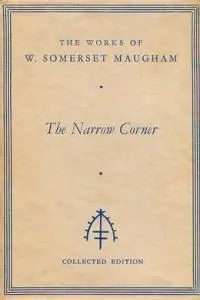
- Название:The Narrow Corner
- Автор:
- Издательство:epubBooks Classics
- Жанр:
- Год:2021
- ISBN:нет данных
- Рейтинг книги:5 / 5. Голосов: 1
-
Избранное:Добавить в избранное
- Отзывы:
-
Ваша оценка:
The Narrow Corner: краткое содержание, описание и аннотация
Предлагаем к чтению аннотацию, описание, краткое содержание или предисловие (зависит от того, что написал сам автор книги «The Narrow Corner»). Если вы не нашли необходимую информацию о книге — напишите в комментариях, мы постараемся отыскать её.
The Narrow Corner — читать онлайн ознакомительный отрывок
Ниже представлен текст книги, разбитый по страницам. Система сохранения места последней прочитанной страницы, позволяет с удобством читать онлайн бесплатно книгу «The Narrow Corner», без необходимости каждый раз заново искать на чём Вы остановились. Поставьте закладку, и сможете в любой момент перейти на страницу, на которой закончили чтение.
Интервал:
Закладка:
“Resignation? That’s the refuge of the beaten. Keep your resignation. I don’t want it. I’m not willing to accept evil and ugliness and injustice. I’m not willing to stand by while the good are punished and the wicked go scot–free. If life means that virtue is trampled on and honesty is mocked and beauty is fouled, then to hell with life.”
“My dear boy, you must take life as you find it.”
“I’m fed up with life as I find it. It fills me with horror. I’ll either have it on my own terms or not at all.”
Rhodomontade. The boy was nervous and upset. It was very natural. Dr. Saunders had little doubt that in a day or two he would be more sensible, and his reply was designed to check this extravagance.
“Have you ever read that laughter is the only gift the gods have vouchsafed to man that he does not share with the beasts?”
“What do you mean by that?” asked Fred sullenly.
“I have acquired resignation by the help of an unfailing sense of the ridiculous.”
“Laugh, then. Laugh your head off.”
“So long as I can,” returned the doctor, looking at him with his tolerant humour, “the gods may destroy me, but I remain unvanquished.”
Rhodomontade? Perhaps.
The conversation might have proceeded indefinitely if at that moment there had not come a knock on the door.
“Who the devil is that?” cried Fred irascibly.
A boy who spoke a little English came in to say that someone wished to see Fred, but they could not understand who it was. Fred, shrugging his shoulders, was about to go when an idea struck him and he stopped.
“Is it a man or a woman?”
He had to repeat the question in two or three different ways before the boy caught his meaning. Then with a smile brightened by the appreciation of his own cleverness, he answered that it was a woman.
“Louise.” Fred shook his head with decision. “You say, Tuan sick, no can come.”
The boy understood this and withdrew.
“You’d better see her,” said the doctor.
“Never. Erik was worth ten of her. He meant all the world to me. I loathe the thought of her. I only want to get away. I want to forget. How could she trample on that noble heart!”
Dr. Saunders raised his eyebrows. Language of that sort chilled his sympathy.
“Perhaps she’s very unhappy,” he suggested mildly.
“I thought you were a cynic. You’re a sentimentalist.”
“Have you only just discovered it?”
The door was slowly opened, pushed wide, silently, and Louise stood in the doorway. She did not come forward. She did not speak. She looked at Fred, and a faint, shy, deprecating smile hovered on her lips. You could see that she was nervous. Her whole body seemed to express a timid uncertainty. It had, as much as her face, an air of appeal. Fred stared at her. He did not move. He did not ask her to come in. His face was sullen and in his eyes was a cold and relentless hatred. The little smile froze on her lips and she seemed to give a gasp, not with her mouth, but with her body, as though a sharp pain pierced her heart. She stood there, for two or three minutes, it seemed, and neither of them moved an eyelash. Their eyes met in an insistent stare. Then, very slowly, and as silently as when she opened it, she drew the door to and softly closed it on herself. The two men were left alone once more. To the doctor the scene had appeared strangely, horribly pathetic.
XXIX
THE Fenton sailed at dawn. The ship that was to take Dr. Saunders to Bali was due in the course of the afternoon. She was to stay only just long enough to take on cargo, and so, towards eleven, hiring a horse–cab, the doctor drove out to Swan’s plantation. He thought it would be uncivil to go without saying good–bye.
When he arrived he found the old man sitting in a chair in the garden. It was the same chair as that in which Erik Christessen had sat on the night when he saw Fred come out of Louise’s room. The doctor passed the time of day with him. The old man did not remember him, but he was spry enough and asked the doctor a number of questions without paying any attention to the replies. Presently Louise came down the steps from the house. She shook hands with him. She bore no sign that she had passed through an emotional crisis, but greeted him with that composed and winning smile that she had had the first time he saw her on the way back from the bathing pool. She wore a brown sarong of batik and a little native coat. Her very fair hair was plaited and bound round her head.
“Won’t you come inside and sit down?” she said. “Dad is working. He’ll be along presently.”
The doctor accompanied her into the large living–room. The jalousies were drawn and the subdued light was pleasant. There was not much comfort in the room, but it was cool, and a great bunch of yellow cannas in a bowl, flaming like the new–risen sun, gave it a peculiar and exotic distinction.
“We haven’t told grandpa about Erik. He liked him; they were both Scandinavians, you know. We were afraid it would upset him. But perhaps he knows; one can never tell. Sometimes, weeks after, he’ll let fall a remark and we find out that he’s known all along something that we thought we’d better say nothing about.”
She talked in a leisurely manner, with a soft, rather full voice, as though of indifferent things.
“Old age is very strange. It has a kind of aloofness. It’s lost so much, that you can hardly look upon the old as quite human any more. But sometimes you have a feeling that they’ve acquired a sort of new sense that tells them things that we can never know.”
“Your grandfather was gay enough the other night. I hope I shall be as alert at his age.”
“He was excited. He likes having new people to talk to. But that’s just like a phonograph that you wind up. That’s the machine. But there’s something else there, like a little animal, a rat burrowing away or a squirrel turning in its cage, that’s busy within him with things we know nothing of. I feel its existence and I wonder what it’s about.”
The doctor had nothing to say to this, and silence for a minute or two fell upon them.
“Will you have a stengah?” she said.
“No, thank you.”
They were sitting opposite one another in easy chairs. The large room surrounded them with strangeness. It seemed to await something.
“The Fenton sailed this morning,” said the doctor.
“I know.”
He looked at her reflectively and she returned his gaze with tranquillity.
“I’m afraid Christessen’s death was a great shock to you.”
“I was very fond of him.”
“He talked to me a great deal about you the night before he died. He was very much in love with you. He told me he was going to marry you.”
“Yes.” She gave him a fleeting glance. “Why did he kill himself?”
“He saw that boy coming out of your room.”
She looked down. She reddened a little.
“That’s impossible.”
“Fred told me. He was there when he jumped over the rail of the verandah.”
“Who told Fred I was engaged to Erik?”
“I did.”
“I thought it was that yesterday afternoon when he wouldn’t see me. And then when I came in and he looked at me like that I knew it was hopeless.”
There was no despair in her manner, but a collected acceptance of the inevitable. You might almost have said that there was in her tone a shrug of the shoulders.
“You weren’t in love with him, then?”
She leaned her face on her hand and for a moment seemed to look into her heart.
“It’s all rather complicated,” she said.
“Anyhow, it’s no business of mine.”
“Oh, I don’t mind telling you. I don’t care what you think of me.”
Читать дальшеИнтервал:
Закладка:
Похожие книги на «The Narrow Corner»
Представляем Вашему вниманию похожие книги на «The Narrow Corner» списком для выбора. Мы отобрали схожую по названию и смыслу литературу в надежде предоставить читателям больше вариантов отыскать новые, интересные, ещё непрочитанные произведения.




Обсуждение, отзывы о книге «The Narrow Corner» и просто собственные мнения читателей. Оставьте ваши комментарии, напишите, что Вы думаете о произведении, его смысле или главных героях. Укажите что конкретно понравилось, а что нет, и почему Вы так считаете.