Роберт Чамберс - The Hidden Children
Здесь есть возможность читать онлайн «Роберт Чамберс - The Hidden Children» весь текст электронной книги совершенно бесплатно (целиком полную версию без сокращений). В некоторых случаях можно слушать аудио, скачать через торрент в формате fb2 и присутствует краткое содержание. Год выпуска: 2015, Издательство: epubBooks Classics, Жанр: Классическая проза, на английском языке. Описание произведения, (предисловие) а так же отзывы посетителей доступны на портале библиотеки ЛибКат.
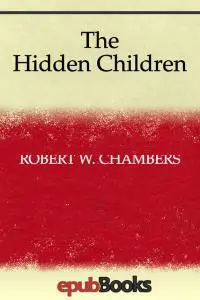
- Название:The Hidden Children
- Автор:
- Издательство:epubBooks Classics
- Жанр:
- Год:2015
- ISBN:нет данных
- Рейтинг книги:3 / 5. Голосов: 1
-
Избранное:Добавить в избранное
- Отзывы:
-
Ваша оценка:
The Hidden Children: краткое содержание, описание и аннотация
Предлагаем к чтению аннотацию, описание, краткое содержание или предисловие (зависит от того, что написал сам автор книги «The Hidden Children»). Если вы не нашли необходимую информацию о книге — напишите в комментариях, мы постараемся отыскать её.
The Hidden Children — читать онлайн бесплатно полную книгу (весь текст) целиком
Ниже представлен текст книги, разбитый по страницам. Система сохранения места последней прочитанной страницы, позволяет с удобством читать онлайн бесплатно книгу «The Hidden Children», без необходимости каждый раз заново искать на чём Вы остановились. Поставьте закладку, и сможете в любой момент перейти на страницу, на которой закончили чтение.
Интервал:
Закладка:
"Now, God be praised!" said Major Parr grimly. "For we shall this day furnish these Western–Gate Keepers with material for a Condolence Feast such as no Seneca ever dreamed of. And if you gentlemen can surprise and destroy Amochol, it will be a most blessed day for our unhappy country."
General Hand, in his patched and faded uniform of blue and buff, drew his long, heavy sword and walked his horse over to Major Parr.
"Well, sir," he said, "we must amuse them, I suppose, until the New Yorkers gain their left. Push your men forward and draw their fire, Major."
There came a low order; the soft shuffle of many mocassined feet; silence. Presently, ahead of us, a single rifle–shot shattered the stillness.
Instantly a mighty roar of Tory musketry filled the forest; and their Indians, realizing that the ambuscade had been discovered, came leaping down the wooded ridge, yelling and firing all along our front; and our rifles began to speak quicker and quicker from every rock and tuft and fallen log.
"Are we to miss this?" said Boyd, restlessly. "Listen to that firing! The devil take this fellow Amochol and his Eries! I wish we were yonder with our own people. I wish at least that I could see what our New Yorkers are about!"
Behind us, Boyd's twenty riflemen stood craning their sunburnt necks; and my Indians, terribly excited, fairly quivered where they crouched beside us. But all we could see was the rifle smoke sifting through the trees, and early sunshine slanting on the misty river.
The fierce yelling of the unseen Mohawks and Senecas on the wooded ridge above us had become one continuous and hideous scream, shrill and piercing above the racket of musketry and rifle fire; sometimes the dreadful volume of sound surged nearer as though they were charging, or showing themselves in order to draw us into a frontal attack on their pits and log breastworks; but always after a little while the yelping tumult receded, and our rifle fire slackened while the musketry from the breastworks grew more furious, crashing out volley on volley, while the entire ridge steamed like a volcano in action. Further to the north we heard more musketry break out, as our New York regiments passed rapidly toward Butler's left flank. And by the running fire we could follow their hurried progress.
"Hell!" said Boyd, furiously, flinging his rifle to his shoulder. "Come on, Loskiel, or we'll miss this accursed Amochol also." And he gave the signal to march.
As we skirted the high knoll where our artillery was planted, the first howitzer shot shook the forest, and my Indians cringed as they ran beside me. High towering rose the shell, screaming like a living thing, and plunged with a shriek into the woods on the ridge, exploding there with a most infernal bang.
Up through the trees gushed a very fountain of smoke, through which we could dimly see dark objects falling; but whether these were the limbs of trees or of men we could not tell.
Crash! A howitzer hurled its five and a half inch shell high into the sunshine. Boom! Another shot from a three–pounder. Bang! The little cohorn added its miniature bellow to the bigger guns, which now began to thunder regularly, one after another, shaking the ground we trod. The ridge was ruddy with the red lightning of exploding shells. Very far away in the forest we could hear entire regiments, as they climbed the slopes, cheering above the continuous racket of musketry; the yelling of the Senecas and Mohawks grew wavering, becoming ragged and thinner.
It was hard for us all, I think, to turn our backs on the first real battle we had seen in months—hard for Boyd, for me, and for our twenty riflemen; harder, perhaps, for our Indians, who could hear the yells of their most deadly enemies, and who knew that they were within striking distance at last.
As we marched in single file, I leading with my Indians, I said aloud, in the Iroquois tongue:
"If in this Battle of the Chemung the Mountain Snake be left writhing, yet unless we crush his head at Catharines–town, the serpent will live to strike again. For though a hundred arrows stick in the Western Serpent's body, his poison lies in his fangs; his fangs are rooted in his head; and the head still hisses at God and man from the shaggy depths of Catharines–town. It is for us of the elect to slay him there—for us few and chosen ones honoured by this mandate from our commander. Why, then, should the thunder of Proctor's guns arouse in us envy for those who join in battle? Let the iron guns do their part; let the men of New York, of Jersey, of Virginia, of New Hampshire, of Pennsylvania, do the great part allotted them. Let us in our hearts pray God to speed them. For if we do our part as worthily, only then shall their labour be not in vain. Their true title to glory is in our keeping, locked inevitably with our own. If we fail, they have failed. Judge, therefore, O Sagamore, judge, you Yellow Moth, and you Oneidas—Grey–Feather, with your war–chief's feather and your Sachem's ensign, Tahoontowhee, chieftain to be—judge, all of you, where the real glory lies—whether behind us in the rifle smoke or before us in the red glare of Amochol's accursed altar!"
They had been listening to every word as I walked beside them. The Mohican made answer first:
"It was hard for us to leave the Chemung, O Loskiel, my brother—with the dog–yelps at the Sinako and Mowawaks insulting our ears. But it was wiser. I, a Sagamore, say it!"
"It is God's will," said the Yellow Moth. But his eyes were still red with his fierce excitement; and the distant cannonade steadily continued as we marched.
"I am Roya–neh!" said the Grey–Feather. "What wisdom counsels I understand, He who would wear the scaly girdle must first know where the fangs lie buried…. But to hear the Antouhonoran scalp–yelp, and to turn one's back, is very hard, O my friend, Loskiel."
The Night–Hawk controlled his youthful features, forcing a merry smile as my eye fell on him.
"Koue!" he exclaimed softly. "I have made promise to my thirsty hatchet, O Loskiel! Else it might have leaped from its sheath and bitten some one."
"A good hatchet and a good dog bite only under orders," I said. "My younger brother's hatchet has acquired glory; now it is acquiring wisdom."
Boyd came up along the line, his deerskin shirt open to the breastbone, the green fringe blowing in the hill wind.
Far below us in the river valley sounded the uproar of the battle—a dull, confused, and distant thunder—for now we could no longer hear the musketry and rifle fire, only the boom–booming of the guns and the endless roar of echoes.
Here on a high hill's spur, with a brisk wind blowing in our faces, the heavy rumble of forest warfare became deadened; and we looked out over the naked ridge of rock, across the forests of this broken country, into a sea of green which stretched from horizon to horizon, accented only by the silver glimmer of lakes and the low mountain peaks east, west, and south of us.
Below us lay a creek, its glittering thread visible here and there. The Great Warrior trail crossed it somewhere in that ravine.
I drew the Mohican aside.
"Sagamore," said I, "now is your time come. Now we depend on you. If it lay with us, not one white man here, not one Indian, could take us straight to Catharines–town; for the Great Warrior trail runs not thither. Are you, then, confident that you know the way?"
"I know the way, Loskiel."
"Is there then a trail that leads from the Great Warrior trail below?"
"There are many."
"And you know the right one?"
"I have spoken, brother."
"I am satisfied. But we must clearly mark the trail for our surveyors and for the army."
"We will mark it," he said meaningly, "so that no Seneca dog can ever mistake which way we passed."
Читать дальшеИнтервал:
Закладка:
Похожие книги на «The Hidden Children»
Представляем Вашему вниманию похожие книги на «The Hidden Children» списком для выбора. Мы отобрали схожую по названию и смыслу литературу в надежде предоставить читателям больше вариантов отыскать новые, интересные, ещё непрочитанные произведения.




Обсуждение, отзывы о книге «The Hidden Children» и просто собственные мнения читателей. Оставьте ваши комментарии, напишите, что Вы думаете о произведении, его смысле или главных героях. Укажите что конкретно понравилось, а что нет, и почему Вы так считаете.