Роберт Чамберс - The Hidden Children
Здесь есть возможность читать онлайн «Роберт Чамберс - The Hidden Children» весь текст электронной книги совершенно бесплатно (целиком полную версию без сокращений). В некоторых случаях можно слушать аудио, скачать через торрент в формате fb2 и присутствует краткое содержание. Год выпуска: 2015, Издательство: epubBooks Classics, Жанр: Классическая проза, на английском языке. Описание произведения, (предисловие) а так же отзывы посетителей доступны на портале библиотеки ЛибКат.
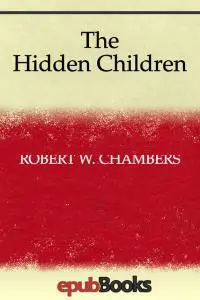
- Название:The Hidden Children
- Автор:
- Издательство:epubBooks Classics
- Жанр:
- Год:2015
- ISBN:нет данных
- Рейтинг книги:3 / 5. Голосов: 1
-
Избранное:Добавить в избранное
- Отзывы:
-
Ваша оценка:
The Hidden Children: краткое содержание, описание и аннотация
Предлагаем к чтению аннотацию, описание, краткое содержание или предисловие (зависит от того, что написал сам автор книги «The Hidden Children»). Если вы не нашли необходимую информацию о книге — напишите в комментариях, мы постараемся отыскать её.
The Hidden Children — читать онлайн бесплатно полную книгу (весь текст) целиком
Ниже представлен текст книги, разбитый по страницам. Система сохранения места последней прочитанной страницы, позволяет с удобством читать онлайн бесплатно книгу «The Hidden Children», без необходимости каждый раз заново искать на чём Вы остановились. Поставьте закладку, и сможете в любой момент перейти на страницу, на которой закончили чтение.
Интервал:
Закладка:
"We have arranged that Miss de Contrecoeur is to share my room with me at Croghan's," said Mrs. Bleecker. "And, Euan, I think you should send a wagon for her box at once. The distance is short; we will stroll home together."
I took my leave of them, contented, and walked back to the fort alone, my heart full of thankfulness for what God had done for her that day.
Chapter X
In Garrison
The end of the month was approaching, and as yet we had received no marching orders, although every evening the heavy–laden batteaux continued to arrive from Albany, and every morning the slow wagon train left for the lake, escorted by details from Schott's irregulars, and Franklin's Wyoming militia.
But our veteran rifle battalion did not stir, although all the other regular regiments had marched to Otsego; and Colonel Gansevoort's 3rd N. Y. Regiment of the Line, which was now under orders to remain and guard the Valley, had not yet returned, although early in the week an Oneida runner had come in with letters for Mrs. Bleecker and Mrs. Lansing from their husbands, saying that the regiment was on its way to the fort, and that they, the ladies, should continue at Croghan's as long as Morgan's Rifles were remaining there in garrison.
Cooler weather had set in with an occasional day of heavy summer rain; and now our garrison life became exceedingly comfortable, especially agreeable because of the ladies' hospitality at Croghan's new house.
Except for Lois and for them my duties on special detail would have become most irksome to me, shut off from the regiment as I was, with only the Mohican to keep an eye on, and nothing else whatever to do except to write at sundown every evening in my daily journal.
Not that I had not come to care a great deal for the Siwanois; indeed, I was gradually becoming conscious of a very genuine affection for this tall Mohican, who, in the calm confidence of our blood–brotherhood, was daily revealing his personality to me in a hundred naive and different ways, and with a simplicity that alternately touched and amused me.
For, after his own beliefs and his own customs, he was every inch a man—courteous, considerate, proud, generous, loyal, and brave. Which seem to me to be the general qualifications for a gentleman.
Except the Seneca Mountain Snakes, the nations of the Long House, considering their beliefs, customs, and limited opportunities, were not a whit inferior to us as men. And the Mohicans have always been their peers.
For, contrary to the general and ignorant belief, except for the Senecas, the Iroquois were civilised people; their Empire had more moral reasons for its existence than any other empire I ever heard of; because the League which bound these nations into a confederacy, and which was called by them "The Great Peace," had been established, not for the purpose of waging war, but to prevent it.
Until men of my own blood and colour had taught them treachery and ferocity and deceit, they had been, as a confederacy, guiltless of these things. Before the advent of the white man, a lie among the Iroquois was punished by death; also, among them, unchastity was scarcely known so rare was it. Even now, that brutal form of violence toward women, white or red, either in time of war or peace, was absolutely non–existent. No captive woman needed to fear that. Only the painted Tories—the blue–eyed Indians—remained to teach the Iroquois that such wickedness existed. For, as they said of themselves, the People of the Morning were "real men."
They had a federal constitution; they had civil and political ceremonies as wisely conceived and as dignified as they were impressive, romantic, and beautiful. Their literature, historical and imaginative, was handed down from generation to generation; and if memory were at fault, there were the wampum belts in their archives to corroborate tradition.
Their federal, national, tribal, sept, and clan systems were devised solely to prevent international decadence and fraternal strife; their secret societies were not sinister; their festivals and dances not immodest; their priesthood not ignoble. They were sedentary and metropolitan people—dwellers in towns—not nomads; they had cattle and fowls, orchards and grain–fields, gardens for vegetables, corrals for breeding stock. They had many towns—some even of two hundred houses, of which dwellings many were cellared, framed, and glazed.
They had their well–built and heavily stockaded forts which, because the first Frenchmen called them chateaux, were still known to us as "castles."
Their family life was, typically, irreproachable; they were tender and indulgent husbands and fathers, charitable neighbours, gay and good–humoured among their friends; and their women were deferred to, respected, and honoured, and had a distinct and important role to play in the social and political practices of the Confederacy.
If they, by necessity, were compelled to decimate the Eries, crush the Hurons, and subdue the Lenape and "make women of them," the latter term meant only that the Lenape could not be trusted to bear arms as allies.
Yet, with truest consideration and courtesy toward these conquered ones, and with a kindly desire to disguise and mitigate a necessary and humiliating restriction, the Iroquois had recognised their priesthood and their clans; had invested the Lenape with the fire–rights at Federal Councils; and had even devised for them a diplomatic role. They were henceforward the ambassadors of the Confederacy, the diplomats and political envoys of the Long House.
And if the Delawares never forgot or forgave their position as a subject nation, yet had the Iroquois done all they dared to soften a nominal servitude which they believed was vitally necessary to the peace and well–being of the entire Iroquois Confederacy.
Of this kind of people, then, were the Iroquois, naturally—not, alas, wholly so after the white man had drugged them with rum, cheated them, massacred them, taught them every vice, inoculated them with every disease.
For I must bear witness to the truth of this, spite of the incredulity of my own countrymen; and, moreover, it is true that the Mohicans were, in all virtuous and noble things, the peers of the civilised people of the Long House.
Those vile, horse–riding, murdering, thieving nomad Indians of the plains—those homeless, wandering, plundering violators of women and butchers of children, had nothing whatever in common with our forest Indians of the East—were a totally different race of people, mentally, spiritually, and physically. And these two species must ever remain distinct—the Gens des Prairies and the Gens du Bois.
Only the Senecas resembled the degraded robbers of the Western plains in having naturally evil and debased propensities, and entertaining similar gross and monstrous customs and most wicked superstitions. But in the Long House the Senecas were really aliens; every nation felt this, from the Canienga and Oneida peoples, whose skin was almost as white as our own, to the dusky Onondaga, Tuscarora, and Cayuga—darker people, but no less civilised than the tall, stalwart, and handsome keepers of the Eastern Gate.
I have ventured to say this much concerning the Iroquois so that it may better be understood among my own countrymen how it was possible for me, a white man of unmixed blood, to love and respect a red man of blood as pure and unmixed as mine. A dog–trader learns many things about dogs by dealing in them; an interpreter who deals with men never, ultimately, mistakes a real man, white or red.
My isolation from the regiment, as I say, was now more than compensated by the presence of the ladies at Croghan's house. And Lois had now been lodged with them for more than a week. How much of her sad history Mrs. Bleecker had seen fit to impart to Lana Helmer and Angelina Lansing I did not know. But it seemed to be generally understood in the garrison that Lois had arrived from Albany on Mrs. Bleecker's invitation, and that the girl was to remain permanently under her protection.
Читать дальшеИнтервал:
Закладка:
Похожие книги на «The Hidden Children»
Представляем Вашему вниманию похожие книги на «The Hidden Children» списком для выбора. Мы отобрали схожую по названию и смыслу литературу в надежде предоставить читателям больше вариантов отыскать новые, интересные, ещё непрочитанные произведения.







Обсуждение, отзывы о книге «The Hidden Children» и просто собственные мнения читателей. Оставьте ваши комментарии, напишите, что Вы думаете о произведении, его смысле или главных героях. Укажите что конкретно понравилось, а что нет, и почему Вы так считаете.