Роберт Чамберс - The Hidden Children
Здесь есть возможность читать онлайн «Роберт Чамберс - The Hidden Children» весь текст электронной книги совершенно бесплатно (целиком полную версию без сокращений). В некоторых случаях можно слушать аудио, скачать через торрент в формате fb2 и присутствует краткое содержание. Год выпуска: 2015, Издательство: epubBooks Classics, Жанр: Классическая проза, на английском языке. Описание произведения, (предисловие) а так же отзывы посетителей доступны на портале библиотеки ЛибКат.
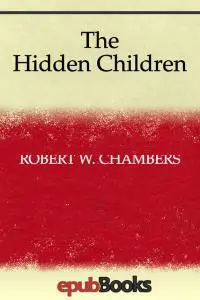
- Название:The Hidden Children
- Автор:
- Издательство:epubBooks Classics
- Жанр:
- Год:2015
- ISBN:нет данных
- Рейтинг книги:3 / 5. Голосов: 1
-
Избранное:Добавить в избранное
- Отзывы:
-
Ваша оценка:
The Hidden Children: краткое содержание, описание и аннотация
Предлагаем к чтению аннотацию, описание, краткое содержание или предисловие (зависит от того, что написал сам автор книги «The Hidden Children»). Если вы не нашли необходимую информацию о книге — напишите в комментариях, мы постараемся отыскать её.
The Hidden Children — читать онлайн бесплатно полную книгу (весь текст) целиком
Ниже представлен текст книги, разбитый по страницам. Система сохранения места последней прочитанной страницы, позволяет с удобством читать онлайн бесплатно книгу «The Hidden Children», без необходимости каждый раз заново искать на чём Вы остановились. Поставьте закладку, и сможете в любой момент перейти на страницу, на которой закончили чтение.
Интервал:
Закладка:
"Catharine Montour!"
"The Toad–woman herself—and all her spawn."
"The Senecas?"
"And the others," he said in a low voice.
A sudden and terrible misgiving assailed me. I swallowed, and then said slowly:
"Two scalps were taken late last night by Murphy and Elerson. And the scalps were not of the Mohawk. Not Oneida, nor Onondaga, nor Cayuga. Mayaro!" I gasped. "So help me God, those scalps are never Seneca!"
"Erie!" he exclaimed with a mixture of rage and horror. And I saw his sinewy hand quivering on his knife–hilt. "Listen, Loskiel! I knew it! No one has told me. I have sat here all the day alone, making my steel bright and my paint fresher, and singing to myself my people's songs. And ever as I sat at the lodge door, something in the summer wind mocked at me and whispered to me of demons. And when I rose and stood at gaze, troubled, and minding every river–breeze, faintly I seemed to scent the taint of evil. If those two scalps be Erie, then where the Cat–People creep their Sorcerer will be found."
"Amochol," I repeated under my breath. And shivered.
For, deep in the secret shadows of that dreadful place where this vile hag, Catharine Montour, ruled it in Catharines–town, dwelt also all that now remained of the Cat–Nation—Eries—People of the Cat—a dozen, it was rumoured, scarcely more—and demons all, serving that horrid warlock, Amochol, the Sorcerer of the Senecas.
What dreadful rites this red priest and his Eries practiced there, none knew, unless it were true that the False Faces knew. But rumour whispered with a thousand tongues of horrors viewless, nameless, inconceivable; and that far to the westward Biskoonah yawned, so close indeed to the world's surface that the waters boiling deep in hell burst into burning fountains in the magic garden where the red priest made his sorcery, alone.
These things I had heard, but vaguely, here and there—a word perhaps at Johnson Hall, a whisper at Fort Johnson, rumours discussed at Guy Park and Schenectady when I was young. But ever the same horror of it filled me, though I believed it not, knowing full well there were no witches, sorcerers, or warlocks in the world; yet, in my soul disturbed concerning what might pass deep in the shadows of that viewless Empire.
"Mayaro," I said seriously, "do you go instantly to the fort and view those scalps."
"Were the braids fastened at the roots with tree–cat claws?"
"Aye!"
"No need to view them, then, Loskiel."
"Are they truly Erie?"
"Cats!" He spat the word from his lips and his eyes blazed.
"And—Amochol!" I asked unsteadily.
"The Cat People creep with the Seneca high priest, mewing under the moon."
"Then—he is surely here?"
"Aye, Loskiel."
"God!" said I, now all a–quiver; "only to slay him! Only to end this demon–thing, this poison spawn of the Woman–Toad! Only to glimpse his scarlet rags fairly along my rifle sight!"
"No bullets touch him."
"That is nonsense, Mayaro―"
"No, Loskiel."
"I tell you he is human! There are no sorcerers on earth. There never were—except the Witch of Endor―"
"I never heard of her. But the Witch of Catharines–town is living. And her warlock offspring, Amochol!" He squared his broad shoulders, shaking them. "What do I care?" he said. "I am a Sagamore of the Enchanted Clan!" He struck the painted symbol on his chest. "What do I care for this red priest's sorcery—I, who wear the great Witch Bear rearing in scarlet here across my breast!
"Let the Cat People make their magic! Let Amochol sacrifice to Leshi in Biskoonah! Let their accursed Atensi watch the Mohicans from behind the moon. Mayaro is a Sagamore and his clan are Sachems; and the clan was old—old—old, O little brother, before their Hiawatha came to them and made their League for them, and returned again to The Master of Life in his silver cloud–canoe!
"And I say to you, O my blood–brother, that between this sorcerer and me is now a war such as no Mohican ever waged and no man living, white or red, has ever seen. His magic will I fight with magic; his knife and hatchet shall be turned on mine! And I shall deceive and trick and mock him—him and his Erie Cats, till one by one their scalps shall swing above a clean Mohican fire. O Loskiel, my brother, and my other self, a warrior and a Sagamore has spoken. Go, now, to your evening tryst in peace and leave me. For in my ears the Seven Chiefs are whispering—The Thunderers. And Tamanund must hear my speech and read my heart. And the long roll of our Mohican dead must be recited—here and alone by me—the only one who has that right since Uncas died and the Mohican priesthood ended, save for the Sagamores of the Magic Clan.
"Go, now, my brother. Go in peace."
Chapter VII
Lois
When I came to the log house by the Spring Waiontha, lantern in hand and my packet tucked beneath my arm, it was twilight, and the starless skies threatened rain. Road and field and forest were foggy and silent; and I thought of the first time I had ever set eyes on Lois, in the late afternoon stillness which heralded a coming storm.
I had with me, as I say, a camp lantern which enabled me to make my way through the thicket to the Spring Waiontha. Not finding her there, I retraced my steps and crossed the charred and dreary clearing to the house of logs.
No light burned within; doubtless this widow woman was far too poor to afford a light of any sort. But my lantern still glimmered, and I went up to the splintered door and rapped.
Lois opened it, her knitting gathered in her hand, and stood aside for me to enter.
At first, so dusky was the room that I perceived no other occupant beside ourselves. Then Lois said: "Mrs. Rannock, Mr. Loskiel, of whom I spoke at supper, is to be made known to you."
Then first I saw a slight and ghostly figure rise, take shape in the shadows, and move slowly into my lantern's feeble beams―a frail and pallid woman, who made her reverence as though dazed, and uttered not a word.
Lois whispered in my ear:
"She scarcely seems to know she is alive, since Cherry Valley. A Tory slew her little sister with a hatchet; then her husband fell; and then, before her eyes, a blue–eyed Indian pinned her baby to its cradle with a bayonet."
I crossed the room to where she stood, offering my hand; and she laid her thin and work–worn fingers listlessly in mine.
"Madam," I said gently, "there are today two thousand widows such as you betwixt Oriska and Schenectady. And, to our cause, each one of you is worth a regiment of men, your sorrows sacred to us all, strengthening our vows, steeling us to a fierce endeavour. No innocent death in this long war has been in vain; no mother's agony. Yet, only God can comfort such as you."
She shook her head slowly.
"No God can comfort me," she said, in a voice so lifeless that it sounded flat as the words that sleepers utter, dreaming of trouble.
"Shall we be seated outside on the door–sill?" whispered Lois. "The only seat within is on the settle, where she sits."
"Is this the only room?"
"Yes—save for the mouse–loft, where I sleep on last year's corn–husks. Shall we sit outside? We can speak very low. She will not heed us."
Pity for all this stark and naked wretchedness left me silent; then, as the lantern's rays fell on this young girl's rags, I remembered my packet.
"Yes, we will sit outside. But first, I bring you a little gift―"
She looked up quickly and drew back a step, "Oh, but such a little gift, Lois—a nothing—a mere jest of mine which we shall enjoy between us. Take it as I offer it, lightly, and without constraint."
Reluctantly she permitted me to lay the packet in her arms, displeasure still darkening her brow. Then I set my lantern on the puncheon floor and stepped outside, closing the hatchet–battered door behind me.
Читать дальшеИнтервал:
Закладка:
Похожие книги на «The Hidden Children»
Представляем Вашему вниманию похожие книги на «The Hidden Children» списком для выбора. Мы отобрали схожую по названию и смыслу литературу в надежде предоставить читателям больше вариантов отыскать новые, интересные, ещё непрочитанные произведения.









Обсуждение, отзывы о книге «The Hidden Children» и просто собственные мнения читателей. Оставьте ваши комментарии, напишите, что Вы думаете о произведении, его смысле или главных героях. Укажите что конкретно понравилось, а что нет, и почему Вы так считаете.