Джозеф Конрад - Chance
Здесь есть возможность читать онлайн «Джозеф Конрад - Chance» весь текст электронной книги совершенно бесплатно (целиком полную версию без сокращений). В некоторых случаях можно слушать аудио, скачать через торрент в формате fb2 и присутствует краткое содержание. Год выпуска: 2014, Издательство: epubBooks Classics, Жанр: Классическая проза, на английском языке. Описание произведения, (предисловие) а так же отзывы посетителей доступны на портале библиотеки ЛибКат.
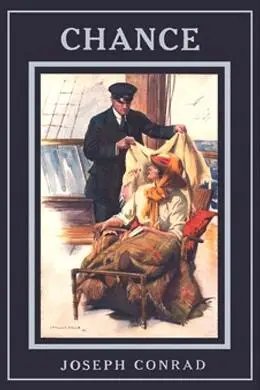
- Название:Chance
- Автор:
- Издательство:epubBooks Classics
- Жанр:
- Год:2014
- ISBN:нет данных
- Рейтинг книги:5 / 5. Голосов: 1
-
Избранное:Добавить в избранное
- Отзывы:
-
Ваша оценка:
Chance: краткое содержание, описание и аннотация
Предлагаем к чтению аннотацию, описание, краткое содержание или предисловие (зависит от того, что написал сам автор книги «Chance»). Если вы не нашли необходимую информацию о книге — напишите в комментариях, мы постараемся отыскать её.
Chance — читать онлайн бесплатно полную книгу (весь текст) целиком
Ниже представлен текст книги, разбитый по страницам. Система сохранения места последней прочитанной страницы, позволяет с удобством читать онлайн бесплатно книгу «Chance», без необходимости каждый раз заново искать на чём Вы остановились. Поставьте закладку, и сможете в любой момент перейти на страницу, на которой закончили чтение.
Интервал:
Закладка:
"Is Mrs. Anthony not feeling well?" asked Powell. But Mr. Smith's remark was not meant for Mrs. Anthony. She was well. He himself was well. It was the captain's health that did not seem quite satisfactory. Had Mr. Powell noticed his appearance?
Mr. Powell didn't know enough of the captain to judge. He couldn't tell. But he observed thoughtfully that Mr. Franklin had been saying the same thing. And Franklin had known the captain for years. The mate was quite worried about it.
This intelligence startled Mr. Smith considerably. "Does he think he is in danger of dying?" he exclaimed with an animation quite extraordinary for him, which horrified Mr. Powell.
"Heavens! Die! No! Don't you alarm yourself, sir. I've never heard a word about danger from Mr. Franklin."
"Well, well," sighed Mr. Smith and left the poop for the saloon rather abruptly.
As a matter of fact Mr. Franklin had been on deck for some considerable time. He had come to relieve young Powell; but seeing him engaged in talk with the "enemy"—with one of the "enemies" at least—had kept at a distance, which, the poop of the Ferndale being aver seventy feet long, he had no difficulty in doing. Mr. Powell saw him at the head of the ladder leaning on his elbow, melancholy and silent. "Oh! Here you are, sir."
"Here I am. Here I've been ever since six o'clock. Didn't want to interrupt the pleasant conversation. If you like to put in half of your watch below jawing with a dear friend, that's not my affair. Funny taste though."
"He isn't a bad chap," said the impartial Powell.
The mate snorted angrily, tapping the deck with his foot; then: "Isn't he? Well, give him my love when you come together again for another nice long yarn."
"I say, Mr. Franklin, I wonder the captain don't take offence at your manners."
"The captain. I wish to goodness he would start a row with me. Then I should know at least I am somebody on board. I'd welcome it, Mr. Powell. I'd rejoice. And dam' me I would talk back too till I roused him. He's a shadow of himself. He walks about his ship like a ghost. He's fading away right before our eyes. But of course you don't see. You don't care a hang. Why should you?"
Mr. Powell did not wait for more. He went down on the main deck. Without taking the mate's jeremiads seriously he put them beside the words of Mr. Smith. He had grown already attached to Captain Anthony. There was something not only attractive but compelling in the man. Only it is very difficult for youth to believe in the menace of death. Not in the fact itself, but in its proximity to a breathing, moving, talking, superior human being, showing no sign of disease. And Mr. Powell thought that this talk was all nonsense. But his curiosity was awakened. There was something, and at any time some circumstance might occur … No, he would never find out … There was nothing to find out, most likely. Mr. Powell went to his room where he tried to read a book he had already read a good many times. Presently a bell rang for the officers' supper.
Chapter Six
…a Moonless Night, Thick With Stars Above, Very Dark on the Water
In the mess–room Powell found Mr. Franklin hacking at a piece of cold salt beef with a table knife. The mate, fiery in the face and rolling his eyes over that task, explained that the carver belonging to the mess– room could not be found. The steward, present also, complained savagely of the cook. The fellow got things into his galley and then lost them. Mr. Franklin tried to pacify him with mournful firmness.
"There, there! That will do. We who have been all these years together in the ship have other things to think about than quarrelling among ourselves."
Mr. Powell thought with exasperation: "Here he goes again," for this utterance had nothing cryptic for him. The steward having withdrawn morosely, he was not surprised to hear the mate strike the usual note. That morning the mizzen topsail tie had carried away (probably a defective link) and something like forty feet of chain and wire–rope, mixed up with a few heavy iron blocks, had crashed down from aloft on the poop with a terrifying racket.
"Did you notice the captain then, Mr. Powell. Did you notice?"
Powell confessed frankly that he was too scared himself when all that lot of gear came down on deck to notice anything.
"The gin–block missed his head by an inch," went on the mate impressively. "I wasn't three feet from him. And what did he do? Did he shout, or jump, or even look aloft to see if the yard wasn't coming down too about our ears in a dozen pieces? It's a marvel it didn't. No, he just stopped short—no wonder; he must have felt the wind of that iron gin–block on his face—looked down at it, there, lying close to his foot—and went on again. I believe he didn't even blink. It isn't natural. The man is stupefied."
He sighed ridiculously and Mr. Powell had suppressed a grin, when the mate added as if he couldn't contain himself:
"He will be taking to drink next. Mark my words. That's the next thing."
Mr. Powell was disgusted.
"You are so fond of the captain and yet you don't seem to care what you say about him. I haven't been with him for seven years, but I know he isn't the sort of man that takes to drink. And then—why the devil should he?"
"Why the devil, you ask. Devil—eh? Well, no man is safe from the devil—and that's answer enough for you," wheezed Mr. Franklin not unkindly. "There was a time, a long time ago, when I nearly took to drink myself. What do you say to that?"
Mr. Powell expressed a polite incredulity. The thick, congested mate seemed on the point of bursting with despondency. "That was bad example though. I was young and fell into dangerous company, made a fool of myself—yes, as true as you see me sitting here. Drank to forget. Thought it a great dodge."
Powell looked at the grotesque Franklin with awakened interest and with that half–amused sympathy with which we receive unprovoked confidences from men with whom we have no sort of affinity. And at the same time he began to look upon him more seriously. Experience has its prestige. And the mate continued:
"If it hadn't been for the old lady, I would have gone to the devil. I remembered her in time. Nothing like having an old lady to look after to steady a chap and make him face things. But as bad luck would have it, Captain Anthony has no mother living, not a blessed soul belonging to him as far as I know. Oh, aye, I fancy he said once something to me of a sister. But she's married. She don't need him. Yes. In the old days he used to talk to me as if we had been brothers," exaggerated the mate sentimentally. "'Franklin,'—he would say—'this ship is my nearest relation and she isn't likely to turn against me. And I suppose you are the man I've known the longest in the world.' That's how he used to speak to me. Can I turn my back on him? He has turned his back on his ship; that's what it has come to. He has no one now but his old Franklin. But what's a fellow to do to put things back as they were and should be. Should be—I say!"
His starting eyes had a terrible fixity. Mr. Powell's irresistible thought, "he resembles a boiled lobster in distress," was followed by annoyance. "Good Lord," he said, "you don't mean to hint that Captain Anthony has fallen into bad company. What is it you want to save him from?"
"I do mean it," affirmed the mate, and the very absurdity of the statement made it impressive—because it seemed so absolutely audacious. "Well, you have a cheek," said young Powell, feeling mentally helpless. "I have a notion the captain would half kill you if he were to know how you carry on."
"And welcome," uttered the fervently devoted Franklin. "I am willing, if he would only clear the ship afterwards of that … You are but a youngster and you may go and tell him what you like. Let him knock the stuffing out of his old Franklin first and think it over afterwards. Anything to pull him together. But of course you wouldn't. You are all right. Only you don't know that things are sometimes different from what they look. There are friendships that are no friendships, and marriages that are no marriages. Phoo! Likely to be right—wasn't it? Never a hint to me. I go off on leave and when I come back, there it is—all over, settled! Not a word beforehand. No warning. If only: 'What do you think of it, Franklin?'—or anything of the sort. And that's a man who hardly ever did anything without asking my advice. Why! He couldn't take over a new coat from the tailor without … first thing, directly the fellow came on board with some new clothes, whether in London or in China, it would be: 'Pass the word along there for Mr. Franklin. Mr. Franklin wanted in the cabin.' In I would go. 'Just look at my back, Franklin. Fits all right, doesn't it?' And I would say: 'First rate, sir,' or whatever was the truth of it. That or anything else. Always the truth of it. Always. And well he knew it; and that's why he dared not speak right out. Talking about workmen, alterations, cabins … Phoo! … instead of a straightforward—'Wish me joy, Mr. Franklin!' Yes, that was the way to let me know. God only knows what they are—perhaps she isn't his daughter any more than she is … She doesn't resemble that old fellow. Not a bit. Not a bit. It's very awful. You may well open your mouth, young man. But for goodness' sake, you who are mixed up with that lot, keep your eyes and ears open too in case—in case of … I don't know what. Anything. One wonders what can happen here at sea! Nothing. Yet when a man is called a jailer behind his back."
Читать дальшеИнтервал:
Закладка:
Похожие книги на «Chance»
Представляем Вашему вниманию похожие книги на «Chance» списком для выбора. Мы отобрали схожую по названию и смыслу литературу в надежде предоставить читателям больше вариантов отыскать новые, интересные, ещё непрочитанные произведения.





Обсуждение, отзывы о книге «Chance» и просто собственные мнения читателей. Оставьте ваши комментарии, напишите, что Вы думаете о произведении, его смысле или главных героях. Укажите что конкретно понравилось, а что нет, и почему Вы так считаете.