Margaret Mitchell - Gone with the Wind
Здесь есть возможность читать онлайн «Margaret Mitchell - Gone with the Wind» весь текст электронной книги совершенно бесплатно (целиком полную версию без сокращений). В некоторых случаях можно слушать аудио, скачать через торрент в формате fb2 и присутствует краткое содержание. Жанр: Классическая проза, на английском языке. Описание произведения, (предисловие) а так же отзывы посетителей доступны на портале библиотеки ЛибКат.
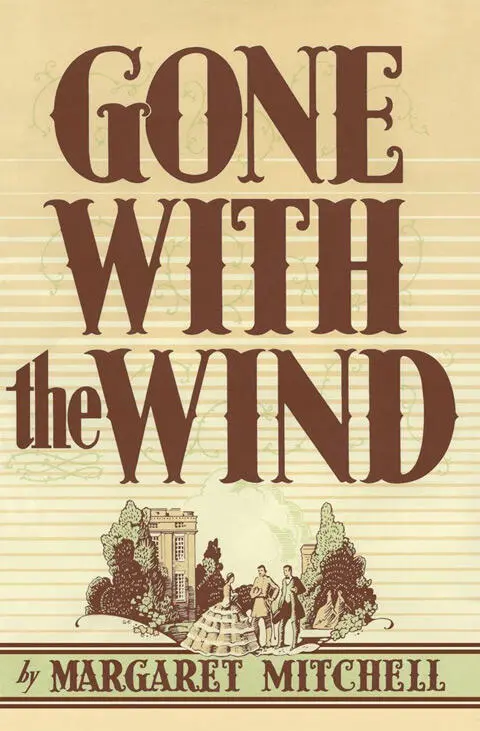
- Название:Gone with the Wind
- Автор:
- Жанр:
- Год:неизвестен
- ISBN:нет данных
- Рейтинг книги:4.17 / 5. Голосов: 6
-
Избранное:Добавить в избранное
- Отзывы:
-
Ваша оценка:
Gone with the Wind: краткое содержание, описание и аннотация
Предлагаем к чтению аннотацию, описание, краткое содержание или предисловие (зависит от того, что написал сам автор книги «Gone with the Wind»). Если вы не нашли необходимую информацию о книге — напишите в комментариях, мы постараемся отыскать её.
Gone with the Wind — читать онлайн бесплатно полную книгу (весь текст) целиком
Ниже представлен текст книги, разбитый по страницам. Система сохранения места последней прочитанной страницы, позволяет с удобством читать онлайн бесплатно книгу «Gone with the Wind», без необходимости каждый раз заново искать на чём Вы остановились. Поставьте закладку, и сможете в любой момент перейти на страницу, на которой закончили чтение.
Интервал:
Закладка:
They loved their men, they believed in them, they trusted them to the last breaths of their bodies. How could disaster ever come to women such as they when their stalwart gray line stood between them and the Yankees? Had there ever been such men as these since the first dawn of the world, so heroic, so reckless, so gallant, so tender? How could anything but overwhelming victory come to a Cause as just and right as theirs? A Cause they loved as much as they loved their men, a Cause they served with their hands and their hearts, a Cause they talked about, thought about, dreamed about—a Cause to which they would sacrifice these men if need be, and bear their loss as proudly as the men bore their battle flags.
It was high tide of devotion and pride in their hearts, high tide of the Confederacy, for final victory was at hand. Stonewall Jackson’s triumphs in the Valley and the defeat of the Yankees in the Seven Days’ Battle around Richmond showed that clearly. How could it be otherwise with such leaders as Lee and Jackson? One more victory and the Yankees would be on their knees yelling for peace and the men would be riding home and there would be kissing and laughter. One more victory and the war was over!
Of course, there were empty chairs and babies who would never see their fathers’ faces and unmarked graves by lonely Virginia creeks and in the still mountains of Tennessee, but was that too great a price to pay for such a Cause? Silks for the ladies and tea and sugar were hard to get, but that was something to joke about. Besides, the dashing blockade runners were bringing in these very things under the Yankees’ disgruntled noses, and that made the possession of them many times more thrilling. Soon Raphael Semmes and the Confederate Navy would tend to those Yankee gunboats and the ports would be wide open. And England was coming in to help the Confederacy win the war, because the English mills were standing idle for want of Southern cotton. And naturally the British aristocracy sympathized with the Confederacy, as one aristocrat with another, against a race of dollar lovers like the Yankees.
So the women swished their silks and laughed and, looking on their men with hearts bursting with pride, they knew that love snatched in the face of danger and death was doubly sweet for the strange excitement that went with it.
When first she looked at the crowd, Scarlett’s heart had thumpthumped with the unaccustomed excitement of being at a party, but as she half-comprehendingly saw the high-hearted look on the faces about her, her joy began to evaporate. Every woman present was blazing with an emotion she did not feel. It bewildered and depressed her. Somehow, the ball did not seem so pretty nor the girls so dashing, and the white heat of devotion to the Cause that was still shining on every face seemed—why, it just seemed silly!
In a sudden flash of self-knowledge that made her mouth pop open with astonishment, she realized that she did not share with these women their fierce pride, their desire to sacrifice themselves and everything they had for the Cause. Before horror made her think: “No—no! I mustn’t think such things! They’re wrong—sinful,” she knew the Cause meant nothing at all to her and that she was bored with hearing other people talk about it with that fanatic look in their eyes. The Cause didn’t seem sacred to her. The war didn’t seem to be a holy affair, but a nuisance that killed men senselessly and cost money and made luxuries hard to get. She saw that she was tired of the endless knitting and the endless bandage rolling and lint picking that roughened the cuticle of her nails. And oh, she was so tired of the hospital! Tired and bored and nauseated with the sickening gangrene smells and the endless moaning, frightened by the look that coming death gave to sunken faces.
She looked furtively around her, as the treacherous, blasphemous thoughts rushed through her mind, fearful that someone might find them written clearly upon her face. Oh, why couldn’t she feel like those other women! They were whole hearted and sincere in their devotion to the Cause. They really meant everything they said and did. And if anyone should ever suspect that she—No, no one must ever know! She must go on making a pretense of enthusiasm and pride in the Cause which she could not feel, acting out her part of the widow of a Confederate officer who bears her grief bravely, whose heart is in the grave, who feels that her husband’s death meant nothing if it aided the Cause to triumph.
Oh, why was she different, apart from these loving women? She could never love anything or anyone so selflessly as they did. What a lonely feeling it was—and she had never been lonely either in body or spirit before. At first she tried to stifle the thoughts, but the hard self-honesty that lay at the base of her nature would not permit it. And so, while the bazaar went on, while she and Melanie waited on the customers who came to their booth, her mind was busily working, trying to justify herself to herself—a task which she seldom found difficult.
The other women were simply silly and hysterical with their talk of patriotism and the Cause, and the men were almost as bad with their talk of vital issues and States’ Rights. She, Scarlett O’Hara Hamilton, alone had good hard-headed Irish sense. She wasn’t going to make a fool out of herself about the Cause, but neither was she going to make a fool out of herself by admitting her true feelings. She was hard-headed enough to be practical about the situation, and no one would ever know how she felt. How surprised the bazaar would be if they knew what she really was thinking! How shocked if she suddenly climbed on the bandstand and declared that she thought the war ought to stop, so everybody could go home and tend to their cotton and there could be parties and beaux again and plenty of pale green dresses.
For a moment, her self-justification buoyed her up but still she looked about the hall with distaste. The McLure girls’ booth was inconspicuous, as Mrs. Merriwether had said, and there were long intervals when no one came to their corner and Scarlett had nothing to do but look enviously on the happy throng. Melanie sensed her moodiness but, crediting it to longing for Charlie, did not try to engage her in conversation. She busied herself arranging the articles in the booth in more attractive display, while Scarlett sat and looked glumly around the room. Even the banked flowers below the pictures of Mr. Davis and Mr. Stephens displeased her.
“It looks like an altar,” she sniffed. “And the way they all carry on about those two, they might as well be the Father and the Son!” Then smitten with sudden fright at her irreverence she began hastily to cross herself by way of apology but caught herself in time.
“Well, it’s true,” she argued with her conscience. “Everybody carries on like they were holy and they aren’t anything but men, and mighty unattractive looking ones at that.”
Of course, Mr. Stephens couldn’t help how he looked for he had been an invalid all his life, but Mr. Davis—She looked up at the cameo clean, proud face. It was his goatee that annoyed her the most. Men should either be clean shaven, mustached or wear full beards.
“That little wisp looks like it was just the best he could do,” she thought, not seeing in his face the cold hard intelligence that was carrying the weight of a new nation.
No, she was not happy now, and at first she had been radiant with the pleasure of being in a crowd. Now just being present was not enough. She was at the bazaar but not a part of it. No one paid her any attention and she was the only young unmarried woman present who did not have a beau. And all her life she had enjoyed the center of the stage. It wasn’t fair! She was seventeen years old and her feet were patting the floor, wanting to skip and dance. She was seventeen years old and she had a husband lying at Oakland Cemetery and a baby in his cradle at Aunt Pittypat’s and everyone thought she should be content with her lot. She had a whiter bosom and a smaller waist and a tinier foot than any girl present, but for all they mattered she might just as well be lying beside Charles with “Beloved Wife of” carved over her.
Читать дальшеИнтервал:
Закладка:
Похожие книги на «Gone with the Wind»
Представляем Вашему вниманию похожие книги на «Gone with the Wind» списком для выбора. Мы отобрали схожую по названию и смыслу литературу в надежде предоставить читателям больше вариантов отыскать новые, интересные, ещё непрочитанные произведения.









Обсуждение, отзывы о книге «Gone with the Wind» и просто собственные мнения читателей. Оставьте ваши комментарии, напишите, что Вы думаете о произведении, его смысле или главных героях. Укажите что конкретно понравилось, а что нет, и почему Вы так считаете.