Margaret Mitchell - Gone with the Wind
Здесь есть возможность читать онлайн «Margaret Mitchell - Gone with the Wind» весь текст электронной книги совершенно бесплатно (целиком полную версию без сокращений). В некоторых случаях можно слушать аудио, скачать через торрент в формате fb2 и присутствует краткое содержание. Жанр: Классическая проза, на английском языке. Описание произведения, (предисловие) а так же отзывы посетителей доступны на портале библиотеки ЛибКат.
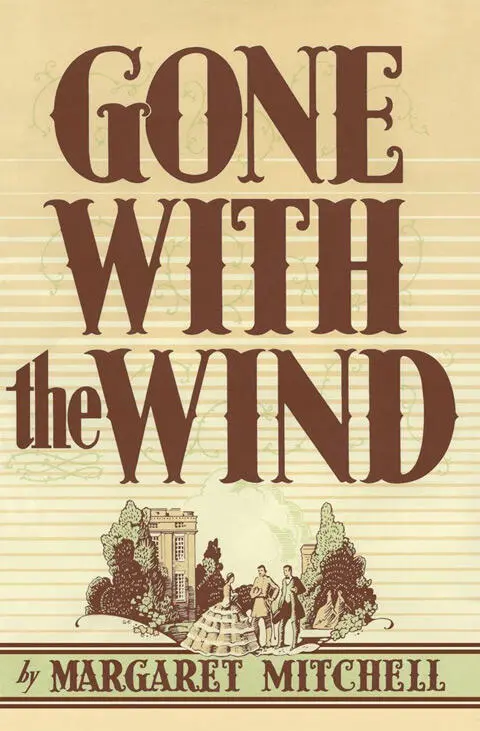
- Название:Gone with the Wind
- Автор:
- Жанр:
- Год:неизвестен
- ISBN:нет данных
- Рейтинг книги:4.17 / 5. Голосов: 6
-
Избранное:Добавить в избранное
- Отзывы:
-
Ваша оценка:
Gone with the Wind: краткое содержание, описание и аннотация
Предлагаем к чтению аннотацию, описание, краткое содержание или предисловие (зависит от того, что написал сам автор книги «Gone with the Wind»). Если вы не нашли необходимую информацию о книге — напишите в комментариях, мы постараемся отыскать её.
Gone with the Wind — читать онлайн бесплатно полную книгу (весь текст) целиком
Ниже представлен текст книги, разбитый по страницам. Система сохранения места последней прочитанной страницы, позволяет с удобством читать онлайн бесплатно книгу «Gone with the Wind», без необходимости каждый раз заново искать на чём Вы остановились. Поставьте закладку, и сможете в любой момент перейти на страницу, на которой закончили чтение.
Интервал:
Закладка:
“You eat as though each meal were your last,” said Rhett. “Don’t scrape the plate, Scarlett. I’m sure there’s more in the kitchen. You have only to ask the waiter. If you don’t stop being such a glutton, you’ll be as fat as the Cuban ladies and then I shall divorce you.”
But she only put out her tongue at him and ordered another pastry, thick with chocolate and stuffed with meringue.
What fun it was to be able to spend as much money as you liked and not count pennies and feel that you should save them to pay taxes or buy mules. What fun to be with people who were gay and rich and not genteelly poor like Atlanta people. What fun to wear rustling brocade dresses that showed your waist and all your neck and arms and more than a little of your breast and know that men were admiring you. And what fun to eat all you wanted without having censorious people say you weren’t ladylike. And what fun to drink all the champagne you pleased. The first time she drank too much, she was embarrassed when she awoke the next morning with a splitting headache and an awful memory of singing “Bonnie Blue Flag” all the way back to the hotel, through the streets of New Orleans, in an open carriage. She had never seen a lady even tipsy, and the only drunken woman she had ever seen had been that Watling creature on the day when Atlanta fell. She hardly knew how to face Rhett, so great was her humiliation, but the affair seemed only to amuse him. Everything she did seemed to amuse him, as though she were a gamboling kitten.
It was exciting to go out with him for he was so handsome. Somehow she had never given his looks a thought before, and in Atlanta everyone had been too preoccupied with his shortcomings ever to talk about his appearance. But here in New Orleans she could see how the eyes of other women followed him and how they fluttered when he bent over their hands. The realization that other women were attracted by her husband, and perhaps envied her, made her suddenly proud to be seen by his side.
“Why, we’re a handsome people,” thought Scarlett with pleasure.
Yes, as Rhett had prophesied, marriage could be a lot of fun. Not only was it fun but she was learning many things. That was odd in itself, because Scarlett had thought life could teach her no more. Now she felt like a child, every day on the brink of a new discovery.
First, she learned that marriage with Rhett was a far different matter from marriage with either Charles or Frank. They had respected her and been afraid of her temper. They had begged for favors and if it pleased her, she had bestowed them. Rhett did not fear her and, she often thought, did not respect her very much either. What he wanted to do, he did, and if she did not like it, he laughed at her. She did not love him but he was undoubtedly an exciting person to live with. The most exciting thing about him was that even in his outbursts of passion which were flavored sometimes with cruelty, sometimes with irritating amusement, he seemed always to be holding himself under restraint, always riding his emotions with a curb bit.
“I guess that’s because he isn’t really in love with me,” she thought and was content enough with the state of affairs. “I should hate for him to ever turn completely loose in any way.” But still the thought of the possibility teased her curiosity in an exciting way.
Living with Rhett, she learned many new things about him, and she had thought she knew him so well. She learned that his voice could be as silky as a cat’s fur one moment and crisp and crackling with oaths the next. He could tell, with apparent sincerity and approval, stories of courage and honor and virtue and love in the odd places he had been, and follow them with ribald stories of coldest cynicism. She knew no man should tell such stories to his wife but they were entertaining and they appealed to something coarse and earthy in her. He could be an ardent, almost a tender, lover for a brief while, and almost immediately a mocking devil who ripped the lid from her gunpowder temper, fired it and enjoyed the explosion. She learned that his compliments were always two edged and his tenderest expressions open to suspicion. In fact, in those two weeks in New Orleans, she learned everything about him except what he really was.
Some mornings he dismissed the maid and brought her the breakfast tray himself and fed her as though she were a child, took the hairbrush from her hand and brushed her long dark hair until it snapped and crackled. Yet other mornings she was torn rudely out of deep slumber when he snatched all the bed covers from her and tickled her bare feet. Sometimes he listened with dignified interest to details of her businesses, nodding approval at her sagacity, and at other times he called her somewhat dubious tradings scavenging, highway robbery and extortion. He took her to plays and annoyed her by whispering that God probably didn’t approve of such amusements, and to churches and, sotto voce, retailed funny obscenities and then reproved her for laughing. He encouraged her to speak her mind, to be flippant and daring. She picked up from him the gift of stinging words and sardonic phrases and learned to relish using them for the power they gave her over other people. But she did not possess his sense of humor which tempered his malice, nor his smile that jeered at himself even while he was jeering others.
He made her play and she had almost forgotten how. Life had been so serious and so bitter. He knew how to play and swept her along with him. But he never played like a boy; he was a man and no matter what he did, she could never forget it. She could not look down on him from the heights of womanly superiority, smiling as women have always smiled at the antics of men who are boys at heart.
This annoyed her a little, whenever she thought of it. It would be pleasant to feel superior to Rhett. All the other men she had known she could dismiss with a half-contemptuous “What a child!”
Her father, the Tarleton twins with their love of teasing and their elaborate practical jokes, the hairy little Fontaines with their childish rages, Charles, Frank, all the men who had paid court to her during the war—everyone, in fact, except Ashley. Only Ashley and Rhett eluded her understanding and her control for they were both adults, and the elements of boyishness were lacking in them.
She did not understand Rhett, nor did she trouble to understand him, though there were things about him which occasionally puzzled her. There was the way he looked at her sometimes, when he thought she was unaware. Turning quickly she frequently caught him watching her, an alert, eager, waiting look in his eyes.
“Why do you look at me like that?” she once asked irritably. “Like a cat at a mouse hole!”
But his face had changed swiftly and he only laughed. Soon she forgot it and did not puzzle her head about it any more, or about anything concerning Rhett. He was too unpredictable to bother about and life was very pleasant—except when she thought of Ashley.
Rhett kept her too busy to think of Ashley often. Ashley was hardly ever in her thoughts during the day but at night when she was tired from dancing or her head was spinning from too much champagne—then she thought of Ashley. Frequently when she lay drowsily in Rhett’s arms with the moonlight streaming over the bed, she thought how perfect life would be if it were only Ashley’s arms which held her so closely, if it were only Ashley who drew her black hair across his face and wrapped it about his throat.
Once when she was thinking this, she sighed and turned her head toward the window, and after a moment she felt the heavy arm beneath her neck become like iron, and Rhett’s voice spoke in the stillness: “May God damn your cheating little soul to hell for all eternity!”
Читать дальшеИнтервал:
Закладка:
Похожие книги на «Gone with the Wind»
Представляем Вашему вниманию похожие книги на «Gone with the Wind» списком для выбора. Мы отобрали схожую по названию и смыслу литературу в надежде предоставить читателям больше вариантов отыскать новые, интересные, ещё непрочитанные произведения.









Обсуждение, отзывы о книге «Gone with the Wind» и просто собственные мнения читателей. Оставьте ваши комментарии, напишите, что Вы думаете о произведении, его смысле или главных героях. Укажите что конкретно понравилось, а что нет, и почему Вы так считаете.