Margaret Mitchell - Gone with the Wind
Здесь есть возможность читать онлайн «Margaret Mitchell - Gone with the Wind» весь текст электронной книги совершенно бесплатно (целиком полную версию без сокращений). В некоторых случаях можно слушать аудио, скачать через торрент в формате fb2 и присутствует краткое содержание. Жанр: Классическая проза, на английском языке. Описание произведения, (предисловие) а так же отзывы посетителей доступны на портале библиотеки ЛибКат.
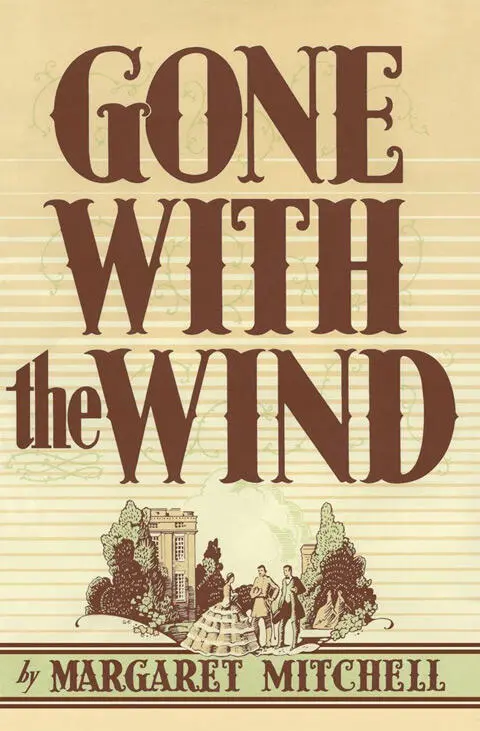
- Название:Gone with the Wind
- Автор:
- Жанр:
- Год:неизвестен
- ISBN:нет данных
- Рейтинг книги:4.17 / 5. Голосов: 6
-
Избранное:Добавить в избранное
- Отзывы:
-
Ваша оценка:
Gone with the Wind: краткое содержание, описание и аннотация
Предлагаем к чтению аннотацию, описание, краткое содержание или предисловие (зависит от того, что написал сам автор книги «Gone with the Wind»). Если вы не нашли необходимую информацию о книге — напишите в комментариях, мы постараемся отыскать её.
Gone with the Wind — читать онлайн бесплатно полную книгу (весь текст) целиком
Ниже представлен текст книги, разбитый по страницам. Система сохранения места последней прочитанной страницы, позволяет с удобством читать онлайн бесплатно книгу «Gone with the Wind», без необходимости каждый раз заново искать на чём Вы остановились. Поставьте закладку, и сможете в любой момент перейти на страницу, на которой закончили чтение.
Интервал:
Закладка:
Melanie who feared to venture onto her own front porch was appalled by such threats.
“Oh, you must not risk yourself! I should die if anything happened to you! Oh, please—”
“I will! I will! I will walk—”
Melanie looked at her and saw that this was not the hysteria of a woman still weak from childbirth. There was the same breakneck, headlong determination in Scarlett’s face that Melanie had often seen in Gerald O’Hara’s face when his mind was made up. She put her arms around Scarlett’s waist and held her tightly.
“It’s all my fault for not being brave like you and for keeping Ashley at home with me all this time when he should have been at the mill. Oh, dear! I’m such a ninny! Darling, I’ll tell Ashley I’m not a bit frightened and I’ll come over and stay with you and Aunt Pitty and he can go back to work and—”
Not even to herself would Scarlett admit that she did not think Ashley could cope with the situation alone and she shouted: “You’ll do nothing of the kind! What earthly good would Ashley do at work if he was worried about you every minute? Everybody is just so hateful! Even Uncle Peter refuses to go out with me! But I don’t care! I’ll go alone. I’ll walk every step of the way and pick up a crew of darkies somewhere—”
“Oh, no! You mustn’t do that! Something dreadful might happen to you. They say that Shantytown settlement on the Decatur road is just full of mean darkies and you’d have to pass right by it. Let me think—Darling, promise me you won’t do anything today and I’ll think of something. Promise me you’ll go home and lie down. You look right peaked. Promise me.”
Because she was too exhausted by her anger to do otherwise, Scarlett sulkily promised and went home, haughtily refusing any overtures of peace from her household.
That afternoon a strange figure stumped through Melanie’s hedge and across Pitty’s back yard. Obviously, he was one of those men whom Mammy and Dilcey referred to as “de riff-raff whut Miss Melly pick up off de streets an’ let sleep in her cellar.”
There were three rooms in the basement of Melanie’s house which formerly had been servants’ quarters and a wine room. Now Dilcey occupied one, and the other two were in constant use by a stream of miserable and ragged transients. No one but Melanie knew whence they came or where they were going and no one but she knew where she collected them. Perhaps the negroes were right and she did pick them up from the streets. But even as the great and the near great gravitated to her small parlor, so unfortunates found their way to her cellar where they were fed, bedded and sent on their way with packages of food. Usually the occupants of the rooms were former Confederate soldiers of the rougher, illiterate type, homeless men, men without families, beating their way about the country in hope of finding work.
Frequently, brown and withered country women with broods of towhaired silent children spent the night there, women widowed by the war, dispossessed of their farms, seeking relatives who were scattered and lost. Sometimes the neighborhood was scandalized by the presence of foreigners, speaking little or no English, who had been drawn South by glowing tales of fortunes easily made. Once a Republican had slept there. At least, Mammy insisted he was a Republican, saying she could smell a Republican, same as a horse could smell a rattlesnake; but no one believed Mammy’s story, for there must be some limit even to Melanie’s charity. At least everyone hoped so.
Yes, thought Scarlett, sitting on the side porch in the pale November sunshine with the baby on her lap, he is one of Melanie’s lame dogs. And he’s really lame, at that!
The man who was making his way across the back yard stumped, like Will Benteen, on a wooden leg. He was a tall, thin old man with a bald head, which shone pinkishly dirty, and a grizzled beard so long he could tuck it in his belt. He was over sixty, to judge by his hard, seamed face, but there was no sag of age to his body. He was lank and ungainly but, even with his wooden peg, he moved as swiftly as a snake.
He mounted the steps and came toward her and, even before he spoke, revealing in his tones a twang and a burring of “r’s” unusual in the lowlands, Scarlett knew that he was mountain born. For all his dirty, ragged clothes there was about him, as about most mountaineers, an air of fierce silent pride that permitted no liberties and tolerated no foolishness. His beard was stained with tobacco juice and a large wad in his jaw made his face look deformed. His nose was thin and craggy, his eyebrows bushy and twisted into witches’ locks and a lush growth of hair sprang from his ears, giving them the tufted look of a lynx’s ears. Beneath his brow was one hollow socket from which a scar ran down his cheek, carving a diagonal line through his beard. The other eye was small, pale and cold, an unwinking and remorseless eye. There was a heavy pistol openly in his trouser band and from the top of his tattered boot protruded the hilt of a bowie knife.
He returned Scarlett’s stare coldly and spat across the rail of the banister before he spoke. There was contempt in his one eye, not a personal contempt for her, but for her whole sex.
“Miz Wilkes sont me to work for you,” he said shortly. He spoke rustily, as one unaccustomed to speaking, the words coming slowly and almost with difficulty. “M’ name’s Archie.”
“I’m sorry but I have no work for you, Mr. Archie.”
“Archie’s m’fuss name.”
“I beg your pardon. What is your last name?”
He spat again. “I reckon that’s my bizness,” he said. “Archie’ll do.”
“I don’t care what your last name is! I have nothing for you to do.”
“I reckon you have. Miz Wilkes was upsot about yore wantin’ to run aroun’ like a fool by yoreself and she sont me over here to drive aroun’ with you.”
“Indeed?” cried Scarlett, indignant both at the man’s rudeness and Melly’s meddling.
His one eye met hers with an impersonal animosity. “Yes. A woman’s got no bizness botherin’ her men folks when they’re tryin’ to take keer of her. If you’re bound to gad about, I’ll drive you. I hates niggers—Yankees too.”
He shifted his wad of tobacco to the other cheek and, without waiting for an invitation, sat down on the top step. “I ain’t sayin’ I like drivin’ women aroun’, but Miz Wilkes been good to me, lettin’ me sleep in her cellar, and she sont me to drive you.”
“But—” began Scarlett helplessly and then she stopped and looked at him. After a moment she began to smile. She didn’t like the looks of this elderly desperado but his presence would simplify matters. With him beside her, she could go to town, drive to the mills, call on customers. No one could doubt her safety with him and his very appearance was enough to keep from giving rise to scandal.
“It’s a bargain,” she said. “That is, if my husband agrees.”
After a private conversation with Archie, Frank gave his reluctant approval and sent word to the livery stable to release the horse and buggy. He was hurt and disappointed that motherhood had not changed Scarlett as he had hoped it would but, if she was determined to go back to her damnable mills, then Archie was a godsend.
So began the relationship that at first startled Atlanta. Archie and Scarlett were a queerly assorted pair, the truculent dirty old man with his wooden peg sticking stiffly out over the dashboard and the pretty, neatly dressed young woman with forehead puckered in an abstracted frown. They could be seen at all hours and at all places in and near Atlanta, seldom speaking to each other, obviously disliking each other, but bound together by mutual need, he of money, she of protection. At least, said the ladies of the town, it’s better than riding around so brazenly with that Butler man. They wondered curiously where Rhett was these days, for he had abruptly left town three months before and no one, not even Scarlett, knew where he was.
Читать дальшеИнтервал:
Закладка:
Похожие книги на «Gone with the Wind»
Представляем Вашему вниманию похожие книги на «Gone with the Wind» списком для выбора. Мы отобрали схожую по названию и смыслу литературу в надежде предоставить читателям больше вариантов отыскать новые, интересные, ещё непрочитанные произведения.









Обсуждение, отзывы о книге «Gone with the Wind» и просто собственные мнения читателей. Оставьте ваши комментарии, напишите, что Вы думаете о произведении, его смысле или главных героях. Укажите что конкретно понравилось, а что нет, и почему Вы так считаете.