Margaret Mitchell - Gone with the Wind
Здесь есть возможность читать онлайн «Margaret Mitchell - Gone with the Wind» весь текст электронной книги совершенно бесплатно (целиком полную версию без сокращений). В некоторых случаях можно слушать аудио, скачать через торрент в формате fb2 и присутствует краткое содержание. Жанр: Классическая проза, на английском языке. Описание произведения, (предисловие) а так же отзывы посетителей доступны на портале библиотеки ЛибКат.
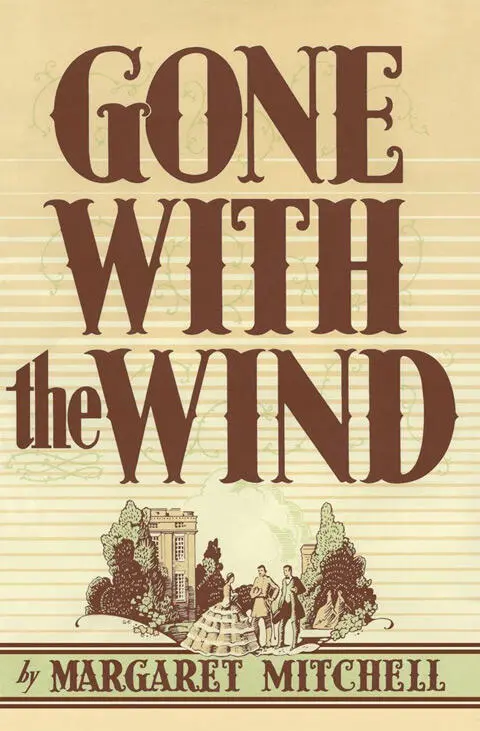
- Название:Gone with the Wind
- Автор:
- Жанр:
- Год:неизвестен
- ISBN:нет данных
- Рейтинг книги:4.17 / 5. Голосов: 6
-
Избранное:Добавить в избранное
- Отзывы:
-
Ваша оценка:
Gone with the Wind: краткое содержание, описание и аннотация
Предлагаем к чтению аннотацию, описание, краткое содержание или предисловие (зависит от того, что написал сам автор книги «Gone with the Wind»). Если вы не нашли необходимую информацию о книге — напишите в комментариях, мы постараемся отыскать её.
Gone with the Wind — читать онлайн бесплатно полную книгу (весь текст) целиком
Ниже представлен текст книги, разбитый по страницам. Система сохранения места последней прочитанной страницы, позволяет с удобством читать онлайн бесплатно книгу «Gone with the Wind», без необходимости каждый раз заново искать на чём Вы остановились. Поставьте закладку, и сможете в любой момент перейти на страницу, на которой закончили чтение.
Интервал:
Закладка:
Up Peachtree came a closed carriage and Scarlett went to the curb eagerly to see if she knew the occupant, for Aunt Pitty’s house was still several blocks away. She and Mammy leaned forward as the carriage came abreast and Scarlett, with a smile arranged, almost called out when a woman’s head appeared for a moment at the window—a too bright red head beneath a fine fur hat. Scarlett took a step back as mutual recognition leaped into both faces. It was Belle Watling and Scarlett had a glimpse of nostrils distended with dislike before she disappeared again. Strange that Belle’s should be the first familiar face she saw.
“Who dat?” questioned Mammy suspiciously. “She knowed you but she din’ bow. Ah ain’ never seed ha’r dat color in mah life. Not even in de Tarleton fambly. It look—well, it look dyed ter me!”
“It is,” said Scarlett shortly, walking faster.
“Does you know a dyed-ha’rd woman? Ah ast you who she is.”
“She’s the town bad woman,” said Scarlett briefly, “and I give you my word I don’t know her, so shut up.”
“Gawdlmighty!” breathed Mammy, her jaw dropping as she looked after the carriage with passionate curiosity. She had not seen a professional bad woman since she left Savannah with Ellen more than twenty years before and she wished ardently that she had observed Belle more closely.
“She sho dressed up fine an’ got a fine cah’ige an’ coachman,” she muttered. “Ah doan know whut de Lawd thinkin’ ’bout lettin’ de bad women flurrish lak dat w’en us good folks is hongry an’ mos’ barefoot.”
“The Lord stopped thinking about us years ago,” said Scarlett savagely. “And don’t go telling me Mother is turning in her grave to hear me say it, either.”
She wanted to feel superior and virtuous about Belle but she could not. If her plans went well, she might be on the same footing with Belle and supported by the same man. While she did not regret her decision one whit, the matter in its true light discomfited her. “I won’t think of it now,” she told herself and hurried her steps.
They passed the lot where the Meade house had stood and there remained of it only a forlorn pair of stone steps and a walk, leading up to nothing. Where the Whitings’ home had been was bare ground. Even the foundation stones and the brick chimneys were gone and there were wagon tracks where they had been carted away. The brick house of the Elsings still stood, with a new roof and a new second floor. The Bonnell home, awkwardly patched and roofed with rude boards instead of shingles, managed to look livable for all its battered appearance. But in neither house was there a face at the window or a figure on the porch, and Scarlett was glad. She did not want to talk to anyone now.
Then the new slate roof of Aunt Pitty’s house came in view with its red-brick walls, and Scarlett’s heart throbbed. How good of the Lord not to level it beyond repair! Coming out of the front yard was Uncle Peter, a market basket on his arm, and when he saw Scarlett and Mammy trudging along, a wide, incredulous smile split his black face.
I could kiss the old black fool, I’m so glad to see him, thought Scarlett, joyfully and she called: “Run get Auntie’s swoon bottle, Peter! It’s really me!”
That night the inevitable hominy and dried peas were on Aunt Pitty’s supper table and, as Scarlett ate them, she made a vow that these two dishes would never appear on her table when she had money again. And, no matter what price she had to pay, she was going to have money again, more than just enough to pay the taxes on Tara. Somehow, some day she was going to have plenty of money if she had to commit murder to get it.
In the yellow lamplight of the dining room, she asked Pitty about her finances, hoping against hope that Charles’ family might be able to lend her the money she needed. The questions were none too subtle but Pitty, in her pleasure at having a member of the family to talk to, did not even notice the bald way the questions were put. She plunged with tears into the details of her misfortunes. She just didn’t know where her farms and town property and money had gone but everything had slipped away. At least, that was what Brother Henry told her. He hadn’t been able to pay the taxes on her estate. Everything except the house she was living in was gone and Pitty did not stop to think that the house had never been hers but was the joint property of Melanie and Scarlett. Brother Henry could just barely pay taxes on this house. He gave her a little something every month to live on and, though it was very humiliating to take money from him, she had to do it.
“Brother Henry says he doesn’t know how he’ll make ends meet with the load he’s carrying and the taxes so high but, of course, he’s probably lying and has loads of money and just won’t give me much.”
Scarlett knew Uncle Henry wasn’t lying. The few letters she had had from him in connection with Charles’ property showed that. The old lawyer was battling valiantly to save the house and the one piece of downtown property where the warehouse had been, so Wade and Scarlett would have something left from the wreckage. Scarlett knew he was carrying these taxes for her at a great sacrifice.
“Of course, he hasn’t any money,” thought Scarlett grimly. “Well, check him and Aunt Pitty off my list. There’s nobody left but Rhett. I’ll have to do it. I must do it. But I mustn’t think about it now… I must get her to talking about Rhett so I can casually suggest to her to invite him to call tomorrow.”
She smiled and squeezed the plump palms of Aunt Pitty between her own.
“Darling Auntie,” she said, “don’t let’s talk about distressing things like money any more. Let’s forget about them and talk of pleasanter things. You must tell me all the news about our old friends. How is Mrs. Merriwether and Maybelle? I heard that Maybelle’s little Creole came home safely. How are the Elsings and Dr. and Mrs. Meade?”
Pittypat brightened at the change of subject and her baby face stopped quivering with tears. She gave detailed reports about old neighbors, what they were doing and wearing and eating and thinking. She told with accents of horror how, before Rene Picard came home from the war, Mrs. Merriwether and Maybelle had made ends meet by baking pies and selling them to the Yankee soldiers. Imagine that! Sometimes there were two dozen Yankees standing in the back yard of the Merriwether home, waiting for the baking to be finished. Now that Rene was home, he drove an old wagon to the Yankee camp every day and sold cakes and pies and beaten biscuits to the soldiers. Mrs. Merriwether said that when she made a little more money she was going to open a bake shop downtown. Pitty did not wish to criticize but after all—As for herself, said Pitty, she would rather starve than have such commerce with Yankees. She made a point of giving a disdainful look to every soldier she met, and crossed to the other side of the street in as insulting a manner as possible, though, she said, this was quite inconvenient in wet weather. Scarlett gathered that no sacrifice, even though it be muddy shoes, was too great to show loyalty to the Confederacy in so far as Miss Pittypat was concerned.
Mrs. Meade and the doctor had lost their home when the Yankees fired the town and they had neither the money nor the heart to rebuild, now that Phil and Darcy were dead. Mrs. Meade said she never wanted a home again, for what was a home without children and grandchildren in it? They were very lonely and had gone to live with the Elsings who had rebuilt the damaged part of their home. Mr. and Mrs. Whiting had a room there, too, and Mrs. Bonnell was talking of moving in, if she was fortunate enough to rent her house to a Yankee officer and his family.
Читать дальшеИнтервал:
Закладка:
Похожие книги на «Gone with the Wind»
Представляем Вашему вниманию похожие книги на «Gone with the Wind» списком для выбора. Мы отобрали схожую по названию и смыслу литературу в надежде предоставить читателям больше вариантов отыскать новые, интересные, ещё непрочитанные произведения.








Обсуждение, отзывы о книге «Gone with the Wind» и просто собственные мнения читателей. Оставьте ваши комментарии, напишите, что Вы думаете о произведении, его смысле или главных героях. Укажите что конкретно понравилось, а что нет, и почему Вы так считаете.