Margaret Mitchell - Gone with the Wind
Здесь есть возможность читать онлайн «Margaret Mitchell - Gone with the Wind» весь текст электронной книги совершенно бесплатно (целиком полную версию без сокращений). В некоторых случаях можно слушать аудио, скачать через торрент в формате fb2 и присутствует краткое содержание. Жанр: Классическая проза, на английском языке. Описание произведения, (предисловие) а так же отзывы посетителей доступны на портале библиотеки ЛибКат.
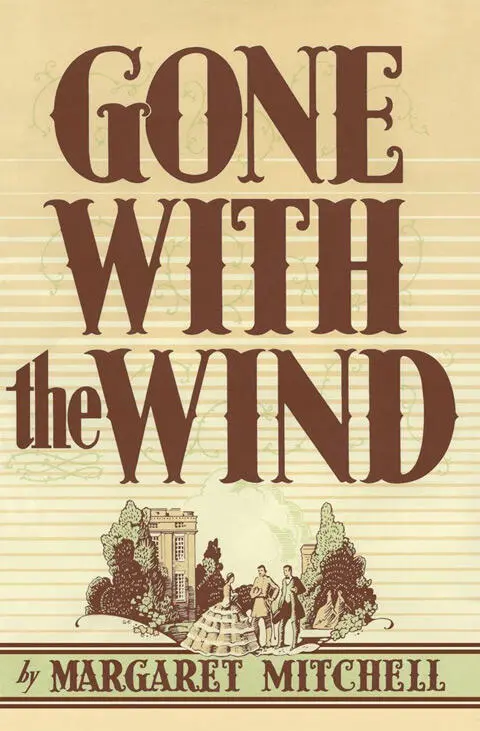
- Название:Gone with the Wind
- Автор:
- Жанр:
- Год:неизвестен
- ISBN:нет данных
- Рейтинг книги:4.17 / 5. Голосов: 6
-
Избранное:Добавить в избранное
- Отзывы:
-
Ваша оценка:
Gone with the Wind: краткое содержание, описание и аннотация
Предлагаем к чтению аннотацию, описание, краткое содержание или предисловие (зависит от того, что написал сам автор книги «Gone with the Wind»). Если вы не нашли необходимую информацию о книге — напишите в комментариях, мы постараемся отыскать её.
Gone with the Wind — читать онлайн бесплатно полную книгу (весь текст) целиком
Ниже представлен текст книги, разбитый по страницам. Система сохранения места последней прочитанной страницы, позволяет с удобством читать онлайн бесплатно книгу «Gone with the Wind», без необходимости каждый раз заново искать на чём Вы остановились. Поставьте закладку, и сможете в любой момент перейти на страницу, на которой закончили чтение.
Интервал:
Закладка:
“It’s only a cow,” said Scarlett, her voice rough with fright. “Don’t be a fool, Prissy. You’ve mashed the baby and frightened Miss Melly and Wade.”
“It’s a ghos’,” moaned Prissy, writhing face down on the wagon boards.
Turning deliberately, Scarlett raised the tree limb she had been using as a whip and brought it down across Prissy’s back. She was too exhausted and weak from fright to tolerate weakness in anyone else.
“Sit up, you fool,” she said, “before I wear this out on you.”
Yelping, Prissy raised her head and peering over the side of the wagon saw it was, indeed, a cow, a red and white animal which stood looking at them appealingly with large frightened eyes. Opening its mouth, it lowed again as if in pain.
“Is it hurt? That doesn’t sound like an ordinary moo.”
“Soun’ ter me lak her bag full an’ she need milkin’ bad,” said Prissy, regaining some measure of control. “Spec it one of Mist’ MacIntosh’s dat de niggers driv in de woods an’ de Yankees din’ git.”
“We’ll take it with us,” Scarlett decided swiftly. “Then we can have some milk for the baby.”
“How all we gwine tek a cow wid us, Miss Scarlett? We kain tek no cow wid us. Cow ain’ no good nohow effen she ain’ been milked lately. Dey bags swells up and busts. Dat’s why she hollerin’.”
“Since you know so much about it, take off your petticoat and tear it up and tie her to the back of the wagon.”
“Miss Scarlett, you knows Ah ain’ had no petticoat fer a month an’ did Ah have one, Ah wouldn’ put it on her fer nuthin’. Ah nebber had no truck wid cows. Ah’s sceered of cows.”
Scarlett laid down the reins and pulled up her skirt. The lacetrimmed petticoat beneath was the last garment she possessed that was pretty—and whole. She untied the waist tape and slipped it down over her feet, crushing the soft linen folds between her hands. Rhett had brought her that linen and lace from Nassau on the last boat he slipped through the blockade and she had worked a week to make the garment. Resolutely she took it by the hem and jerked, put it in her mouth and gnawed, until finally the material gave with a rip and tore the length. She gnawed furiously, tore with both hands and the petticoat lay in strips in her hands. She knotted the ends with fingers that bled from blisters and shook from fatigue.
“Slip this over her horns,” she directed. But Prissy balked.
“Ah’s sceered of cows, Miss Scarlett. Ah ain’ nebber had nuthin’ ter do wid cows. Ah ain’ no yard nigger. Ah’s a house nigger.”
“You’re a fool nigger, and the worst day’s work Pa ever did was to buy you,” said Scarlett slowly, too tired for anger. “And if I ever get the use of my arm again, I’ll wear this whip out on you.”
There, she thought, I’ve said “nigger” and Mother wouldn’t like that at all.
Prissy rolled her eyes wildly, peeping first at the set face of her mistress and then at the cow which bawled plaintively. Scarlett seemed the less dangerous of the two, so Prissy clutched at the sides of the wagon and remained where she was.
Stiffly, Scarlett climbed down from the seat, each movement of agony of aching muscles. Prissy was not the only one who was “sceered” of cows. Scarlett had always feared them, even the mildest cow seemed sinister to her, but this was no time to truckle to small fears when great ones crowded so thick upon her. Fortunately the cow was gentle. In its pain it had sought human companionship and help and it made no threatening gesture as she looped one end of the torn petticoat about its horns. She tied the other end to the back of the wagon, as securely as her awkward fingers would permit. Then, as she started back toward the driver’s seat, a vast weariness assailed her and she swayed dizzily. She clutched the side of the wagon to keep from falling.
Melanie opened her eyes and, seeing Scarlett standing beside her, whispered: “Dear—are we home?”
Home! Hot tears came to Scarlett’s eyes at the word. Home. Melanie did not know there was no home and that they were alone in a mad and desolate world.
“Not yet,” she said, as gently as the constriction of her throat would permit, “but we will be, soon. I’ve just found a cow and soon we’ll have some milk for you and the baby.”
“Poor baby,” whispered Melanie, her hand creeping feebly toward the child and falling short.
Climbing back into the wagon required all the strength Scarlett could muster, but at last it was done and she picked up the lines. The horse stood with head drooping dejectedly and refused to start. Scarlett laid on the whip mercilessly. She hoped God would forgive her for hurting a tired animal. If He didn’t she was sorry. After all, Tara lay just ahead, and after the next quarter of a mile, the horse could drop in the shafts if he liked.
Finally he started slowly, the wagon creaking and the cow lowing mournfully at every step. The pained animal’s voice rasped on Scarlett’s nerves until she was tempted to stop and untie the beast. What good would the cow do them anyway if there should be no one at Tara? She couldn’t milk her and, even if she could, the animal would probably kick anyone who touched her sore udder. But she had the cow and she might as well keep her. There was little else she had in this world now.
Scarlett’s eyes grew misty when, at last, they reached the bottom of a gentle incline, for just over the rise lay Tara! Then her heart sank. The decrepit animal would never pull the hill. The slope had always seemed so slight, so gradual, in days when she galloped up it on her fleet-footed mare. It did not seem possible it could have grown so steep since she saw it last. The horse would never make it with the heavy load.
Wearily she dismounted and took the animal by the bridle.
“Get out, Prissy,” she commanded, “and take Wade. Either carry him or make him walk. Lay the baby by Miss Melanie.”
Wade broke into sobs and whimperings from which Scarlett could only distinguish: “Dark—dark—Wade fwightened!”
“Miss Scarlett, Ah kain walk. Mah feets done blistered an’ dey’s thoo mah shoes, an’ Wade an’ me doan weigh so much an’—”
“Get out! Get out before I pull you out! And if I do, I’m going to leave you right here, in the dark by yourself. Quick, now!”
Prissy moaned, peering at the dark trees that closed about them on both sides of the road—trees which might reach out and clutch her if she left the shelter of the wagon. But she laid the baby beside Melanie, scrambled to the ground and, reaching up, lifted Wade out. The little boy sobbed, shrinking close to his nurse.
“Make him hush. I can’t stand it,” said Scarlett, taking the horse by the bridle and pulling him to a reluctant start. “Be a little man, Wade, and stop crying or I will come over there and slap you.”
Why had God invented children, she thought savagely as she turned her ankle cruelly on the dark road—useless, crying nuisances they were, always demanding care, always in the way. In her exhaustion, there was no room for compassion for the frightened child, trotting by Prissy’s side, dragging at her hand and sniffling—only a weariness that she had borne him, only a tired wonder that she had ever married Charles Hamilton.
“Miss Scarlett,” whispered Prissy, clutching her mistress’ arm, “doan le’s go ter Tara. Dey’s not dar. Dey’s all done gone. Maybe dey daid—Maw an’ all’m.”
The echo of her own thoughts infuriated her and Scarlett shook off the pinching fingers.
“Then give me Wade’s hand. You can sit right down here and stay.”
“No’m! No’m!”
“Then hush!”
How slowly the horse moved! The moisture from his slobbering mouth dripped down upon her hand. Through her mind ran a few words of the song she had once sung with Rhett—she could not recall the rest:
Читать дальшеИнтервал:
Закладка:
Похожие книги на «Gone with the Wind»
Представляем Вашему вниманию похожие книги на «Gone with the Wind» списком для выбора. Мы отобрали схожую по названию и смыслу литературу в надежде предоставить читателям больше вариантов отыскать новые, интересные, ещё непрочитанные произведения.







Обсуждение, отзывы о книге «Gone with the Wind» и просто собственные мнения читателей. Оставьте ваши комментарии, напишите, что Вы думаете о произведении, его смысле или главных героях. Укажите что конкретно понравилось, а что нет, и почему Вы так считаете.