Mark Twain - A Tramp Abroad
Здесь есть возможность читать онлайн «Mark Twain - A Tramp Abroad» весь текст электронной книги совершенно бесплатно (целиком полную версию без сокращений). В некоторых случаях можно слушать аудио, скачать через торрент в формате fb2 и присутствует краткое содержание. Жанр: Классическая проза, Юмористическая проза, на английском языке. Описание произведения, (предисловие) а так же отзывы посетителей доступны на портале библиотеки ЛибКат.
- Название:A Tramp Abroad
- Автор:
- Жанр:
- Год:неизвестен
- ISBN:нет данных
- Рейтинг книги:5 / 5. Голосов: 1
-
Избранное:Добавить в избранное
- Отзывы:
-
Ваша оценка:
A Tramp Abroad: краткое содержание, описание и аннотация
Предлагаем к чтению аннотацию, описание, краткое содержание или предисловие (зависит от того, что написал сам автор книги «A Tramp Abroad»). Если вы не нашли необходимую информацию о книге — напишите в комментариях, мы постараемся отыскать её.
A Tramp Abroad — читать онлайн бесплатно полную книгу (весь текст) целиком
Ниже представлен текст книги, разбитый по страницам. Система сохранения места последней прочитанной страницы, позволяет с удобством читать онлайн бесплатно книгу «A Tramp Abroad», без необходимости каждый раз заново искать на чём Вы остановились. Поставьте закладку, и сможете в любой момент перейти на страницу, на которой закончили чтение.
Интервал:
Закладка:
It is an inane town, filled with sham, and petty fraud, and snobbery, but the baths are good. I spoke with many people, and they were all agreed in that. I had the twinges of rheumatism unceasingly during three years, but the last one departed after a fortnight's bathing there, and I have never had one since. I fully believe I left my rheumatism in Baden-Baden. Baden-Baden is welcome to it. It was little, but it was all I had to give. I would have preferred to leave something that was catching, but it was not in my power.
There are several hot springs there, and during two thousand years they have poured forth a never-diminishing abundance of the healing water. This water is conducted in pipe to the numerous bath-houses, and is reduced to an endurable temperature by the addition of cold water. The new Friederichsbad is a very large and beautiful building, and in it one may have any sort of bath that has ever been invented, and with all the additions of herbs and drugs that his ailment may need or that the physician of the establishment may consider a useful thing to put into the water. You go there, enter the great door, get a bow graduated to your style and clothes from the gorgeous portier, and a bath ticket and an insult from the frowsy woman for a quarter; she strikes a bell and a serving-man conducts you down a long hall and shuts you into a commodious room which has a washstand, a mirror, a bootjack, and a sofa in it, and there you undress at your leisure.
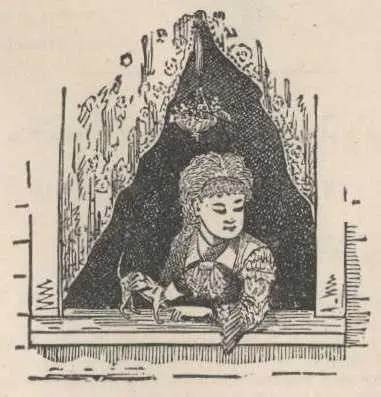
The room is divided by a great curtain; you draw this curtain aside, and find a large white marble bathtub, with its rim sunk to the level of the floor, and with three white marble steps leading down to it. This tub is full of water which is as clear as crystal, and is tempered to 28 degrees Re'aumur (about 95 degrees Fahrenheit). Sunk into the floor, by the tub, is a covered copper box which contains some warm towels and a sheet. You look fully as white as an angel when you are stretched out in that limpid bath. You remain in it ten minutes, the first time, and afterward increase the duration from day to day, till you reach twenty-five or thirty minutes. There you stop. The appointments of the place are so luxurious, the benefit so marked, the price so moderate, and the insults so sure, that you very soon find yourself adoring the Friederichsbad and infesting it.
We had a plain, simple, unpretending, good hotel, in Baden-Baden—the Hôtel de France—and alongside my room I had a giggling, cackling, chattering family who always went to bed just two hours after me and always got up two hours ahead of me. But this is common in German hotels; the people generally go to bed long after eleven and get up long before eight. The partitions convey sound like a drum-head, and everybody knows it; but no matter, a German family who are all kindness and consideration in the daytime make apparently no effort to moderate their noises for your benefit at night. They will sing, laugh, and talk loudly, and bang furniture around in a most pitiless way. If you knock on your wall appealingly, they will quiet down and discuss the matter softly among themselves for a moment—then, like the mice, they fall to persecuting you again, and as vigorously as before. They keep cruelly late and early hours, for such noisy folk.
Of course, when one begins to find fault with foreign people's ways, he is very likely to get a reminder to look nearer home, before he gets far with it. I open my note-book to see if I can find some more information of a valuable nature about Baden-Baden, and the first thing I fall upon is this:
"BADEN-BADEN (no date). Lot of vociferous Americans at breakfast this morning. Talking AT everybody, while pretending to talk among themselves. On their first travels, manifestly. Showing off. The usual signs—airy, easy-going references to grand distances and foreign places. 'Well GOOD-by, old fellow—if I don't run across you in Italy, you hunt me up in London before you sail.'"
The next item which I find in my note-book is this one:
"The fact that a band of 6,000 Indians are now murdering our frontiersmen at their impudent leisure, and that we are only able to send 1,200 soldiers against them, is utilized here to discourage emigration to America. The common people think the Indians are in New Jersey."
This is a new and peculiar argument against keeping our army down to a ridiculous figure in the matter of numbers. It is rather a striking one, too. I have not distorted the truth in saying that the facts in the above item, about the army and the Indians, are made use of to discourage emigration to America. That the common people should be rather foggy in their geography, and foggy as to the location of the Indians, is a matter for amusement, maybe, but not of surprise.
There is an interesting old cemetery in Baden-Baden, and we spent several pleasant hours in wandering through it and spelling out the inscriptions on the aged tombstones. Apparently after a man has laid there a century or two, and has had a good many people buried on top of him, it is considered that his tombstone is not needed by him any longer. I judge so from the fact that hundreds of old gravestones have been removed from the graves and placed against the inner walls of the cemetery. What artists they had in the old times! They chiseled angels and cherubs and devils and skeletons on the tombstones in the most lavish and generous way—as to supply—but curiously grotesque and outlandish as to form. It is not always easy to tell which of the figures belong among the blest and which of them among the opposite party. But there was an inscription, in French, on one of those old stones, which was quaint and pretty, and was plainly not the work of any other than a poet. It was to this effect:
Here Reposes in God, Caroline de Clery, a Religieuse of St. Denis aged 83 years—and blind. The light was restored to her in Baden the 5th of January, 1839
We made several excursions on foot to the neighboring villages, over winding and beautiful roads and through enchanting woodland scenery. The woods and roads were similar to those at Heidelberg, but not so bewitching. I suppose that roads and woods which are up to the Heidelberg mark are rare in the world.
Once we wandered clear away to La Favorita Palace, which is several miles from Baden-Baden. The grounds about the palace were fine; the palace was a curiosity. It was built by a Margravine in 1725, and remains as she left it at her death. We wandered through a great many of its rooms, and they all had striking peculiarities of decoration. For instance, the walls of one room were pretty completely covered with small pictures of the Margravine in all conceivable varieties of fanciful costumes, some of them male.
The walls of another room were covered with grotesquely and elaborately figured hand-wrought tapestry. The musty ancient beds remained in the chambers, and their quilts and curtains and canopies were decorated with curious handwork, and the walls and ceilings frescoed with historical and mythological scenes in glaring colors. There was enough crazy and rotten rubbish in the building to make a true brick-a-bracker green with envy. A painting in the dining-hall verged upon the indelicate—but then the Margravine was herself a trifle indelicate.
It is in every way a wildly and picturesquely decorated house, and brimful of interest as a reflection of the character and tastes of that rude bygone time.
In the grounds, a few rods from the palace, stands the Margravine's chapel, just as she left it—a coarse wooden structure, wholly barren of ornament. It is said that the Margravine would give herself up to debauchery and exceedingly fast living for several months at a time, and then retire to this miserable wooden den and spend a few months in repenting and getting ready for another good time. She was a devoted Catholic, and was perhaps quite a model sort of a Christian as Christians went then, in high life.
Читать дальшеИнтервал:
Закладка:
Похожие книги на «A Tramp Abroad»
Представляем Вашему вниманию похожие книги на «A Tramp Abroad» списком для выбора. Мы отобрали схожую по названию и смыслу литературу в надежде предоставить читателям больше вариантов отыскать новые, интересные, ещё непрочитанные произведения.











Обсуждение, отзывы о книге «A Tramp Abroad» и просто собственные мнения читателей. Оставьте ваши комментарии, напишите, что Вы думаете о произведении, его смысле или главных героях. Укажите что конкретно понравилось, а что нет, и почему Вы так считаете.