John Steinbeck - Once there was a war
Здесь есть возможность читать онлайн «John Steinbeck - Once there was a war» весь текст электронной книги совершенно бесплатно (целиком полную версию без сокращений). В некоторых случаях можно слушать аудио, скачать через торрент в формате fb2 и присутствует краткое содержание. Город: New York, Год выпуска: 1960, Издательство: Bantam Books, Жанр: Классическая проза, на английском языке. Описание произведения, (предисловие) а так же отзывы посетителей доступны на портале библиотеки ЛибКат.
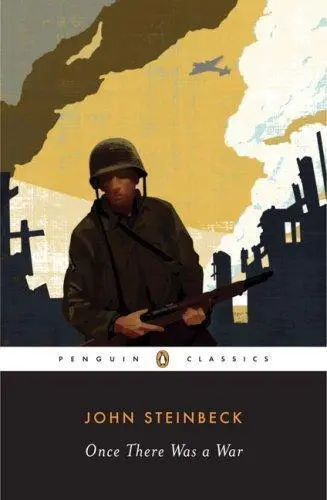
- Название:Once there was a war
- Автор:
- Издательство:Bantam Books
- Жанр:
- Год:1960
- Город:New York
- ISBN:нет данных
- Рейтинг книги:3 / 5. Голосов: 1
-
Избранное:Добавить в избранное
- Отзывы:
-
Ваша оценка:
Once there was a war: краткое содержание, описание и аннотация
Предлагаем к чтению аннотацию, описание, краткое содержание или предисловие (зависит от того, что написал сам автор книги «Once there was a war»). Если вы не нашли необходимую информацию о книге — напишите в комментариях, мы постараемся отыскать её.
Once there was a war — читать онлайн бесплатно полную книгу (весь текст) целиком
Ниже представлен текст книги, разбитый по страницам. Система сохранения места последней прочитанной страницы, позволяет с удобством читать онлайн бесплатно книгу «Once there was a war», без необходимости каждый раз заново искать на чём Вы остановились. Поставьте закладку, и сможете в любой момент перейти на страницу, на которой закончили чтение.
Интервал:
Закладка:
While Veronica Lake, long blond hair over one eye, sat in pajamas on a man’s bed and he worried for his good and respectable name and the children crowed with delight — ten German fighter-bombers whirled in over the coast. The spotters picked them up. The Spitfires took the air. The anti-aircraft guns fired and two of the raiders were shot down. A third crashed against a little hill. Then a crazy, ragged chase started in the gray cloud. Spitfires ranging and searching in the cloud. The raiders separated and lunged on toward London, and on the ground the sirens howled and the tremendous system of alarms and defenses went into action.
Only one of the raiders got through, twisting and dodging through the defenses. He came racing down out of the cloud and right under him was the theater. He was very low when he released his bombs. The top of the theater leaped into the air and then settled back into a rubble. The screen went blank. The raider banked his plane, whipped around, came back, and poured his guns into the wreck. Then he jerked his ship into the gray clouds and ran for the coast. And he left behind him the screaming of children in pain and fear.
The communities are organized for things like this. In a matter of minutes the rescue squads were at work; the firemen were on the ground. The squads are well trained. They forced themselves into the torn and shredded building. The broken children were carried out and rushed to the hospital, crushed and shot and destroyed. The dead ones were set aside for burial, but those who still breathed and kicked and whimpered went to the waiting doctors.
All night long the operations went on. Probing for bullets, hands and arms and legs cut off and put aside. Eyes removed. The anesthetists worked delicately against pain, dripping unconsciousness onto the masks. It went on through the night, the procession of the maimed to the hospital. The doctors worked carefully, speedily. Quick judgments — this one can’t live — kept consciousness away. This one has a chance if both legs are sliced off. Judgments and quick work.
From the depots the blood plasma was rushed In and the strength from other people’s veins dripped into the arteries of the children.
It was nine in the morning when the operating was finished. At the theater the tired squads were still finding a few bodies. And in the hospital beds — great wads of bandage and wide, staring, unbelieving eyes and utter weariness — the little targets, the seven-year-old military objectives.
Workmen were digging a great, long, common grave for the dead. Veronica Lake had flared up with the quick flash of burning film and only the reels she was wound on were left. And in the houses in the morning people were just beginning to be aware enough to cry. It was very quiet in the streets.
At a bar a tired doctor got a drink before he went to bed. His eyes were ringed with red sorrow and his hand shook as he lifted the whiskey to his lips.
DIRECTED UNDERSTANDING
LONDON, July 19, 1943 —
International amity, good fellowship, and mutual understanding between the British and Americans often reaches a pitch where war between the two seems very close. This is usually directed understanding, and it gives rise to some very silly situations.
Directed understanding and tolerance ordinarily begin with generalizations. Our troops approaching England are told in pamphlets what the British are like, where they are tender and where hard, what words, innocent at home, are harsh and ugly on the British ear. This has much the same effect as telling a friend, “You must meet Jones — wonderful fellow. You two will get along.” With a start like that, Jones has got two strikes on him before you ever meet him. He has to live down being a charming fellow before you can tolerate him. In this case it is even worse, because the British are told that they will like us when they just get to know us. The result is that the two come together like strange dogs, each one looking for trouble. It takes a long time to live down this kind of understanding.
The second phase of getting along is carried on in innumerable attempts to describe each other. The British are so and so. The Americans are so and so. The British are just like other people only more so. The Americans are boasters who love money. This love of money is, of course, unique with Americans. Every other people detests money. The Americans are fine, sturdy people. The British are fine, sturdy people. This is obviously a lie. There are good ones and stinkers on both sides. Setting them up doesn’t do any good. Just about the time you get a liking and a respect for a number of Englishmen, someone comes along and tells you about the English and you have to start from scratch again. This same thing, undoubtedly, happens to the English too.
The third little pitfall concerns the qualities of the fighting men. A big, rangy old mountain boy comes rolling down the street with his knuckles just barely clearing the pavement, and right behind is a Guardsman, shoulders back, chin up, nine buttons glowing like mad. Immediately the comparison is made. One is a fine soldier and the other is a lout. The fact of the matter is that they are both covering ground at the same rate, and each one could probably cover the same ground with a full pack. And then, having learned about soldierly qualities, you see a little twist-faced, wide-shouldered Tommy who walks sideways like a crab, and you realize that he’s as good a fighting man as the world had produced, but on his record, not on his soldierly bearing.
The whole trouble seems to lie in generalities. Once you have made a generality you are stuck with it. You have to defend it. Let’s say the British and/or American soldier is a superb soldier. The British and/or American officer is a gentleman. You start in with a lie. There are good ones and bad ones. You find out for yourself which is which if you can be let alone. And when you see an American second lieutenant misbehaving in a London club, it is expected that you will deny it. Or if you meet an ill-mannered, surly popinjay of a British officer, the British are expected to deny that he exists. But he does exist, and they hate him as much as we do. The trouble with generalities, particularly patriotic ones, is that they force people to defend things they don’t normally like at all.
It must be a great shock to an Englishman who is convinced that Americans are boasters when he meets a modest one. His sense of rightness is outraged. Preconceived generalities are bad enough without trying consciously to start new ones. Recently a Georgia boy with a face like a catfish and the fine soldierly bearing of a coyote complained bitterly that he had been here four days and hadn’t seen a duke. He had got to believing that there weren’t any dukes and he was shocked beyond words.
Somewhere there is truth or an approximation of it. If there is an engagement and the British say, “We got knocked about a bit,” and the Americans say, “They shot the hell out of us,” neither statement is true. Understatement is universally admired here and overstatement is detested, whereas neither one is near the truth and neither one had anything to do with the fighting quality of the soldier involved. We know that you can’t say the Americans are something or other when those Americans are crackers and long-legged men from the Panhandle and the neat business men in bifocals and shoddy jewelry salesmen and high riggers from the woods in Oregon. And it is just as silly to try to describe the British when they are Lancashiremen and Welshmen and cockneys and Liverpool longshoremen. We get along very well as individuals, but just the moment we become the Americans and they become the British trouble is not far behind.
BIG TRAIN
Интервал:
Закладка:
Похожие книги на «Once there was a war»
Представляем Вашему вниманию похожие книги на «Once there was a war» списком для выбора. Мы отобрали схожую по названию и смыслу литературу в надежде предоставить читателям больше вариантов отыскать новые, интересные, ещё непрочитанные произведения.






Обсуждение, отзывы о книге «Once there was a war» и просто собственные мнения читателей. Оставьте ваши комментарии, напишите, что Вы думаете о произведении, его смысле или главных героях. Укажите что конкретно понравилось, а что нет, и почему Вы так считаете.