Herbert Wells - Mr. Britling Sees It Through
Здесь есть возможность читать онлайн «Herbert Wells - Mr. Britling Sees It Through» весь текст электронной книги совершенно бесплатно (целиком полную версию без сокращений). В некоторых случаях можно слушать аудио, скачать через торрент в формате fb2 и присутствует краткое содержание. Жанр: Классическая проза, на английском языке. Описание произведения, (предисловие) а так же отзывы посетителей доступны на портале библиотеки ЛибКат.
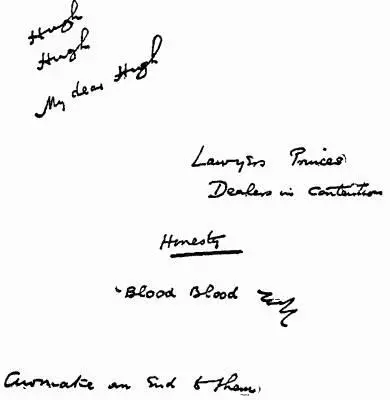
- Название:Mr. Britling Sees It Through
- Автор:
- Жанр:
- Год:неизвестен
- ISBN:нет данных
- Рейтинг книги:4 / 5. Голосов: 1
-
Избранное:Добавить в избранное
- Отзывы:
-
Ваша оценка:
Mr. Britling Sees It Through: краткое содержание, описание и аннотация
Предлагаем к чтению аннотацию, описание, краткое содержание или предисловие (зависит от того, что написал сам автор книги «Mr. Britling Sees It Through»). Если вы не нашли необходимую информацию о книге — напишите в комментариях, мы постараемся отыскать её.
Mr. Britling Sees It Through — читать онлайн бесплатно полную книгу (весь текст) целиком
Ниже представлен текст книги, разбитый по страницам. Система сохранения места последней прочитанной страницы, позволяет с удобством читать онлайн бесплатно книгу «Mr. Britling Sees It Through», без необходимости каждый раз заново искать на чём Вы остановились. Поставьте закладку, и сможете в любой момент перейти на страницу, на которой закончили чтение.
Интервал:
Закладка:
But this wasn't what he had always been. He thought of the strenuous intentions of his youth, before he had got into this turmoil of amorous experiences, while he was still out there with the clean star of youth. As Hugh was....
In those days he had had no amiable doctrine of compromise. He had truckled to no "domesticated God," but talked of the "pitiless truth"; he had tolerated no easygoing pseudo-aristocratic social system, but dreamt of such a democracy "mewing its mighty youth" as the world had never seen. He had thought that his brains were to do their share in building up this great national imago , winged, divine, out of the clumsy, crawling, snobbish, comfort-loving caterpillar of Victorian England. With such dreams his life had started, and the light of them, perhaps, had helped him to his rapid success. And then his wife had died, and he had married again and become somehow more interested in his income, and then the rather expensive first of the eight experiences had drained off so much of his imaginative energy, and the second had drained off so much, and there had been quarrels and feuds, and the way had been lost, and the days had passed. He hadn't failed. Indeed he counted as a success among his generation. He alone, in the night watches, could gauge the quality of that success. He was widely known, reputably known; he prospered. Much had come, oh! by a mysterious luck, but everything was doomed by his invincible defects. Beneath that hollow, enviable show there ached waste. Waste, waste, waste—his heart, his imagination, his wife, his son, his country—his automobile....
Then there flashed into his mind a last straw of disagreeable realisation.
He hadn't as yet insured his automobile! He had meant to do so. The papers were on his writing-desk.
§ 7
On these black nights, when the personal Mr. Britling would lie awake thinking how unsatisfactorily Mr. Britling was going on, and when the impersonal Mr. Britling would be thinking how unsatisfactorily his universe was going on, the whole mental process had a likeness to some complex piece of orchestral music wherein the organ deplored the melancholy destinies of the race while the piccolo lamented the secret trouble of Mrs. Harrowdean; the big drum thundered at the Irish politicians, and all the violins bewailed the intellectual laxity of the university system. Meanwhile the trumpets prophesied wars and disasters, the cymbals ever and again inserted a clashing jar about the fatal delay in the automobile insurance, while the triangle broke into a plangent solo on the topic of a certain rotten gate-post he always forgot in the daytime, and how in consequence the cows from the glebe farm got into the garden and ate Mrs. Britling's carnations.
Time after time he had promised to see to that gatepost....
The organ motif battled its way to complete predominance. The lesser themes were drowned or absorbed. Mr. Britling returned from the rôle of an incompetent automobilist to the rôle of a soul naked in space and time wrestling with giant questions. These cosmic solicitudes, it may be, are the last penalty of irreligion. Was Huxley right, and was all humanity, even as Mr. Britling, a careless, fitful thing, playing a tragically hopeless game, thinking too slightly, moving too quickly, against a relentless antagonist?
Or is the whole thing just witless, accidentally cruel perhaps, but not malignant? Or is it wise, and merely refusing to pamper us? Is there somewhere in the immensities some responsive kindliness, some faint hope of toleration and assistance, something sensibly on our side against death and mechanical cruelty? If so, it certainly refuses to pamper us.... But if the whole thing is cruel, perhaps also it is witless and will-less? One cannot imagine the ruler of everything a devil—that would be silly. So if at the worst it is inanimate then anyhow we have our poor wills and our poor wits to pit against it. And manifestly then, the good of life, the significance of any life that is not mere receptivity, lies in the disciplined and clarified will and the sharpened and tempered mind. And what for the last twenty years—for all his lectures and writings—had he been doing to marshal the will and harden the mind which were his weapons against the Dark? He was ready enough to blame others—dons, politicians, public apathy, but what was he himself doing?
What was he doing now?
Lying in bed!
His son was drifting to ruin, his country was going to the devil, the house was a hospital of people wounded by his carelessness, the country roads choked with his smashed (and uninsured) automobiles, the cows were probably lined up along the borders and munching Edith's carnations at this very moment, his pocketbook and bureau were stuffed with venomous insults about her—and he was just lying in bed!
Suddenly Mr. Britling threw back his bedclothes and felt for the matches on his bedside table.
Indeed this was by no means the first time that his brain had become a whirring torment in his skull. Previous experiences had led to the most careful provision for exactly such states. Over the end of the bed hung a light, warm pyjama suit of llama-wool, and at the feet of it were two tall boots of the same material that buckled to the middle of his calf. So protected, Mr. Britling proceeded to make himself tea. A Primus stove stood ready inside the fender of his fireplace, and on it was a brightly polished brass kettle filled with water; a little table carried a tea-caddy, a tea-pot, a lemon and a glass. Mr. Britling lit the stove and then strolled to his desk. He was going to write certain "Plain Words about Ireland." He lit his study lamp and meditated beside it until a sound of water boiling called him to his tea-making.
He returned to his desk stirring the lemon in his glass of tea. He would write the plain common sense of this Irish situation. He would put things so plainly that this squabbling folly would have to cease. It should be done austerely, with a sort of ironical directness. There should be no abuse, no bitterness, only a deep passion of sanity.
What is the good of grieving over a smashed automobile?
He sipped his tea and made a few notes on his writing pad. His face in the light of his shaded reading lamp had lost its distraught expression, his hand fingered his familiar fountain pen....
§ 8
The next morning Mr. Britling came into Mr. Direck's room. He was pink from his morning bath, he was wearing a cheerful green-and-blue silk dressing gown, he had shaved already, he showed no trace of his nocturnal vigil. In the bathroom he had whistled like a bird. "Had a good night?" he said. "That's famous. So did I. And the wrist and arm didn't even ache enough to keep you awake?"
"I thought I heard you talking and walking about," said Mr. Direck.
"I got up for a little bit and worked. I often do that. I hope I didn't disturb you. Just for an hour or so. It's so delightfully quiet in the night...."
He went to the window and blinked at the garden outside. His two younger sons appeared on their bicycles returning from some early expedition. He waved a hand of greeting. It was one of those summer mornings when attenuated mist seems to fill the very air with sunshine dust.
"This is the sunniest morning bedroom in the house," he said. "It's south-east."
The sunlight slashed into the masses of the blue cedar outside with a score of golden spears.
"The Dayspring from on High," he said.... "I thought of rather a useful pamphlet in the night.
"I've been thinking about your luggage at that hotel," he went on, turning to his guest again. "You'll have to write and get it packed up and sent down here—
"No," he said, "we won't let you go until you can hit out with that arm and fell a man. Listen!"
Читать дальшеИнтервал:
Закладка:
Похожие книги на «Mr. Britling Sees It Through»
Представляем Вашему вниманию похожие книги на «Mr. Britling Sees It Through» списком для выбора. Мы отобрали схожую по названию и смыслу литературу в надежде предоставить читателям больше вариантов отыскать новые, интересные, ещё непрочитанные произведения.



Обсуждение, отзывы о книге «Mr. Britling Sees It Through» и просто собственные мнения читателей. Оставьте ваши комментарии, напишите, что Вы думаете о произведении, его смысле или главных героях. Укажите что конкретно понравилось, а что нет, и почему Вы так считаете.