Jane Austen - Pride and Prejudice
Здесь есть возможность читать онлайн «Jane Austen - Pride and Prejudice» — ознакомительный отрывок электронной книги совершенно бесплатно, а после прочтения отрывка купить полную версию. В некоторых случаях можно слушать аудио, скачать через торрент в формате fb2 и присутствует краткое содержание. Жанр: Классическая проза, на английском языке. Описание произведения, (предисловие) а так же отзывы посетителей доступны на портале библиотеки ЛибКат.
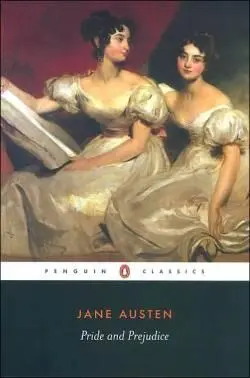
- Название:Pride and Prejudice
- Автор:
- Жанр:
- Год:неизвестен
- ISBN:нет данных
- Рейтинг книги:4.5 / 5. Голосов: 2
-
Избранное:Добавить в избранное
- Отзывы:
-
Ваша оценка:
Pride and Prejudice: краткое содержание, описание и аннотация
Предлагаем к чтению аннотацию, описание, краткое содержание или предисловие (зависит от того, что написал сам автор книги «Pride and Prejudice»). Если вы не нашли необходимую информацию о книге — напишите в комментариях, мы постараемся отыскать её.
Pride and Prejudice — читать онлайн ознакомительный отрывок
Ниже представлен текст книги, разбитый по страницам. Система сохранения места последней прочитанной страницы, позволяет с удобством читать онлайн бесплатно книгу «Pride and Prejudice», без необходимости каждый раз заново искать на чём Вы остановились. Поставьте закладку, и сможете в любой момент перейти на страницу, на которой закончили чтение.
Интервал:
Закладка:
She perfectly remembered everything that had passed in conversation between Wickham and herself, in their first evening at Mr. Phillips's. Many of his expressions were still fresh in her memory. She was now struck with the impropriety of such communications to a stranger, and wondered it had escaped her before. She saw the indelicacy of putting himself forward as he had done, and the inconsistency of his professions with his conduct. She remembered that he had boasted of having no fear of seeing Mr. Darcy-that Mr. Darcy might leave the country, but that he should stand his ground; yet he had avoided the Netherfield ball the very next week. She remembered also that, till the Netherfield family had quitted the country, he had told his story to no one but herself; but that after their removal it had been everywhere discussed; that he had then no reserves, no scruples in sinking Mr. Darcy's character, though he had assured her that respect for the father would always prevent his exposing the son.
How differently did everything now appear in which he was concerned! His attentions to Miss King were now the consequence of views solely and hatefully mercenary; and the mediocrity of her fortune proved no longer the moderation of his wishes, but his eagerness to grasp at anything. His behaviour to herself could now have had no tolerable motive; he had either been deceived with regard to her fortune, or had been gratifying his vanity by encouraging the preference which she believed she had most incautiously shown. Every lingering struggle in his favour grew fainter and fainter; and in farther justification of Mr. Darcy, she could not but allow Mr. Bingley, when questioned by Jane, had long ago asserted his blamelessness in the affair; that proud and repulsive as were his manners, she had never, in the whole course of their acquaintance-an acquaintance which had latterly brought them much together, and given her a sort of intimacy with his ways-seen anything that betrayed him to be unprincipled or unjust-anything that spoke him of irreligious or immoral habits; that among his own connections he was esteemed and valued-that even Wickham had allowed him merit as a brother, and that she had often heard him speak so affectionately of his sister as to prove him capable of some amiable feeling; that had his actions been what Mr. Wickham represented them, so gross a violation of everything right could hardly have been concealed from the world; and that friendship between a person capable of it, and such an amiable man as Mr. Bingley, was incomprehensible.
She grew absolutely ashamed of herself. Of neither Darcy nor Wickham could she think without feeling she had been blind, partial, prejudiced, absurd.
"How despicably I have acted!" she cried; "I, who have prided myself on my discernment! I, who have valued myself on my abilities! who have often disdained the generous candour of my sister, and gratified my vanity in useless or blameable mistrust! How humiliating is this discovery! Yet, how just a humiliation! Had I been in love, I could not have been more wretchedly blind! But vanity, not love, has been my folly. Pleased with the preference of one, and offended by the neglect of the other, on the very beginning of our acquaintance, I have courted prepossession and ignorance, and driven reason away, where either were concerned. Till this moment I never knew myself."
From herself to Jane-from Jane to Bingley, her thoughts were in a line which soon brought to her recollection that Mr. Darcy's explanation there had appeared very insufficient, and she read it again. Widely different was the effect of a second perusal. How could she deny that credit to his assertions in one instance, which she had been obliged to give in the other? He declared himself to be totally unsuspicious of her sister's attachment; and she could not help remembering what Charlotte's opinion had always been. Neither could she deny the justice of his description of Jane. She felt that Jane's feelings, though fervent, were little displayed, and that there was a constant complacency in her air and manner not often united with great sensibility.
When she came to that part of the letter in which her family were mentioned in terms of such mortifying, yet merited reproach, her sense of shame was severe. The justice of the charge struck her too forcibly for denial, and the circumstances to which he particularly alluded as having passed at the Netherfield ball, and as confirming all his first disapprobation, could not have made a stronger impression on his mind than on hers.
The compliment to herself and her sister was not unfelt. It soothed, but it could not console her for the contempt which had thus been self-attracted by the rest of her family; and as she considered that Jane's disappointment had in fact been the work of her nearest relations, and reflected how materially the credit of both must be hurt by such impropriety of conduct, she felt depressed beyond anything she had ever known before.
After wandering along the lane for two hours, giving way to every variety of thought-re-considering events, determining probabilities, and reconciling herself, as well as she could, to a change so sudden and so important, fatigue, and a recollection of her long absence, made her at length return home; and she entered the house with the wish of appearing cheerful as usual, and the resolution of repressing such reflections as must make her unfit for conversation.
She was immediately told that the two gentlemen from Rosings had each called during her absence; Mr. Darcy, only for a few minutes, to take leave-but that Colonel Fitzwilliam had been sitting with them at least an hour, hoping for her return, and almost resolving to walk after her till she could be found. Elizabeth could but just affect concern in missing him; she really rejoiced at it. Colonel Fitzwilliam was no longer an object; she could think only of her letter.
Chapter 37
The two gentlemen left Rosings the next morning, and Mr. Collins having been in waiting near the lodges, to make them his parting obeisance, was able to bring home the pleasing intelligence, of their appearing in very good health, and in as tolerable spirits as could be expected, after the melancholy scene so lately gone through at Rosings. To Rosings he then hastened, to console Lady Catherine and her daughter; and on his return brought back, with great satisfaction, a message from her ladyship, importing that she felt herself so dull as to make her very desirous of having them all to dine with her.
Elizabeth could not see Lady Catherine without recollecting that, had she chosen it, she might by this time have been presented to her as her future niece; nor could she think, without a smile, of what her ladyship's indignation would have been. "What would she have said? how would she have behaved?" were questions with which she amused herself.
Their first subject was the diminution of the Rosings party. "I assure you, I feel it exceedingly," said Lady Catherine; "I believe no one feels the loss of friends so much as I do. But I am particularly attached to these young men, and know them to be so much attached to me! They were excessively sorry to go! But so they always are. The dear Colonel rallied his spirits tolerably till just at last; but Darcy seemed to feel it most acutely, more, I think, than last year. His attachment to Rosings certainly increases."
Mr. Collins had a compliment, and an allusion to throw in here, which were kindly smiled on by the mother and daughter.
Lady Catherine observed, after dinner, that Miss Bennet seemed out of spirits, and immediately accounting for it by herself, by supposing that she did not like to go home again so soon, she added:
"But if that is the case, you must write to your mother and beg that you may stay a little longer. Mrs. Collins will be very glad of your company, I am sure."
Читать дальшеИнтервал:
Закладка:
Похожие книги на «Pride and Prejudice»
Представляем Вашему вниманию похожие книги на «Pride and Prejudice» списком для выбора. Мы отобрали схожую по названию и смыслу литературу в надежде предоставить читателям больше вариантов отыскать новые, интересные, ещё непрочитанные произведения.







Обсуждение, отзывы о книге «Pride and Prejudice» и просто собственные мнения читателей. Оставьте ваши комментарии, напишите, что Вы думаете о произведении, его смысле или главных героях. Укажите что конкретно понравилось, а что нет, и почему Вы так считаете.