Sandor Marai - The Rebels
Здесь есть возможность читать онлайн «Sandor Marai - The Rebels» весь текст электронной книги совершенно бесплатно (целиком полную версию без сокращений). В некоторых случаях можно слушать аудио, скачать через торрент в формате fb2 и присутствует краткое содержание. Год выпуска: 2004, ISBN: 2004, Издательство: Knopf Doubleday Publishing Group, Жанр: Классическая проза, на английском языке. Описание произведения, (предисловие) а так же отзывы посетителей доступны на портале библиотеки ЛибКат.
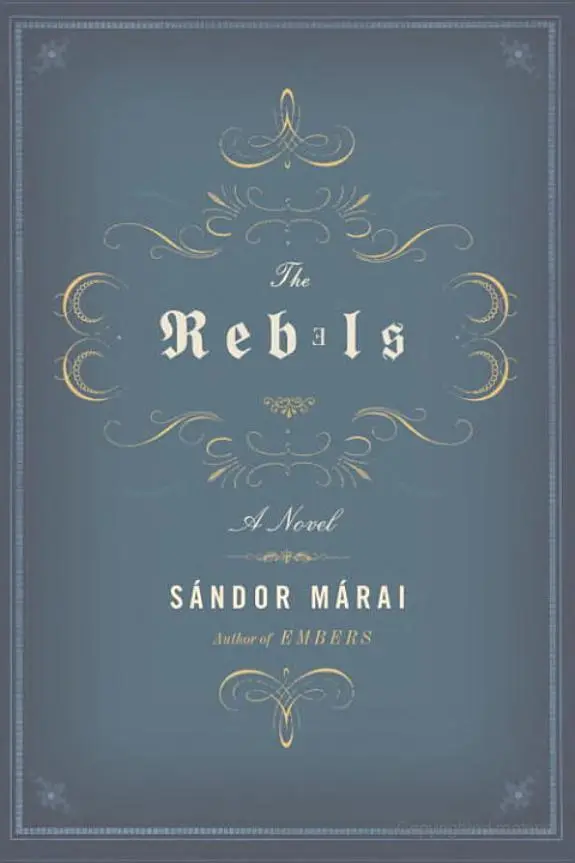
- Название:The Rebels
- Автор:
- Издательство:Knopf Doubleday Publishing Group
- Жанр:
- Год:2004
- ISBN:9780307267405
- Рейтинг книги:3 / 5. Голосов: 1
-
Избранное:Добавить в избранное
- Отзывы:
-
Ваша оценка:
The Rebels: краткое содержание, описание и аннотация
Предлагаем к чтению аннотацию, описание, краткое содержание или предисловие (зависит от того, что написал сам автор книги «The Rebels»). Если вы не нашли необходимую информацию о книге — напишите в комментариях, мы постараемся отыскать её.
is a haunting story of a group of alienated boys on the cusp of adult life—and possibly death—during World War I.
It is the summer of 1918, and four boys approaching graduation are living in a ghost town bereft of fathers, uncles, and older brothers, who are off fighting at the front. The boys know they will very soon be sent to join their elders, and in their final weeks of freedom they begin acting out their frustrations and fears in a series of subversive games and petty thefts. But when they attract the attention of a stranger in town—an actor with a traveling theater company—their games, and their lives, begin to move in a direction they could not have predicted and cannot control, and one that reveals them to be strangers to one another. Resisting and defying adulthood, they find themselves still subject to its baffling power even in their attempted rebellion.
The Rebels — читать онлайн бесплатно полную книгу (весь текст) целиком
Ниже представлен текст книги, разбитый по страницам. Система сохранения места последней прочитанной страницы, позволяет с удобством читать онлайн бесплатно книгу «The Rebels», без необходимости каждый раз заново искать на чём Вы остановились. Поставьте закладку, и сможете в любой момент перейти на страницу, на которой закончили чтение.
Интервал:
Закладка:
The pawnbroker sat behind the barred window. He was alone. The actor entered, whistling and swinging his cane, his hat pushed back to the crown of his head but carefully lest it disturb his wig. The pawnbroker stood up, came out from behind the counter, and propped his elbow against the grille. The actor looked about him dreamily as if it were his first visit, taking in the board that said “Receipt of Goods” and its partner, “Issue of Goods.” He leaned against the bars without a word of greeting and stared in front of him.
“Just imagine!” he remarked casually, swiveling his Kentucky minstrel eyes. “They’re all virgins.”
3
THE PERFORMANCE WAS OVER. THE REVOLVINGdoors were in full swing and the night regulars were arriving, in dribs and drabs, including members of the company. The bon vivant who had not removed all traces of theatrical makeup passed the booth, stopped, flashed his gold teeth, and dropped some quiet remark to the comic. Both laughed. The actor ignored them. He had delivered his major sketch about the effects of vodka on the human sensitivity to color. Now he was sitting, panting slightly, recovering.
The prima donna took her place among the usual crowd at the bohemian table. The actor fixed his curious eye on the door. The director hadn’t yet arrived and the seat on the prima donna’s right was unoccupied. The director was like the captain of a sinking ship: he was the last to leave the theater, the night’s takings in his pocket. He wouldn’t go until the cleaners had swept the auditorium clean.
Let’s wait until my assistant reports back, said the actor cautiously, his hand before his mouth. It would be wiser to wait till then.
He had plans that he had been mysteriously hinting at all evening. They weren’t feeling too good. They leaned on the table in desultory fashion, drank their beer, and gazed at the stream of new arrivals. It was the first time in their lives they could sit in the café legally, without anxiety, without fear of being spotted. They had occupied this booth before but for only a half an hour at a time, shivering slightly with the curtains drawn. Tonight was the first occasion on which they could take their place without sneaking in, without embarrassment.
They couldn’t help but notice in the first half hour they spent in the adult camp as equals that it was not all gaiety here. Or if gaiety there was, there was less of it than they had imagined the day before. The edgy excitement of the entertainment had quite vanished. A few weeks ago, when such excursions were still counted as a dangerous enterprise, they hadn’t noticed the insultingly patronizing manner of the waiter or the servile to-ing and fro-ing of the café manager who had condescended to conceal and shelter them. This confidentiality seemed humiliating to them now and lent a certain tension to the evening. They sat in low spirits, noticing for the first time the dinginess of the décor, breathing in the stale and bitter air.
“What is it?” asked Tibor.
Ábel gave a wry laugh.
“Do you remember how we used to look through the window whenever we came by here?”
Boredom gave way to anxious lassitude. What if everything they had only known from the outside turned out like this? If everything that had been alien and other were now becoming familiar, so that they could relax and take command of the world along with all those secrets that adults fought tooth and nail over—money, freedom, women—and they discovered that it was all quite different and much duller than they had thought?
“I’m bored,” said Béla, wrinkling his nose.
He raised his monocle to his eye and glared about him. Other tables smiled back at them. At about eleven their history master appeared in the café. Ernõ spoke a quiet word of command and the gang immediately leapt to their feet, made deep bows, and in singsong unison greeted the teacher.
“Your humble servant, sir!”
The chorus rang like music in the room. The elderly man in the pince-nez returned the school greeting, gave a clumsy bow, and muttered in confusion: “Your humble servant.” The master hurried away to escape the embarrassing scene. Ábel was of the opinion that he had blushed. Slowly they began to recover their confidence.
“That’s the way it has to be,” said Ernõ. “One has to be careful. Even tomorrow we shall have to hide our cigarettes when anyone approaches us. And we will have to bow deep in greeting, much deeper than we have ever done before. The waiter will have to draw the curtains, and the manager will have to watch that we’re not spotted.”
They hatched a plan for the following week to confront all their teachers in the afternoon, singly and together, before the staff disappeared on vacation, and ask them to fill in the blanks in their knowledge regarding certain as yet unclear details. They should enter with the utmost humility, stuttering, twisting their hats in their hands, and put their question red-faced, humming and hawing, exactly as they used to do.
Ernõ stood up.
“For instance, you go into Gurka and say: ‘Your humble servant, sir, I beg your pardon, I do not mean to be a nuisance, forgive me for disturbing you, sir.’ He is sitting at his desk, he pushes his glasses up to his forehead, gives a croak, and screws up his eyes. ‘Who is that?’ he asks in that nasal voice of his. ‘A student? What does the student want?’ You move closer, you twist your hat in your hands, you can hardly speak for respect, you are so deeply honored. Gurka slowly rises. ‘Really,’ he says. ‘Do my eyes not deceive me? Can it really be Ruzsák? It really is you, Ruzsák.’ Then he comes up to you and extends his hand in the greatest embarrassment because he is the master who could have failed you, twice, and has only permitted you to pass now because the army needs you and the commissioner insisted on it. And he is the one who has beaten you time and again right up until fourth grade. He is the one who stood guard on every street corner where girls were to be found and frequently caught the flu because he had been lurking in gateways for hours on end, keeping a sneaky watch on us. He was the one who had his suits made so that the collar covered half his face up to the earlobes, only so that he could creep up on groups of students unnoticed. Gurka. That’s your man. He is frowning suspiciously. He doesn’t know whether to sit you down or not, so you just stand there, listening, staring at him. He is already regretting offering his hand for you to shake. What can the student be wanting? Whatever it is he can’t be up to any good. Perhaps he has brass knuckles in his pocket, or a dagger. ‘Now, now, Ruzsák,’ he says, gasping for air. ‘What brings you here?’ You, in the meantime, just stand there, trembling, flushed.”
They drew closer together. This they understood. The waiter drew the curtains, concealing them.
“You drop your hat, you cough,” said Ábel.
“Maybe. And then you say, ‘I have made so bold, sir…with your kind permission…I make so bold as to disturb you,’ shifting from one foot to the other. Gurka relaxes. He puts his hand on your shoulder. ‘Speak up, Ruzsák, no need to get in a state about it. I know, my boy. The Creator has not distributed his intellectual gifts equally. In your case, Ruzsák, I have often had to spur you on to greater efforts, indeed, Ruzsák, I may have called you an ass or a numbskull. Don’t take it to heart. What’s done is done. There are professions, my boy, that make no great intellectual demands, require no sharpness of mind, such as is required by, say, a teacher. Why don’t you become a grocer, Ruzsák? There are many professions in the world. The important thing is to carry out whatever duties life imposes on you with honor.’
Читать дальшеИнтервал:
Закладка:
Похожие книги на «The Rebels»
Представляем Вашему вниманию похожие книги на «The Rebels» списком для выбора. Мы отобрали схожую по названию и смыслу литературу в надежде предоставить читателям больше вариантов отыскать новые, интересные, ещё непрочитанные произведения.








Обсуждение, отзывы о книге «The Rebels» и просто собственные мнения читателей. Оставьте ваши комментарии, напишите, что Вы думаете о произведении, его смысле или главных героях. Укажите что конкретно понравилось, а что нет, и почему Вы так считаете.