Jerome Salinger - Nine Stories
Здесь есть возможность читать онлайн «Jerome Salinger - Nine Stories» весь текст электронной книги совершенно бесплатно (целиком полную версию без сокращений). В некоторых случаях можно слушать аудио, скачать через торрент в формате fb2 и присутствует краткое содержание. Год выпуска: 1953, Издательство: Little Brown, Жанр: Классическая проза, на английском языке. Описание произведения, (предисловие) а так же отзывы посетителей доступны на портале библиотеки ЛибКат.
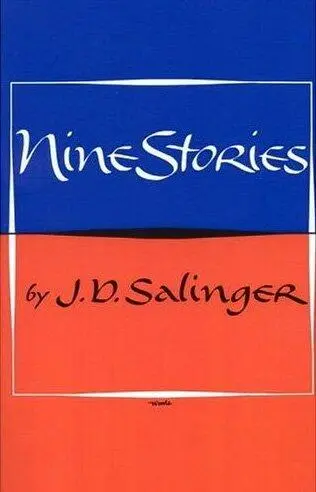
- Название:Nine Stories
- Автор:
- Издательство:Little Brown
- Жанр:
- Год:1953
- ISBN:нет данных
- Рейтинг книги:4 / 5. Голосов: 2
-
Избранное:Добавить в избранное
- Отзывы:
-
Ваша оценка:
Nine Stories: краткое содержание, описание и аннотация
Предлагаем к чтению аннотацию, описание, краткое содержание или предисловие (зависит от того, что написал сам автор книги «Nine Stories»). Если вы не нашли необходимую информацию о книге — напишите в комментариях, мы постараемся отыскать её.
Nine Stories — читать онлайн бесплатно полную книгу (весь текст) целиком
Ниже представлен текст книги, разбитый по страницам. Система сохранения места последней прочитанной страницы, позволяет с удобством читать онлайн бесплатно книгу «Nine Stories», без необходимости каждый раз заново искать на чём Вы остановились. Поставьте закладку, и сможете в любой момент перейти на страницу, на которой закончили чтение.
Интервал:
Закладка:
“May I inquire how you were employed before entering the Army?” Esme asked me.
I said I hadn’t been employed at all, that I’d only been out of college a year but that I like to think of myself as a professional short-story writer.
She nodded politely. “Published?” she asked.
It was a familiar but always touchy question, and one that I didn’t answer just one, two, three. I started to explain how most editors in America were a bunch—
“My father wrote beautifully,” Esme interrupted. “I’m saving a number of his letters for posterity.”
I said that sounded like a very good idea. I happened to be looking at her enormous-faced, chronographic-looking wristwatch again. I asked if it had belonged to her father.
She looked down at her wrist solemnly. “Yes, it did,” she said. “He gave it to me just before Charles and I were evacuated.” Self-consciously, she took her hands off the table, saying, “Purely as a momento, of course.” She guided the conversation in a different direction. “I’d be extremely flattered if you’d write a story exclusively for me sometime. I’m an avid reader.”
I told her I certainly would, if I could. I said that I wasn’t terribly prolific.
“It doesn’t have to be terribly prolific! Just so that it isn’t childish and silly.” She reflected. “I prefer stories about squalor.”
“About what?” I said, leaning forward. “Squalor. I’m extremely interested in squalor.”
I was about to press her for more details, but I felt Charles pinching me, hard, on my arm. I turned to him, wincing slightly. He was standing right next to me. “What did one wall say to the other wall?” he asked, not unfamiliarly.
“You asked him that,” Esme said. “Now, stop it.”
Ignoring his sister, and stepping up on one of my feet, Charles repeated the key question. I noticed that his necktie knot wasn’t adjusted properly. I slid it up into place, then, looking him straight in the eye, suggested, “Meetcha at the corner?”
The instant I’d said it, I wished I hadn’t. Charles’ mouth fell open. I felt as if I’d struck it open. He stepped down off my foot and, with white-hot dignity, walked over to his own table, without looking back.
“He’s furious,” Esme said. “He has a violent temper. My mother had a propensity to spoil him. My father was the only one who didn’t spoil him.”
I kept looking over at Charles, who had sat down and started to drink his tea, using both hands on the cup. I hoped he’d turn around, but he didn’t.
Esme stood up. `Il faut que je parte aussi,” she said, with a sigh. “Do you know French?”
I got up from my own chair, with mixed feelings of regret and confusion. Esme and I shook hands; her hand, as I’d suspected, was a nervous hand, damp at the palm. I told her, in English, how very much I’d enjoyed her company.
She nodded. “I thought you might,” she said. “I’m quite communicative for my age.” She gave her hair another experimental touch. “I’m dreadfully sorry about my hair,” she said. “I’ve probably been hideous to look at.”
“Not at all! As a matter of fact, I think a lot of the wave is coming back already.”
She quickly touched her hair again. “Do you think you’ll be coming here again in the immediate future?” she asked. “We come here every Saturday, after choir practice.”
I answered that I’d like nothing better but that, unfortunately, I was pretty sure I wouldn’t be able to make it again.
“In other words, you can’t discuss troop movements,” said Esme. She made no move to leave the vicinity of the table. In fact, she crossed one foot over the other and, looking down, aligned the toes of her shoes. It was a pretty little execution, for she was wearing white socks and her ankles and feet were lovely. She looked up at me abruptly. “Would you like me to write to you?” she asked, with a certain amount of color in her face. “I write extremely articulate letters for a person my—”
“I’d love it.” I took out pencil and paper and wrote down my name, rank, serial number, and A.P.O. number.
“I shall write to you first,” she said, accepting it, “so that you don’t feel compromised in any way.” She put the address into a pocket of her dress. “Goodbye,” she said, and walked back to her table.
I ordered another pot of tea and sat watching the two of them till they, and the harassed Miss Megley, got up to leave. Charles led the way out, limping tragically, like a man with one leg several, inches shorter than the other. He didn’t look over at me. Miss Megley went next, then Esme, who waved to me. I waved back, half getting up from my chair. It was a strangely emotional moment for me.
Less than a minute later, Esme came back into the tearoom, dragging Charles behind her by the sleeve of his reefer. “Charles would like to kiss you goodbye,” she said.
I immediately put down my cup, and said that was very nice, but was she sure?
“Yes,” she said, a trifle grimly. She let go Charles’ sleeve and gave him a rather vigorous push in my direction. He came forward, his face livid, and gave me a loud, wet smacker just below the right ear. Following this ordeal, he started to make a beeline for the door and a less sentimental way of life, but I caught the half belt at the back of his reefer, held on to it, and asked him, “What did one wall say to the other wall?”
His face lit up. “Meet you at the corner!” he shrieked, and raced out of the room, possibly in hysterics.
Esme was standing with crossed ankles again. “You’re quite sure you won’t forget to write that story for me?” she asked. “It doesn’t have to be exclusively for me. It can—”
I said there was absolutely no chance that I’d forget. I told her that I’d never written a story for anybody, but that it seemed like exactly the right time to get down to it.
She nodded. “Make it extremely squalid and moving,” she suggested. “Are you at all acquainted with squalor?”
I said not exactly but that I was getting better acquainted with it, in one form or another, all the time, and that I’d do my best to come up to her specifications. We shook hands.
“Isn’t it a pity that we didn’t meet under less extenuating circumstances?”
I said it was, I said it certainly was.
“Goodbye,” Esme said. “I hope you return from the war with all your faculties intact.”
I thanked her, and said a few other words, and then watched her leave the tearoom. She left it slowly, reflectively, testing the ends of her hair for dryness.
This is the squalid, or moving, part of the story, and the scene changes. The people change, too. I’m still around, but from here on in, for reasons I’m not at liberty to disclose, I’ve disguised myself so cunningly that even the cleverest reader will fail to recognize me.
It was about ten-thirty at night in Gaufurt, Bavaria, several weeks after V-E Day. Staff Sergeant X was in his room on the second floor of the civilian home in which he and nine other American soldiers had been quartered, even before the armistice. He was seated on a folding wooden chair at a small, messy-looking writing table, with a paperback overseas novel open before him, which he was having great trouble reading. The trouble lay with him, not the novel. Although the men who lived on the first floor usually had first grab at the books sent each month by Special Services, X usually seemed to be left with the book he might have selected himself. But he was a young man who had not come through the war with all his faculties intact, and for more than an hour he had been triple-reading paragraphs, and now he was doing it to the sentences. He suddenly closed the book, without marking his place. With his hand, he shielded his eyes for a moment against the harsh, watty glare from the naked bulb over the table.
Читать дальшеИнтервал:
Закладка:
Похожие книги на «Nine Stories»
Представляем Вашему вниманию похожие книги на «Nine Stories» списком для выбора. Мы отобрали схожую по названию и смыслу литературу в надежде предоставить читателям больше вариантов отыскать новые, интересные, ещё непрочитанные произведения.









Обсуждение, отзывы о книге «Nine Stories» и просто собственные мнения читателей. Оставьте ваши комментарии, напишите, что Вы думаете о произведении, его смысле или главных героях. Укажите что конкретно понравилось, а что нет, и почему Вы так считаете.