Upton Sinclair - Dragons’s teeth
Здесь есть возможность читать онлайн «Upton Sinclair - Dragons’s teeth» весь текст электронной книги совершенно бесплатно (целиком полную версию без сокращений). В некоторых случаях можно слушать аудио, скачать через торрент в формате fb2 и присутствует краткое содержание. Жанр: Историческая проза, на английском языке. Описание произведения, (предисловие) а так же отзывы посетителей доступны на портале библиотеки ЛибКат.
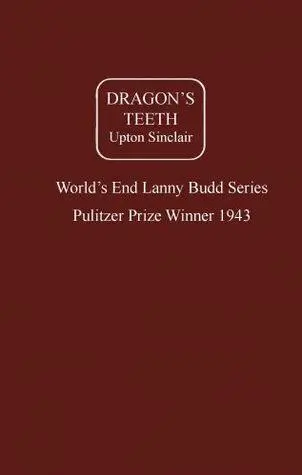
- Название:Dragons’s teeth
- Автор:
- Жанр:
- Год:неизвестен
- ISBN:нет данных
- Рейтинг книги:3 / 5. Голосов: 1
-
Избранное:Добавить в избранное
- Отзывы:
-
Ваша оценка:
Dragons’s teeth: краткое содержание, описание и аннотация
Предлагаем к чтению аннотацию, описание, краткое содержание или предисловие (зависит от того, что написал сам автор книги «Dragons’s teeth»). Если вы не нашли необходимую информацию о книге — напишите в комментариях, мы постараемся отыскать её.
Dragons’s teeth — читать онлайн бесплатно полную книгу (весь текст) целиком
Ниже представлен текст книги, разбитый по страницам. Система сохранения места последней прочитанной страницы, позволяет с удобством читать онлайн бесплатно книгу «Dragons’s teeth», без необходимости каждый раз заново искать на чём Вы остановились. Поставьте закладку, и сможете в любой момент перейти на страницу, на которой закончили чтение.
Интервал:
Закладка:
Living in the midst of this enormous institute of lunacy, Lanny Budd tried to keep his balance and not be permanently stood upon his head. If there was anything he couldn’t comprehend, his Nazi friends were eager to explain it, but there wasn’t a single German from whom he could hear a sane word. Even Hugo Behr and his friends who were planning the "Second Revolution" were all loyal Hitlerites, co-operating in what they considered a sublime demonstration of patriotic fervor. Even the members of smart society dared give no greater sign of rationality than a slight smile, or the flicker of an eyelash so faint that you couldn’t be sure if you had seen it. The danger was real, even to important persons. Only a few days later they would see Herzog Philip Albert of Württemberg imprisoned for failing to cast his vote in this sublime national referendum.
Hitler had raised the issue in the middle of October when the British at Geneva had dared to propose a four years' "trial period" before permitting Germany to rearm. The Führer’s reply was to withdraw the German delegates from both the League of Nations and the Conference for Arms Limitation. In so doing he issued to the German people one of those eloquent manifestoes which he delighted to compose; he told them how much he loved peace and how eager he was to disarm when the other nations would do the same. He talked to them about "honor"—he, the author of Mein Kampf— and they believed him, thus proving that they were exactly what he had said they were. He proclaimed that what the German people wanted was "equal rights"; and, having just deprived them of all rights, he put to them in the name of the government this solemn question:
"Does the German people accept the policy of its National Cabinet as enunciated here and is it willing to declare this to be the expression of its own view and its own will and to give it holy support?"
Such was the "referendum" to be voted on a month later. In addition, there was to be a new Reichstag election, with only one slate of candidates, 686 of them, all selected by the Führer, and headed by the leading Nazis: Hitler, Göring, Goebbels, Hess, Röhm, and so on. One party, one list—and one circle in which you could mark your cross to indicate "yes." There was no place for you to vote "no," and blank ballots were declared invalid.
For that sort of "election" the Fatherland was kept in a turmoil for four weeks, and more money was spent than had ever been spent by all the forty-five parties in any previous Reichstag election. The shows and spectacles, the marching and singing, the carrying of the "blood banners," the ceremonies in honor of the Nazi martyrs; the posters and proclamations, the torchlight processions, the standing at attention and saluting, the radio orations with the people assembled in the public squares to listen to loud-speakers— and a few sent to concentration camps for failing to listen. Hitherto the business of standing silent had been reserved as an honor for the war dead; but now all over Germany the traffic came to a halt and people stood in silence with bared heads; all the factories ceased work and thirty million workers stood to listen to the voice of Adolf Hitler, speaking in the dynamo hall of the enormous Siemens-Schuckert Electrical Works in Berlin. Afterward they stayed and worked an hour overtime, so that they and not their employers might have the honor and glory of making a sacrifice for the Fatherland!
X
On a bright and pleasant Sunday in mid-November, great masses of the German Volk lined up in front of polling-places all over the land, and even in foreign lands, and in ships upon the high seas. They voted in prisons and even in concentration camps. Late in the day the Stormtroopers rounded up the lazy and careless ones; and so more than forty-three million ballots were cast, and more than ninety-five per cent voted for the Hitler Reichstag and for the solemn referendum in favor of their own peace and freedom. Irma read about it, the next day and the days thereafter, and was tremendously impressed. She said: "You see, Lanny, the Germans really believe in Hitler. He is what they want." When she read that the internees of Dachau had voted twenty to one for the man who had shut them up there, she said: "That seems to show that things can’t be so very bad."
The husband replied: "It seems to me to show that they are a lot worse."
But he knew there was no use trying to explain that. It would only mean an argument. He was learning to keep his unhappiness locked up in his soul. His wife was having a very good time in Berlin, meeting brilliant and distinguished personalities; and Lanny was going about tormenting himself over the activities and the probable fates of a little group of secret conspirators in a Berlin slum!
He could guess pretty well what they were doing; he imagined a small hand-press in the back of the tailor shop, and they were printing leaflets, perhaps about the Brown Book and its revelations concerning the Reichstag fire, perhaps quoting opinions of the outside world, so as to keep up the courage of the comrades in a time of dreadful anguish. Probably Trudi was carrying some of this "literature" to others who would see to its distribution. All of them were working in hourly peril of their lives; and Lanny thought: "I ought to be helping them; I am the one who could really accomplish something, because I could get money, and bring them information from outside, and carry messages to their comrades in France and England."
But then he would think: "If I did that, I’d ruin the happiness of my mother and my wife and most of my friends. In the end I’d probably wreck my marriage."
24. Die Juden Sind Schuld
I
A PLEASANT thing to leave the flat windy plain of Prussia at the beginning of winter and motor into the forests and snug valleys of South Germany. Pleasant to arrive in a beautiful and comparatively modern city and to find a warm welcome awaiting you in an establishment called the "Four Seasons of the Year" so as to let you know that it was always ready. Munich was a "Four Seasons of the Year" city; its life was a series of festivals, and the drinking of beer out of Maßkrugen was a civic duty.
The devoted Zoltan had come in advance and made all arrangements for the show. The Herr Privatdozent Doktor der Philosophie Aloysius Winckler zu Sturmschatten had applied his arts, and the intellectuals of Munich were informed as to the merits of the new school of representational painting; also the social brilliance of the young couple who were conferring this bounty upon them.
In the morning came the reporters by appointment. They had been provided with extracts from what the Berlin press had said about Detaze, and with information as to the Barnes fortune and the importance of Budd Gunmakers; also the fact that Lanny had been on a shooting trip with General Göring and had once had tea with the Führer. The young couple exhibited that affability which is expected from the land of cowboys and movies. Lanny said yes, he knew Munich very well; he had purchased several old masters here— he named them, and told in what new world collections they had found havens. He had happened to be in the city on a certain historic day ten years ago and had witnessed scenes which would make the name of Munich forever famous. Flashlight bulbs went off while he talked, reminding him of those scenes on the Marienplatz when the Nazi martyrs had been shot down.
The interviews appeared in due course, and when the exhibition opened on the following afternoon the crowds came. An old story now, but the people were new, and those who love greatness and glory never tire of meeting Herzog und Herzogin Überall und Prinz und Prinzessin Undsoweiter. A great thing for art when ladies of the highest social position take their stand in a public gallery to pay tribute to genius, even though dead. While Parsifal Dingle went off to ask the spirit of the dead painter if he was pleased with the show, and while Lanny went to inspect older masters and dicker over prices, Beauty Budd and her incomparable daughter-in-law were introduced to important personages, accepted invitations to lunches and dinners, and collected anecdotes which they would retail to their spouses and later to their relatives and friends.
Читать дальшеИнтервал:
Закладка:
Похожие книги на «Dragons’s teeth»
Представляем Вашему вниманию похожие книги на «Dragons’s teeth» списком для выбора. Мы отобрали схожую по названию и смыслу литературу в надежде предоставить читателям больше вариантов отыскать новые, интересные, ещё непрочитанные произведения.






Обсуждение, отзывы о книге «Dragons’s teeth» и просто собственные мнения читателей. Оставьте ваши комментарии, напишите, что Вы думаете о произведении, его смысле или главных героях. Укажите что конкретно понравилось, а что нет, и почему Вы так считаете.