Александр Дюма - The Conspirators
Здесь есть возможность читать онлайн «Александр Дюма - The Conspirators» весь текст электронной книги совершенно бесплатно (целиком полную версию без сокращений). В некоторых случаях можно слушать аудио, скачать через торрент в формате fb2 и присутствует краткое содержание. Год выпуска: 2014, Издательство: epubBooks Classics, Жанр: Историческая проза, на английском языке. Описание произведения, (предисловие) а так же отзывы посетителей доступны на портале библиотеки ЛибКат.
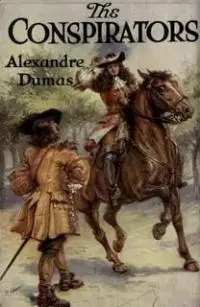
- Название:The Conspirators
- Автор:
- Издательство:epubBooks Classics
- Жанр:
- Год:2014
- ISBN:нет данных
- Рейтинг книги:3 / 5. Голосов: 1
-
Избранное:Добавить в избранное
- Отзывы:
-
Ваша оценка:
The Conspirators: краткое содержание, описание и аннотация
Предлагаем к чтению аннотацию, описание, краткое содержание или предисловие (зависит от того, что написал сам автор книги «The Conspirators»). Если вы не нашли необходимую информацию о книге — напишите в комментариях, мы постараемся отыскать её.
The Conspirators — читать онлайн бесплатно полную книгу (весь текст) целиком
Ниже представлен текст книги, разбитый по страницам. Система сохранения места последней прочитанной страницы, позволяет с удобством читать онлайн бесплатно книгу «The Conspirators», без необходимости каждый раз заново искать на чём Вы остановились. Поставьте закладку, и сможете в любой момент перейти на страницу, на которой закончили чтение.
Интервал:
Закладка:
"In this roll, monseigneur, in this roll," said Buvat, extending it toward Dubois.
Dubois made a single bound from his chair to Buvat, took the roll, and sat down at a desk, and in a turn of the hand, having torn off the string and the wrapper, found the papers in question. The first on which he lighted were in Spanish; but as Dubois had been sent twice to Spain, and knew something of the language of Calderon and Lopez de Vega, he saw at the first glance how important these papers were. Indeed, they were neither more nor less than the protestation of the nobility, the list of officers who requested commissions under the king of Spain, and the manifesto prepared by the Cardinal de Polignac and the Marquis de Pompadour to rouse the kingdom. These different documents were addressed directly to Philip V.; and a little note—which Dubois recognized as Cellamare's hand writing—announced that the denouement of the conspiracy was near at hand; he informed his Catholic majesty, from day to day, of all the important events which could advance or retard the scheme. Then came, finally, that famous plan of the conspirators which we have already given to our readers, and which—left by an oversight among the papers which had been translated into Spanish—had opened Buvat's eyes. Near the plan, in the good man's best writing, was the copy which he had begun to make, and which was broken off at the words, "Act thus in all the provinces."
Buvat had followed all the working of Dubois's face with a certain anxiety; he had seen it pass from astonishment to joy, then from joy to impassibility. Dubois, as he continued to read, had passed, successively, one leg over the other, had bitten his lips, pinched the end of his nose, but all had been utterly untranslatable to Buvat, and at the end of the reading he understood no more from the face of the archbishop than he had understood at the end of the copy from the Spanish original. As to Dubois, he saw that this man had come to furnish him with the beginning of a most important secret, and he was meditating on the best means of making him furnish the end also. This was the signification of the crossed legs, the bitten lips, and the pinched nose. At last he appeared to have taken his resolution. A charming benevolence overspread his countenance, and turning toward the good man, who had remained standing respectfully—
"Take a seat, my dear M. Buvat," said he.
"Thank you, monseigneur," answered Buvat, trembling; "I am not fatigued."
"Pardon, pardon," said Dubois, "but your legs shake."
Indeed, since he had read the procès–verbal of the question of Van der Enden, Buvat had retained in his legs a nervous trembling, like that which may be observed in dogs that have just had the distemper.
"The fact is, monseigneur," said Buvat, "that I do not know what has come to me the last two hours, but I find a great difficulty in standing upright."
"Sit down, then, and let us talk like two friends."
Buvat looked at Dubois with an air of stupefaction, which, at any other time, would have had the effect of making him burst out laughing, but now he did not seem to notice it, and taking a chair himself, he repeated with his hand the invitation which he had given with his voice. There was no means of drawing back; the good man approached trembling, and sat down on the edge of his chair; put his hat on the ground, took his cane between his legs, and waited. All this, however, was not executed without a violent internal struggle as his face testified, which, from being white as a lily when he came in, had now become as red as a peony.
"My dear M. Buvat, you say that you make copies?"
"Yes, monseigneur."
"And that brings you in—?"
"Very little, monseigneur, very little."
"You have, nevertheless, a superb handwriting, M. Buvat."
"Yes, but all the world does not appreciate the value of that talent as your eminence does."
"That is true, but you are employed at the library?"―"I have that honor."
"And your place brings you—?"
"Oh, my place—that is another thing, monseigneur; it brings me in nothing at all, seeing that for five years the cashier has told us at the end of each month that the king was too poor to pay us."
"And you still remained in the service of his majesty? that was well done, M. Buvat; that was well done."
Buvat rose, saluted Dubois, and reseated himself.
"And, perhaps, all the while you have a family to support—a wife, children?"
"No, monseigneur; I am a bachelor."
"But you have parents, at all events?"
"No, monseigneur; but I have a ward, a charming young person, full of talent, who sings like Mademoiselle Berry, and who draws like Greuze."
"Ah, ah! and what is the name of your ward, M. Buvat?"
"Bathilde—Bathilde du Rocher, monseigneur; she is a young person of noble family, her father was squire to Monsieur the Regent, when he was still Duc de Chartres, and had the misfortune to be killed at the battle of Almanza."
"Thus I see you have your charges, my dear Buvat."
"Is it of Bathilde that you speak, monseigneur? Oh no, Bathilde is not a charge; on the contrary, poor dear girl, she brings in more than she costs. Bathilde a charge! Firstly, every month M. Papillon, the colorman at the corner of the Rue Clery, you know, monseigneur, gives her eighty francs for two drawings; then—"
"I should say, my dear Buvat, that you are not rich."
"Oh! rich, no, monseigneur, I am not, but I wish I was, for poor Bathilde's sake; and if you could obtain from monseigneur, that out of the first money which comes into the State coffers he would pay me my arrears, or at least something on account—"
"And to how much do your arrears amount?"
"To four thousand seven hundred francs, two sous, and eight centimes, monseigneur."
"Is that all?" said Dubois.
"How! is that all, monseigneur?"
"Yes, that is nothing."
"Indeed, monseigneur, it is a great deal, and the proof is that the king cannot pay it."
"But that will not make you rich."
"It will make me comfortable, and I do not conceal from you, monseigneur, that if, from the first money which comes into the treasury—"
"My dear Buvat," said Dubois, "I have something better than that to offer you."
"Offer it, monseigneur."
"You have your fortune at your fingers' ends."
"My mother always told me so, monseigneur."
"That proves," said Dubois, "what a sensible woman your mother was."
"Well, monseigneur! I am ready; what must I do?"
"Ah! mon Dieu! the thing is very simple, you will make me, now, and here, copies of all these."
"But, monseigneur—"
"That is not all, my dear Monsieur Buvat. You will take back to the person who gave you these papers, the copies and the originals, you will take all that that person gives you; you will bring them to me directly, so that I may read them, then you will do the same with other papers as with these, and so on indefinitely, till I say enough."
"But, monseigneur, it seems to me that in acting thus I should betray the confidence of the prince."
"Ah! it is with a prince that you have business, Monsieur Buvat! and what may this prince be called?"
"Oh, monseigneur, it appears to me that in telling you his name I denounce—"
"Well, and what have you come here for, then?"
"Monseigneur, I have come here to inform you of the danger which his highness runs, that is all."
"Indeed," said Dubois, in a bantering tone, "and you imagine you are going to stop there?"
"I wish to do so, monseigneur."
"There is only one misfortune, that it is impossible, my dear Monsieur Buvat."
"Why impossible?"
"Entirely."
"Monseigneur, I am an honest man."
"M. Buvat, you are a fool."
"Monseigneur, I still wish to keep silence."
"My dear monsieur, you will speak."
Читать дальшеИнтервал:
Закладка:
Похожие книги на «The Conspirators»
Представляем Вашему вниманию похожие книги на «The Conspirators» списком для выбора. Мы отобрали схожую по названию и смыслу литературу в надежде предоставить читателям больше вариантов отыскать новые, интересные, ещё непрочитанные произведения.
Обсуждение, отзывы о книге «The Conspirators» и просто собственные мнения читателей. Оставьте ваши комментарии, напишите, что Вы думаете о произведении, его смысле или главных героях. Укажите что конкретно понравилось, а что нет, и почему Вы так считаете.