Philippa Gregory - Virgin Earth
Здесь есть возможность читать онлайн «Philippa Gregory - Virgin Earth» — ознакомительный отрывок электронной книги совершенно бесплатно, а после прочтения отрывка купить полную версию. В некоторых случаях можно слушать аудио, скачать через торрент в формате fb2 и присутствует краткое содержание. Жанр: Историческая проза, на английском языке. Описание произведения, (предисловие) а так же отзывы посетителей доступны на портале библиотеки ЛибКат.
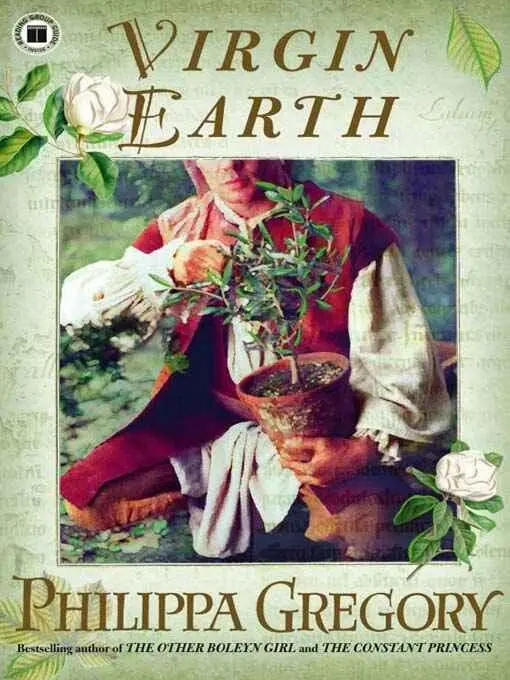
- Название:Virgin Earth
- Автор:
- Жанр:
- Год:неизвестен
- ISBN:нет данных
- Рейтинг книги:4 / 5. Голосов: 1
-
Избранное:Добавить в избранное
- Отзывы:
-
Ваша оценка:
Virgin Earth: краткое содержание, описание и аннотация
Предлагаем к чтению аннотацию, описание, краткое содержание или предисловие (зависит от того, что написал сам автор книги «Virgin Earth»). Если вы не нашли необходимую информацию о книге — напишите в комментариях, мы постараемся отыскать её.
Virgin Earth — читать онлайн ознакомительный отрывок
Ниже представлен текст книги, разбитый по страницам. Система сохранения места последней прочитанной страницы, позволяет с удобством читать онлайн бесплатно книгу «Virgin Earth», без необходимости каждый раз заново искать на чём Вы остановились. Поставьте закладку, и сможете в любой момент перейти на страницу, на которой закончили чтение.
Интервал:
Закладка:
Attone came up beside John so silently that not even a twig cracked. “Who’s the smelly one?” he asked.
“My neighbor, the farmer, Bertram Hobert,” John said. The name sounded strange and awkward on his lips, he was so accustomed to the ripple of Powhatan speech.
“The winter has rotted his feet,” Attone remarked.
John saw that the brave was right. Bertram was painfully lame and instead of shoes or boots his feet were encased in thick wrappings tied with twine.
“That hurts,” Attone said. “He should wear bear grease and moccasins.”
“He does not know,” John said sadly. “He would not know that, and only your people could teach him.”
Attone gave him a quick smile at the unlikeliness of such a meeting and such a lesson. “He has our hare. Shall we kill him?”
John put his hand on Attone’s forearm as he reached for his arrow. “Spare him. He was my friend.”
Attone raised a dark eyebrow. “He was going to shoot you.”
“He didn’t know me. But he helped me build my house when I came to the plantation. We traveled across the sea together. He has a good wife. He was once my friend. I won’t see him shot for a hare.”
“I would shoot him for a mouse,” Attone remarked, but the arrow stayed in his quiver. “And now we will have to cross the river. There will be no game here for miles where he is stamping on his rotting feet.”
They caught no game though they stayed out for three days, traveling along the narrow trails which the People had used for centuries. Every now and then one of the trails would spread itself to double, even treble, the necessary width and then Attone would scowl and look out for a new house being built, a new headright created where this wide path would lead. Again and again they would see a new building standing proud, and facing the river and around it a desert of felled trees and roughly cleared land. Attone would look for a moment, his face expressionless, and then say to John: “We have to go on, there will be no game here.”
They struck away from the river on the second day, since the plantations chose the riverside so that the tobacco could be floated down to the quayside at Jamestown. Once they broke away from the riverbanks things were better for them. In the deeper forest they found traces of deer again and then on the third day, as they were bearing around in a wide circle for home, a great shadowy bush caught Tradescant’s eye and as he watched, it moved. Then he felt Attone’s hand on the small of his back and his breath as he said: “Elk.”
Something in the quiver of the brave’s voice set John’s heart racing too. The beast was massive, its antlers as broad as the outspread wings of a condor. Moving almost unconsciously, John fitted his arrow to his bow and felt the thinness of the shaft and the lightness of the sharpened reed arrowhead. Surely, this would be like shooting peas at a carthorse, he thought. Nothing could bring this monster down.
Attone was moving away from him. For a moment John thought they were to make the traditional pincer movement of deer-stalking, but then he saw that Attone had slung his bow over his shoulder and was climbing the lowest branches of one of the trees. When he was stretched along it with an arrow on the string he nodded to John with one of his darkest smiles.
John glanced back at the grazing elk. It was calm, unaware of their presence. John made a pointing upward gesture: should he climb too? Attone’s teeth flashed in a grin, white in the darkness. He shook his head. John should shoot at ground level.
John realized at once why this was apparently amusing. When the elk was struck it would look around for its enemy and it would charge the first thing it saw. That would be John. Attone, in the safety of the branch of the tree, would rain down arrows, but John on the ground below would serve as decoy: as bait. John scowled at Attone, who gave him the blandest of smiles and a shrug – it was the luck of the hunt.
John set his arrow on the string and waited. The elk sniffed the forest floor, searching for food. It turned full face to John and lifted its head for a moment, scenting the air. It was a perfect opportunity. Both arrows flew at the same second. John’s arrow, aimed for the heart, pierced the thick skin and layer of fat at the chest, while Attone’s plunged deep and unerringly into the beast’s eye. It bellowed in pain and plunged forward. A second arrow from Attone’s bow pierced its shoulder, severing the muscle of the foreleg so the animal dropped to one knee. John’s shaky second shot went wide and then he was running, dodging behind the trees as the beast came on, stumbled on, blood pouring from its head. Attone let fly one more arrow into the head again and then jumped from the tree, his knife in his hand. The flow of blood was weakening the animal, it was unable to charge. It fell to both knees, its head moving from one side to the other, the great sweep of the antlers still a danger. John peeped out from behind a tree and came running back, pulling his hunting knife with the sharp shell blade from its safe pouch. Either side of the wounded animal the two men watched for their chance. Attone, whispering the word of blessing on the dying creature, dived behind the moving antlers and plunged his knife between its high shoulders. The head slumped and John reached down and jabbed a hacking, sawing cut into the thick throat.
The two men jumped clear as the beast rolled on its side and died. Attone nodded. “Good and quick,” he said breathlessly. “Go, my brother, we thank you.”
John rubbed the sweat from his face with fingers that were wet with fresh blood. He dropped to sit on the snowy forest floor, his legs weak underneath him. “What if you had missed?” he asked.
Attone thought for a moment. “Missed?”
“When the beast was charging at me. What if you had missed your shot?”
Attone took a breath to answer and then John’s aggrieved face was too much for him; he could make no sensible reply. He whooped with laughter and dropped back on the cold snow. He laughed and laughed his great belly laugh of joy and John, trying to keep a straight face, trying to stay on his dignity, found it was too much for him and he started to laugh as well.
“Why ask? Why should it matter to you?” Attone demanded, wiping his eyes, and bubbling again. “You wouldn’t care. You’d be dead.”
John howled at the logic of this and the two men lay like lovers, side by side on their backs in the winter forest, and laughed until their empty bellies ached while the blue winter sky above them was darkened with the passing of the geese and the wood was louder with their honking than with laughter.
John was left to guard the carcass while Attone started the long run back to the village. It would be two days before he could bring the braves back to carry the meat into camp. John made himself as comfortable as he could for the wait, built a little bender tent of a pair of saplings and thatched it with thin winter fern, made himself a hearth at one side of it and let the tent fill with smoke for the warmth, and started the work of skinning and butchering the great beast. Attone had left his hunting knife with John, so that when John’s knife was blunted cutting the thick hide, fat and meat he would not have to waste time sharpening it. He worked from sunrise in the morning when he rose and said the Powhatan morning prayers at his morning wash in the icy water. At noon he gathered nuts and berries and ate with his dark gaze on the river, watching for shoals of fish. After his dinner he gathered firewood and set to work on the elk again. At night he cut a thin slice of elk meat to barbecue over the fire. John had lost completely the white man’s habit of gorging when food was available and starving when times were thin. He ate like one of the People, conscious all the time of the river that brought fish to him, and the winds that blew the birds to him and the woods that hid and offered the animals. It was not the way of a Powhatan to plunge into a trough of food like a hog into acorns. Food was not a free gift, it was part of a giving and taking, a balance; and a hunter must take with awareness.
Читать дальшеИнтервал:
Закладка:
Похожие книги на «Virgin Earth»
Представляем Вашему вниманию похожие книги на «Virgin Earth» списком для выбора. Мы отобрали схожую по названию и смыслу литературу в надежде предоставить читателям больше вариантов отыскать новые, интересные, ещё непрочитанные произведения.
Обсуждение, отзывы о книге «Virgin Earth» и просто собственные мнения читателей. Оставьте ваши комментарии, напишите, что Вы думаете о произведении, его смысле или главных героях. Укажите что конкретно понравилось, а что нет, и почему Вы так считаете.