Philippa Gregory - Virgin Earth
Здесь есть возможность читать онлайн «Philippa Gregory - Virgin Earth» — ознакомительный отрывок электронной книги совершенно бесплатно, а после прочтения отрывка купить полную версию. В некоторых случаях можно слушать аудио, скачать через торрент в формате fb2 и присутствует краткое содержание. Жанр: Историческая проза, на английском языке. Описание произведения, (предисловие) а так же отзывы посетителей доступны на портале библиотеки ЛибКат.
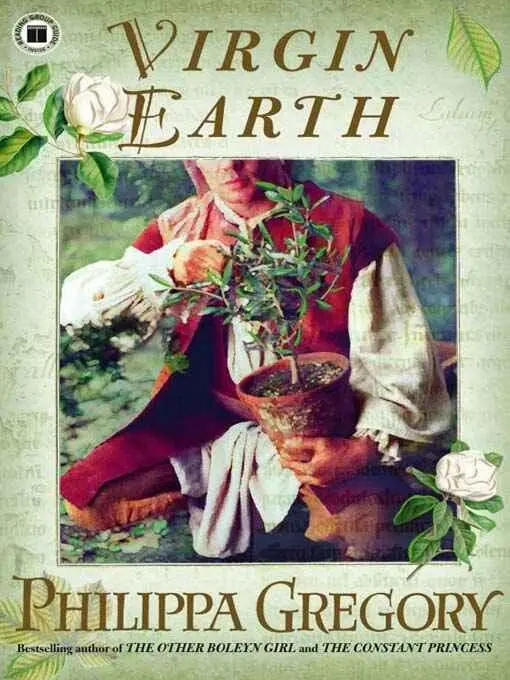
- Название:Virgin Earth
- Автор:
- Жанр:
- Год:неизвестен
- ISBN:нет данных
- Рейтинг книги:4 / 5. Голосов: 1
-
Избранное:Добавить в избранное
- Отзывы:
-
Ваша оценка:
Virgin Earth: краткое содержание, описание и аннотация
Предлагаем к чтению аннотацию, описание, краткое содержание или предисловие (зависит от того, что написал сам автор книги «Virgin Earth»). Если вы не нашли необходимую информацию о книге — напишите в комментариях, мы постараемся отыскать её.
Virgin Earth — читать онлайн ознакомительный отрывок
Ниже представлен текст книги, разбитый по страницам. Система сохранения места последней прочитанной страницы, позволяет с удобством читать онлайн бесплатно книгу «Virgin Earth», без необходимости каждый раз заново искать на чём Вы остановились. Поставьте закладку, и сможете в любой момент перейти на страницу, на которой закончили чтение.
Интервал:
Закладка:
He dreamed of the month they had spent in the forest together and the light shining through the leaves to dapple her bare brown skin. He dreamed of the line of her spine as she squatted before the fire, of the asymmetric tilt of her head where the hair was cut short on one side to keep the bowstring free, and black and flowing on the other. In his dreams he could taste the food she had found and cooked for them, the bitterness of the dried blueberries, the richness of the roasted lobster, the nuts, the seeds, the roots. He remembered the clean cold taste of water, an exotic drink for a man who had drunk small ale or milk for all his life. He woke in the mornings to the sudden pang of disappointment that they were still so many days out of Jamestown, and he woke aroused and embarrassed. He had the little enclosed bed with doors around the bunk all to himself, but anyone sleeping outside could have heard him groan in desire in his dreams, and he was afraid that he might have said her name in his sleep.
The cold winter mornings at sea were hard for John. While he had been in Lambeth, trapped between the demands of the king and the duties to his family, he had managed to forget the last words she had called to him – “Come at Nepinough,” the harvesttime. He had not gone back to her as he had promised. Perhaps she had waited, perhaps her mother had waited with her, and met every boat from England for all of the summer season, and then? And then? Would they have waited a full year, would they have waited two, four?
John hoped that they would have heard that England was at war with itself. The Virginia colonists were sworn to the royalist cause but there would have been a ready stream of gossip and fears running around the colony. Enough talk, surely, for the Indian woman and her daughter to realize that perhaps John could not get away? But perhaps they had never thought that he would come. John remembered Suckahanna’s ability to say nothing for a whole month, even though he spoke to her, and laughed with her and worked beside her and watched her every move with tenderness and desire. She had said nothing to him, even though she had understood every word that he had said. She had said nothing to him because she had been ordered by her mother to stay silent. Perhaps, after Nepinough had come and gone, her mother had ordered her to forget him, or to marry a man of her own people, or – worst thought of all – to go and lie with a white man and earn their safety that way. At that thought, John would pull on his boots and stamp up to the deck and look out over the bowsprit to where the horizon of sea and air lay empty and unhelpful, miles and miles away.
“I’ve never seen a man in such a hurry to go and see some flowers,” Bertram Hobert remarked as he came beside John one morning near dawn to lean on the rail and look westward with him.
For a moment John thought of confiding in him – his anxious desire for Suckahanna, his undeniable betrayal of Hester – but then he shrugged and nodded.
“Running from? or running to?” Hobert pursued.
John shook his head at the tangle of his life. “Both, I suppose.”
They ran into a storm just a week before they were due to sight the coast of the Americas and John had some bad days of sickness and fear as the ship rolled and shuddered and felt as if she was foundering in the troughs of the waves. He opened the hatch and looked out to try and ease his sickness but he was met by the sight of a wall of water, a towering mountain of water, rearing over the narrow deck and about to fall. The other passengers, a young family and a couple of men, shouted at him to shut the hatch, and he dropped it down and then heard the crash of the wave on the deck, felt the ship shudder under the impact and stagger under the weight of the water. They were in such terror that they did not speak, except Mrs. Austin who prayed constantly, her arms around her children, her eyes tight shut, and Bertram Hobert, who maintained his own whispered litany of swearing. John, huddled in the hold beside them, wedged in with goods, was certain that they were all going to sink to the bottom of the heaving ocean, and that he would deserve such a fate, because he had betrayed not one but two women, and had abandoned them both.
Slowly, painfully slowly, the waves eased a little, and then the terrifying howling of the wind in the mast and the rigging eased, the ship steadied, and once again they could hear the everyday noises of the crew on deck. The hatch opened and dripping and exhausted sailors dropped down into the hold and shouted into the galley for bread and a hot drink before turning into their hammocks to sleep, all wet and sea-stained, with their boots still on. The bread was rationed, the water rationed too. The ship had made the voyage without the usual stop at the West Indies and everything was running short.
John, cautiously going up on deck, found a clear, freezing day with the storm a dark smudge on the horizon to the north, and before them, and ahead of them, and growing clearer all the time, the stark white and black of the forests of Virginia in midwinter.
“Home,” John said, as if the storm had blown his doubts away, and the terror of the storm had earned him the right to claim his own land and his own future. “Home, at last.”
As they sailed up the river John looked around eagerly for changes. He could see at once that settlers had spread out along the river in the four years he had been away. Every three or four miles there was newly cleared land and a little house set facing the water, a small wooden pontoon to serve as a quay for loading of the only crop: tobacco. John thought that Suckahanna’s mother had been right to predict that there would be no room for the two races to live alongside each other. The British were spreading themselves so prodigally that their new lands and houses lined the riverside like a ragged ribbon on both banks.
Bertram Hobert joined John at the rail. “That’s Isle of Wight County.” He nodded toward it.
“Isle of Wight?” John exclaimed, taking in the thick forest, deep green with pine and fir trees, black-and-white with naked boughs filled with deep snow. Hobert laughed shortly. “Sounds odd, doesn’t it? Isle of Wight County there, and Surrey County next door to it.”
John looked to the other bank. “And there’s Jamestown at last,” Hobert said, following his gaze. “I’ll tell my wife to be ready.” He turned and went below. But John stayed on deck, straining to see the settlement, to see all the changes. The derelict land around Jamestown had spread further in the four years, like a wound gone bad, festering in the marshy ground. The tree stumps were left in the ground to rot and the unused branches were left where they had fallen. New patches of ground had been cleared by burning and were black and charred, ready to come under the plow for tobacco to be planted in spring. Drifts of snow were heaped around the cleared area as if the loss of the trees had left an opening for fierce winds and cold weather. Even the snow was dirty.
Jamestown itself looked as if it were thriving. The stone quay had been extended to handle more and more ships coming to the country for tobacco, and the warehouses along the quayside were a story higher and broader than they had been before, laden with drifts of grimy snow which rested on the cold roofs.
There was a new paved road running parallel with the river, and someone had planted a row of trees for shade. Behind the new road were substantial stone-built houses, still no greater than a yeoman’s cottage in England, but better made than their predecessors, and with windows of oiled paper rather than shutters. In some small square panes John could see the bright glint of expensive glass.
The quayside was still filthy with garbage and the deep gutter in the new road showed that no one had thought it worthwhile to consider drainage for the new town. The score of houses still tipped their night soil on the riverbank or threw it out in the yard where it froze and then leached into the drinking water supply. It was still a town where men, and an increasing number of women, were coming only to seek their fortunes. They did not care what sort of life they led nor what sort of place they were making. Most of them still thought of England as “home.”
Читать дальшеИнтервал:
Закладка:
Похожие книги на «Virgin Earth»
Представляем Вашему вниманию похожие книги на «Virgin Earth» списком для выбора. Мы отобрали схожую по названию и смыслу литературу в надежде предоставить читателям больше вариантов отыскать новые, интересные, ещё непрочитанные произведения.

Обсуждение, отзывы о книге «Virgin Earth» и просто собственные мнения читателей. Оставьте ваши комментарии, напишите, что Вы думаете о произведении, его смысле или главных героях. Укажите что конкретно понравилось, а что нет, и почему Вы так считаете.