Philippa Gregory - Earthly Joys
Здесь есть возможность читать онлайн «Philippa Gregory - Earthly Joys» — ознакомительный отрывок электронной книги совершенно бесплатно, а после прочтения отрывка купить полную версию. В некоторых случаях можно слушать аудио, скачать через торрент в формате fb2 и присутствует краткое содержание. Жанр: Историческая проза, на английском языке. Описание произведения, (предисловие) а так же отзывы посетителей доступны на портале библиотеки ЛибКат.
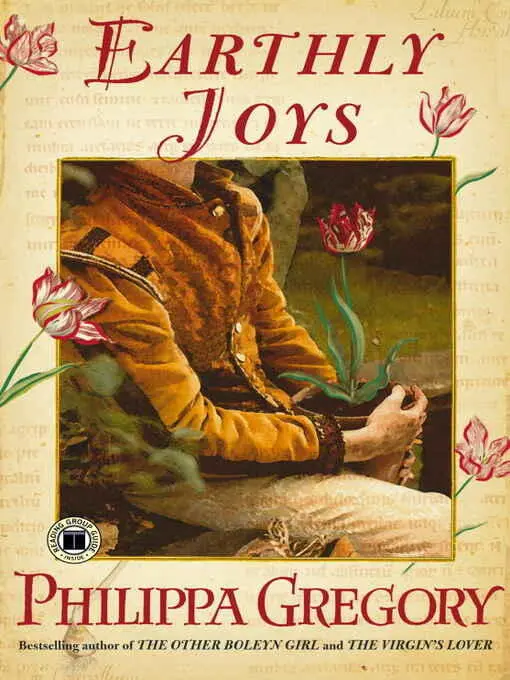
- Название:Earthly Joys
- Автор:
- Жанр:
- Год:неизвестен
- ISBN:нет данных
- Рейтинг книги:3 / 5. Голосов: 1
-
Избранное:Добавить в избранное
- Отзывы:
-
Ваша оценка:
Earthly Joys: краткое содержание, описание и аннотация
Предлагаем к чтению аннотацию, описание, краткое содержание или предисловие (зависит от того, что написал сам автор книги «Earthly Joys»). Если вы не нашли необходимую информацию о книге — напишите в комментариях, мы постараемся отыскать её.
Earthly Joys — читать онлайн ознакомительный отрывок
Ниже представлен текст книги, разбитый по страницам. Система сохранения места последней прочитанной страницы, позволяет с удобством читать онлайн бесплатно книгу «Earthly Joys», без необходимости каждый раз заново искать на чём Вы остановились. Поставьте закладку, и сможете в любой момент перейти на страницу, на которой закончили чтение.
Интервал:
Закладка:
“His Grace has ordered me to buy trees and plants from his tenants, and command them to take the cost from their rent,” Tradescant began.
The steward looked up from the household books, which were spread before him. “What?”
“He has ordered me to buy from the tenants,” John began again.
“I heard you,” the man said angrily. “But how am I to know what is bought or sold? And how am I to run this house if the rents are discounted before they are collected?”
John hesitated. “I was coming to you only to ask you how it should be done, if you have a list of tenants-”
“I have a list of tenants, I have a list of rents, I have a list of expenditure. What no one will tell me is how to make the one agree with the other.”
John paused for a moment to take stock of the man. “I am new in this post,” he said cautiously. “I don’t seek to make your task any harder. I do need to buy his lordship trees and plants to stock his gardens and he ordered me to buy from his tenants and see that they deduct the cost from their rents.”
The steward took in Tradescant’s steadiness. “Aye,” he said more quietly. “But the rents are already spent, signed away or promised. They are not free for deductions.”
There was a brief silence. “What am I to do then?” John asked pleasantly. “Shall I return to his lordship and tell him it cannot be done?”
“Would you do that?” the man enquired.
John smiled. “Surely. What else could I do?”
“You don’t fear taking bad news to a new master, the greatest master in the land?”
“I have worked for a great man before,” John said. “And, good news or bad, I found the best way was to tell him simply what was amiss. If a man is fool enough to punish his messengers he’ll never get his messages.”
The steward cracked a laugh and held out his hand. “I am William Ward. And I am glad to meet you, Mr. Tradescant.”
John took the handshake. “Have you been in his lordship’s service for long?” he asked.
The steward nodded. “Yes.”
“And are his affairs in a bad way?”
“He is the wealthiest man in the land,” William Ward stated. “Newly married to an heiress and with the king’s own fortune at his disposal.”
“Then-?”
“And the most spendthrift. And the wildest. D’you know how he did his courting?”
John glanced at the closed door behind them and shook his head.
“He caught the lady’s fancy – not surprising-”
John thought of that smile and the way the man threw back his head when he laughed. “Not surprising,” he agreed.
“But when he went to her father, the man declined. Again, not surprising.”
John thought of the rumors that Buckingham was the king’s man in ways that a sensible man did not question. “I don’t know,” he said stoutly.
“Not surprising to those of us who have seen the king on his visits here,” the steward said bluntly. “So what does my lord do?”
Tradescant shook his head. “I have been away, and in Canterbury, we don’t hear gossip. I rarely listen to it, anyway.”
The steward laughed shortly. “Well, hear this. Buckingham invites Lady Kate to his mother’s house for dinner and when the dinner is ended they don’t let her call for her carriage. They don’t let her go home! Buckingham’s mother herself keeps the girl overnight. So her reputation is ruined and her father is glad to get her wed at any price, takes the duke’s offer and has to pay handsomely for the privilege of having his daughter dishonored into the bargain.”
Tradescant’s jaw dropped open. “He did this?”
William Ward nodded.
“To a lady?”
“Aye. Now you get some idea of what he can do and what he is allowed. And now you get some idea of his rashness.”
Tradescant took a couple of swift steps and looked out of the window. Almost at once his sense of anxiety at this new post, at this madly impulsive young master, deserted him. He could see the site of what would be his kitchen garden, and he had it in mind to build a hollow wall, the first of its kind in England, and to heat the inside of it like a chimney. It might warm the fruit trees growing against the wall and make them come early into bud. He shook his head at the promising site and returned to the problem of his new master’s wildness.
“And is his new wife unhappy?” he asked.
William Ward looked at him for one incredulous moment and then burst into laughter. “You’ve seen my lord. D’you think a new wife would be unhappy?”
John shrugged. “Who knows what a woman wants?”
“She wants rough wooing and passionate bedding and she has had both from our lord. She wants to know that he loves her above everything else and there is no other woman in the land who can say that her husband risked everything to have her.”
“And the king?” Tradescant asked, going to the key of all things.
Ward smiled. “The king keeps the two of them as lesser men keep lovebirds in a cage, for the pleasure of seeing their happiness. And in any case, when he wants Buckingham all to himself he has only to crook his finger and our lord goes. His wife knows that he must go, and she smiles and bids him farewell.”
The steward fell silent. John looked out again at the parkland that stretched to the horizon. This was flat country; he thought the winds in winter would be cruel. “So,” he said slowly. “I have a new lord who is a spendthrift, and wild, a breaker of hearts and no respecter of persons.”
The steward nodded. “And any one of us would lay down our lives for him.”
Surprised, John looked up. The steward was smiling.
“Yes,” he said. “There isn’t a man on the estate who wouldn’t go hungry to keep him in his silks and satin. You’ll see. Now go and buy your trees. Every time you agree a price, make sure that you note down the tenant’s name and the price of his trees. And tell them that I – I and not they – will calculate the difference in the rents and discount the rents next quarter day. Bring me the list when you have done.”
He paused for a moment. “Unless I have given you a disliking for your lord and you want to go back to Canterbury?” he asked. “He is as wild as I say, he is as spendthrift as I say and he is as wealthy as I say. He has more power at his fingertips than any man in the land, and that is probably including the king.”
John had a strong sense of returning to his place at the very center of things, serving a lord who served his country, a man whose doings were the talk of every ale house in the land. “I’ll keep my place here,” he said. “There is much for me to do.”
1623
John and J worked hard all the winter, planning the gardens and pegging out lines for the knot garden, for the terraces and for the turf benches in the lord’s new orchards. Much of the work had to wait until the spring when the ground was soft enough for digging, but John had a small forest of trees waiting for the earth to warm so that they could be planted, each one labeled with its place, each with a plot reserved for it. For the workers who could neither read nor write, J had instituted a scheme of colored dots. They had to match the label on the tree marked with three red dots with the plot in the ground marked with three red dots. Or green or yellow. “This is code,” John said admiringly to J.
“It’s madness,” J said bluntly. “Everyone should be taught to read at dame school. How else can they understand their Bible? How else do their work?”
“We’re not all scholars like you,” John said mildly.
J flushed in one of his sudden attacks of bashfulness. “I’m no scholar,” he said gruffly. “I don’t pretend to be one. I’m no better than any man. But I do think that all men should be taught to read and write so that they can read their Bible and think for themselves.”
Читать дальшеИнтервал:
Закладка:
Похожие книги на «Earthly Joys»
Представляем Вашему вниманию похожие книги на «Earthly Joys» списком для выбора. Мы отобрали схожую по названию и смыслу литературу в надежде предоставить читателям больше вариантов отыскать новые, интересные, ещё непрочитанные произведения.




Обсуждение, отзывы о книге «Earthly Joys» и просто собственные мнения читателей. Оставьте ваши комментарии, напишите, что Вы думаете о произведении, его смысле или главных героях. Укажите что конкретно понравилось, а что нет, и почему Вы так считаете.