Jody Shields - The Winter Station
Здесь есть возможность читать онлайн «Jody Shields - The Winter Station» весь текст электронной книги совершенно бесплатно (целиком полную версию без сокращений). В некоторых случаях можно слушать аудио, скачать через торрент в формате fb2 и присутствует краткое содержание. Город: New York, Год выпуска: 2018, ISBN: 2018, Издательство: Little, Brown and Company, Жанр: Историческая проза, thriller_medical, на английском языке. Описание произведения, (предисловие) а так же отзывы посетителей доступны на портале библиотеки ЛибКат.
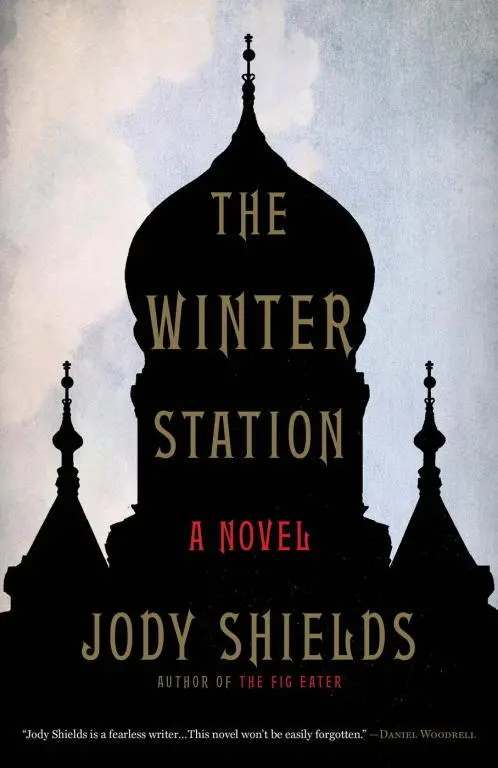
- Название:The Winter Station
- Автор:
- Издательство:Little, Brown and Company
- Жанр:
- Год:2018
- Город:New York
- ISBN:978-0-316-38532-9
- Рейтинг книги:5 / 5. Голосов: 1
-
Избранное:Добавить в избранное
- Отзывы:
-
Ваша оценка:
The Winter Station: краткое содержание, описание и аннотация
Предлагаем к чтению аннотацию, описание, краткое содержание или предисловие (зависит от того, что написал сам автор книги «The Winter Station»). Если вы не нашли необходимую информацию о книге — напишите в комментариях, мы постараемся отыскать её.
1910: people are mysteriously dying at an alarming rate in the Russian-ruled city of Kharbin, a major railway outpost in Northern China. Strangely, some of the dead bodies vanish before they can be identified.
During a dangerously cold winter in a city gripped by fear, the Baron, a wealthy Russian aristocrat and the city’s medical commissioner, is determined to stop this mysterious plague. Battling local customs, an occupying army, and a brutal epidemic with no name, the Baron is torn between duty and compassion, between Western medical science and respect for Chinese tradition. His allies include a French doctor, a black marketeer, and a charismatic Chinese dwarf. His greatest refuge is the intimacy he shares with his young Chinese wife—but she has secrets of her own.
Based on a true story that has been lost to history, set during the last days of imperial Russia, THE WINTER STATION is a richly textured and brilliant novel about mortality, fear and love.
The Winter Station — читать онлайн бесплатно полную книгу (весь текст) целиком
Ниже представлен текст книги, разбитый по страницам. Система сохранения места последней прочитанной страницы, позволяет с удобством читать онлайн бесплатно книгу «The Winter Station», без необходимости каждый раз заново искать на чём Вы остановились. Поставьте закладку, и сможете в любой момент перейти на страницу, на которой закончили чтение.
Интервал:
Закладка:
He knocked on the bedroom door. He felt the fear of the others waiting behind him, and it was a struggle to control his breath, the tight pressure of anticipation in his gut. He was trapped inside a bell, a blind, suffocating place. Fear pulsed through his hand, and without waiting for an answer, he shoved the door open with a bang.
They’d expected to be welcomed as saviors, rescuers, but there was only a strange flatness, a sense of waiting, not peace. The silence, and the lack of greeting, was a momentary relief.
A dead woman lay in the first bed, a prayer book open on her lap, the linens stained black in the dim light. Her face had been cleaned, perhaps a caretaker’s last gesture.
The Baron hesitated, sensing another presence. A cradle holding a still white figure was wedged next to the bed, the wall pinpointed with spots, blood from the infant’s coughing.
Another room with rows of beds. A man’s dark silhouette in the corner bed, dirty linens bunched up around his neck as if to hold him upright. Two men lay on the floor. Other beds held the rounded shapes of bodies covered with blankets. Better to die here, among familiar things, preserved by the cold, than locked in a train car for quarantine. “Nothing we can do here.”
The nurse and the medic who had followed him into the room stepped back into the corridor. They decided to check the church for survivors. Their voices stilted and very loud in the quiet space.
The church door was unlocked and they entered the climate of familiar odors, incense, wax, cold stone. The echoing noise of their movements stopped as the medic fumbled with a lantern, filling the height of the center space with frail light above lines of empty pews. In front of the altar, coffins were stacked on long tables, fit together like a raft waiting to be launched.
“Mother of God.”
The trespassers crossed themselves. The dead in the coffins must have been the first plague victims, their bodies stored here in the church for burial when the ground had thawed. Something caught the Baron’s eye, and he crouched to examine the legs of a table. “Bring the light here.”
Each table leg was wrapped with a large inverted metal cone to stop rats climbing up to reach the corpses inside the coffins. The lettering on the side of the coffins was barely legible and he leaned closer, reading several names aloud, his voice solemnly rising into the dim height of the church, a courtesy owed to the dead. He feared finding the name of a friend or acquaintance.
No one had an appetite for a meal, but they found tea and the samovar in the kitchen, heated snow until it boiled, and drank the hot liquid. Two bottles of vodka were discovered in a cupboard and a glass quickly poured for everyone.
When their share of the vodka was finished, the two soldiers left to continue searching the church and the outbuildings. The Baron and Father Androvich slumped at the kitchen table, waiting. Conversation was impossible.
Someone shouted that they’d found a closed room. The Baron and the priest hurriedly followed the voices to the door of the church cellar. The excited soldiers stood aside on the steps to let them pass, lanterns swinging in their hands.
The door at the bottom of the steps was sealed with metal strips and a thick plate was secured along the floor. Giddy from nerves and vodka, the soldiers joked about the gold and valuables inside the room.
The priest wearily leaned against the wall. “There’s nothing precious behind the door. You’ll see.”
The Baron gestured for a lantern. “Here’s a puzzle. The door is heavily secured but the key’s in plain sight. Look.” A key hung next to a crucifix on the wall.
The key fit the lock.
The door opened to a foul odor and a faint bitter smell of carbolic acid. Inside, the light from the lantern was a harsh eye on a disorder of heaped coffins, the tumbled long shapes of corpses wrapped in shrouds, blankets, rags. A catacombs. The suffocating air invaded the Baron’s nose and throat, and his face was damp with sweat. He silently backed out of the room, the images unwillingly fastened in memory as if burned in place.
The medic and the nurse were dismissed after all the buildings were searched. Two hundred and forty-three bodies were counted and left in place. The door in the stone wall around the church was repaired and barred against looters.
The Baron joined Father Androvich and the two soldiers in the church. They replaced the candles in the holders on the altar and set a kerosene lantern on the front pew, sharpening shadows on the rows of coffins. The plague dead were a tainted burden.
The priest recited an epistle from Thessalonians: “Rest with the saints, O Christ, thy servant’s soul, where there is no pain, nor grief, nor sighing, but life that endeth not.”
The Baron hoped the presence of other believers had brought peace to the dying and that they had been tended and mourned. Perhaps, mercifully, many of them were unaware that Father Bourles and everyone else had died. The place would be cleaned and someday no trace would remain of the many who had perished here.
He didn’t remember falling asleep in the church but woke in a wagon jolting back to the hospital. The streets were deserted. Was it morning or late afternoon? He could barely see his hand in the dimness.
He blinked, rubbed his eyes, needing the contact, the pressure of his fingertips as a connection to wakefulness, to convince himself that the events in the church hadn’t been a dream. He was awake.
CHAPTER TWELVE
The plague’s hunger had carved up the city. A layer had been stripped away, revealing hidden bones, barbed wire, metal, and wood that became barricades. Every road into Kharbin was blocked by men with bayonets against an invisible enemy. A cordon radiated out over the quarters—Novy Gorod, Pristan, Fuchiatien, Staryi Kharbin—dividing the city into four, then eight and finally sixteen guarded sections. Some Kharbinskiis felt more secure, as if plague could be held inside certain boundaries.
The center of Kharbin was deserted. The furriers on Kitayskaya and Mostovaya Streets were shut down first, as fur was suspected of harboring plague-carrying fleas. All the foreign-owned companies and the Chinese and Russian banks closed. Hotels refused guests who worked in hospitals or gave dubious answers when queried about their visit to Kharbin. Public worship was forbidden, and churches, synagogues, and temples closed. Schools closed. Libraries closed. The opera, ballet, and other theaters locked their doors. Restaurants and most chaynaya closed. The lumberyards, the Soskin grain mill, and Borodin’s vodka distillery closed.
Pawnshops drew their curtains but secretly continued a flourishing business in certain goods, solid durable valuables that could be disinfected—jewelry, silverware, icons, jade and ivory objects, precious metals.
Pleasure was accessible for the brave or foolhardy. Opium dens and nightclubs defied the ban on public gatherings and remained open. As a dark joke, the young women selling cigarettes and cigars added a few thermometers to the offerings on their trays.
The Baron stared down the dim alley at the plague wagon next to the inn. Three reflected points of light indicated the bayonets held by the soldiers seated in the front of the wagon. The Baron spoke to the men’s silhouettes. “Wait here. Let me enter the inn alone. I’ll shout if I need help.”
“Be quick with your inspection.”
Lanterns illuminated the center of the low, overheated inn, and the faces of the laborers massed around the tables shone with sweat. It was like being confined in the belly of a ship.
He addressed them in Chinese about the sickness. “If one person becomes sick, everyone around him will become sick. Then you’ll give the sickness to your families. In the hospital, you’ll be made comfortable.” His words were unconvincing.
Читать дальшеИнтервал:
Закладка:
Похожие книги на «The Winter Station»
Представляем Вашему вниманию похожие книги на «The Winter Station» списком для выбора. Мы отобрали схожую по названию и смыслу литературу в надежде предоставить читателям больше вариантов отыскать новые, интересные, ещё непрочитанные произведения.










Обсуждение, отзывы о книге «The Winter Station» и просто собственные мнения читателей. Оставьте ваши комментарии, напишите, что Вы думаете о произведении, его смысле или главных героях. Укажите что конкретно понравилось, а что нет, и почему Вы так считаете.