Dan Simmons - Black Hills
Здесь есть возможность читать онлайн «Dan Simmons - Black Hills» весь текст электронной книги совершенно бесплатно (целиком полную версию без сокращений). В некоторых случаях можно слушать аудио, скачать через торрент в формате fb2 и присутствует краткое содержание. Год выпуска: 2010, ISBN: 2010, Издательство: Little, Brown & Company, Жанр: Историческая проза, на английском языке. Описание произведения, (предисловие) а так же отзывы посетителей доступны на портале библиотеки ЛибКат.
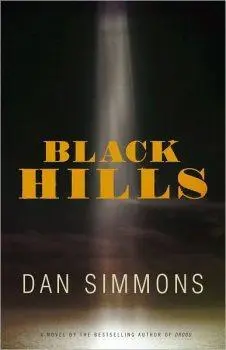
- Название:Black Hills
- Автор:
- Издательство:Little, Brown & Company
- Жанр:
- Год:2010
- ISBN:9780316071963
- Рейтинг книги:5 / 5. Голосов: 1
-
Избранное:Добавить в избранное
- Отзывы:
-
Ваша оценка:
Black Hills: краткое содержание, описание и аннотация
Предлагаем к чтению аннотацию, описание, краткое содержание или предисловие (зависит от того, что написал сам автор книги «Black Hills»). Если вы не нашли необходимую информацию о книге — напишите в комментариях, мы постараемся отыскать её.
In BLACK HILLS, Dan Simmons weaves the stories of Paha Sapa and Custer together seamlessly, depicting a violent and tumultuous time in the history of Native Americans and the United States Army. Haunted by the voice of the general his people called "Long Hair," Paha Sapa lives a long life, driven by a dramatic vision he experiences in the Black Hills that are his tribe's homeland. As an explosives worker on the massive Mount Rushmore project, he may finally be rid of his ghosts?on the very day FDR comes to South Dakota to dedicate the Jefferson face.
Black Hills — читать онлайн бесплатно полную книгу (весь текст) целиком
Ниже представлен текст книги, разбитый по страницам. Система сохранения места последней прочитанной страницы, позволяет с удобством читать онлайн бесплатно книгу «Black Hills», без необходимости каждый раз заново искать на чём Вы остановились. Поставьте закладку, и сможете в любой момент перейти на страницу, на которой закончили чтение.
Интервал:
Закладка:
In the morning, the bugle blew and Big Foot was helped out of his tent and the soldiers began the disarming. The warriors and old men handed over their rifles and old pistols. Not satisfied, the soldiers went into the tipis and threw axes and knives and even tent stakes onto the big pile in the center of the circle of disarmed men.
Most of the Hunkpapas and Minneconjous wore their inpenetrable Ghost Shirts that day, but not in anticipation of a fight. They’d given up their guns.
But there is always one who won’t. In this case, I was told, it was a very young Minneconjou named Black Coyote. Some told me that Black Coyote was deaf and couldn’t hear the commands from the soldiers and his own chiefs to put his rifle down. Others said that Black Coyote could hear all right, but that he was a stupid pain in the ass and a show-off. At any rate, Black Coyote danced around with his rifle held out, not aiming it but not putting it down with the other weapons. Then the soldiers grabbed him and spun him around and there was a shot—some thought it came from Black Coyote’s rifle; others told me it hadn’t. But it was enough.
You can imagine what happened next, Robert, on that sunny, very cold day near the end of the Moon When the Deer Shed Their Horns. Many of the warriors snatched up their rifles and tried to fight. Eventually the Hotchkiss guns began firing down into them. When it was over, more than half of Big Foot’s people were dead or very seriously wounded… a hundred and fifty-three were dead on the snowy battlefield. More crawled away to die in the bushes or stream. Louise Weasel Bear, who told me the story, said that almost three hundred of the original three hundred and fifty men, women, and children who’d followed Big Foot there died at Chankpe Opi Wakpala. I remember that something like twenty-five wasichu soldiers died that day. I don’t know how many were wounded, but not that many more. The young woman Hakiktawin told me that most of the Seventh Cavalry soldiers had been shot by their own men or hit by shrapnel from rounds from the Hotchkiss guns striking rock or bone. I’ve always preferred to think that this is not the truth—that the warriors and old men and women who died there that day did fire back with some effect.
I was not quite to Pine Ridge when I heard and I turned around and hurried to Chankpe Opi Wakpala. Limps-a-Lot had taken me to that place many times when I was a boy, simply because it was beautiful and had many legends and stories about it.
There was a blizzard. My horse died, but I kept walking, then stole another horse from a cavalry detachment I came across in the storm. When I arrived at Chankpe Opi Wakpala I saw that the Seventh had left the Indian dead and severely wounded behind, and now the bodies were frozen in strange postures and covered with snow from the storm. I found Big Foot first—his right arm and right leg were bent as if he were pushing himself up to a sitting position, his back was off the ground, the fingers of his left hand were raised and frozen as if in the act of opening, with only the little finger curled shut—and he was wearing a woman’s scarf around his head. His left eye was closed but his right eye was open—the crows and magpies had not taken his eyes yet, probably because they were frozen as hard as marbles—and there was snow on his open eye.
Limps-a-Lot was lying no more than thirty feet from Big Foot. Something, probably a thirty-seven-millimeter round from one of the Hotchkiss guns, had taken his right arm off, but I found it lying nearby in the snow, rising almost vertically from a snowdrift, as if my tunkašila were waving at me. His mouth was wide open as if he had died screaming—but I prefer to think that he was singing his Death Song loudly. Either way, his gaping mouth had filled with snow until the snow overflowed, running out in all directions like some pure, white vomit of death, filling his eye sockets and outlining his sharp cheekbones.
I knew the wasichu cavalry would be back, probably that same day, to take photographs and to bury the dead there, probably in a single mass grave, and I could not leave Limps-a-Lot’s body there for that. But I had no shovel with me, not even a knife, and my tunkašila’s body was frozen to the cold earth. They were as one. Nothing bent—not his arm, not his twisted legs, not even the separate arm rising from the snowdrift. Even his left ear was one with the frozen earth. With only my cold, bare hands, it was like trying to lift a rooted tree out of the ground.
Eventually I sat down, panting, freezing, my hands numb, knowing that the cavalry detachment would be there soon and that they would take me prisoner as well—the word I’d heard was that the few Hunkpapa and Minneconjou survivors were being sent to a prison in Omaha, where they had planned to send Big Foot and all his men—and I began walking that murder field, I refuse to this day to call it a battlefield, until I found a woman’s corpse with a dull, flat-bladed cooking knife in her clenched hand. I had to snap all her fingers like twigs to get the knife free. With that knife to chip away at the ice between Limps-a-Lot’s frozen coat and frozen flesh and the frozen soil, I freed his body from the earth’s grip in less than half an hour. I brought the severed arm with the white bone protruding as well. I propped Limps-a-Lot’s body on the saddlehorn in front of me—it was like carrying a long and twisted and unwieldy, but almost weightless, cottonwood branch—and I lashed his right arm across his chest with long strips of cloth torn from my shirt.
With only that dull knife, I could not bury Limps-a-Lot in the frozen soil that day, but I took him far away from what I thought of that day as that evil field and buried him miles and miles away along the Chankpe Opi Wakpala where it undercut a tall bluff and where larger, older cottonwoods—the kind of beautiful waga chun, “rustling tree,” of the kind Limps-a-Lot or Sitting Bull would have chosen to stand in the center of the dancing circle—and there I made the best burial scaffold I could for my tunkašila up there in the branches of one of those rustling-tree perfect cottonwoods.
But I had no robes to lay under him or to cover him with, no real weapons or tools to leave by his side. I did leave the dull knife after using it to hack off all my hair, and it was covered with my frozen blood as well as some from Limps-a-Lot. I kissed both of his hands—lifting the severed right arm toward my lips—and kissed his cold-stone of a furrowed forehead and whispered good-bye and rode the stolen cavalry horse almost all the way back to Pine Ridge before dismounting, swatting the exhausted beast on the rump, and walking the rest of the way home. It had been three days since I had eaten anything and I lost two toes on my left foot to frostbite.
The other fallen, I learned, were buried in a mass grave that very afternoon. No one knows where I left Limps-a-Lot’s body and I have never returned to the secret spot.
That is all, Robert. Hecetu. Mitakuye oyasin.
So be it. All my relatives—every one of us. I have spoken.

IT TAKES PAHA SAPA six trips back and forth with the donkeys before he gets all twenty-one crates of dynamite hidden in the Hall of Records test bore tunnel. He could have made it in five trips if he’d thought the diminutive donkeys could handle more than two crates lashed onto their pack frames at a time, but he was conservative there, and the final trip back up the canyon, a tether in each hand, is made with one donkey carrying the last crate of dynamite and the other carrying only the hundreds of feet of coiled detonation wire and other incidental things Paha Sapa will need on Sunday. He has painted the black wire a granite gray.
Читать дальшеИнтервал:
Закладка:
Похожие книги на «Black Hills»
Представляем Вашему вниманию похожие книги на «Black Hills» списком для выбора. Мы отобрали схожую по названию и смыслу литературу в надежде предоставить читателям больше вариантов отыскать новые, интересные, ещё непрочитанные произведения.



Обсуждение, отзывы о книге «Black Hills» и просто собственные мнения читателей. Оставьте ваши комментарии, напишите, что Вы думаете о произведении, его смысле или главных героях. Укажите что конкретно понравилось, а что нет, и почему Вы так считаете.