Dan Simmons - Black Hills
Здесь есть возможность читать онлайн «Dan Simmons - Black Hills» весь текст электронной книги совершенно бесплатно (целиком полную версию без сокращений). В некоторых случаях можно слушать аудио, скачать через торрент в формате fb2 и присутствует краткое содержание. Год выпуска: 2010, ISBN: 2010, Издательство: Little, Brown & Company, Жанр: Историческая проза, на английском языке. Описание произведения, (предисловие) а так же отзывы посетителей доступны на портале библиотеки ЛибКат.
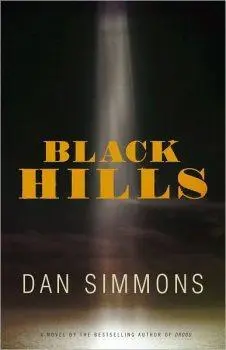
- Название:Black Hills
- Автор:
- Издательство:Little, Brown & Company
- Жанр:
- Год:2010
- ISBN:9780316071963
- Рейтинг книги:5 / 5. Голосов: 1
-
Избранное:Добавить в избранное
- Отзывы:
-
Ваша оценка:
Black Hills: краткое содержание, описание и аннотация
Предлагаем к чтению аннотацию, описание, краткое содержание или предисловие (зависит от того, что написал сам автор книги «Black Hills»). Если вы не нашли необходимую информацию о книге — напишите в комментариях, мы постараемся отыскать её.
In BLACK HILLS, Dan Simmons weaves the stories of Paha Sapa and Custer together seamlessly, depicting a violent and tumultuous time in the history of Native Americans and the United States Army. Haunted by the voice of the general his people called "Long Hair," Paha Sapa lives a long life, driven by a dramatic vision he experiences in the Black Hills that are his tribe's homeland. As an explosives worker on the massive Mount Rushmore project, he may finally be rid of his ghosts?on the very day FDR comes to South Dakota to dedicate the Jefferson face.
Black Hills — читать онлайн бесплатно полную книгу (весь текст) целиком
Ниже представлен текст книги, разбитый по страницам. Система сохранения места последней прочитанной страницы, позволяет с удобством читать онлайн бесплатно книгу «Black Hills», без необходимости каждый раз заново искать на чём Вы остановились. Поставьте закладку, и сможете в любой момент перейти на страницу, на которой закончили чтение.
Интервал:
Закладка:
If the nitro or dynamite goes now, he realizes as he crawls up the mountain road in low gear, it will be only him and a stretch of highway and a few dozen trees vaporized. But Paha Sapa frowns as he realizes that it’s been so terribly dry this entire summer that such a blast on this part of the road will almost certainly start a forest fire that could still destroy all of Keystone, and the Doane Mountain and Mount Rushmore structures as well.
The twenty-one crates of dynamite and single, smaller crate of detonators don’t blow during the bouncing, jolting ride up the hill.
Paha Sapa is amazed to discover not only that he expected them to, but—in some strange, inexplicable, sick way—he is a little disappointed that they haven’t.
Parked in moon shadows again, he unloads all twenty-one crates and the single, much smaller box of detonators. Then he drives the Dodge quietly out of the parking lot, pulls it into an abandoned fire road three-quarters of a mile down the hill, and walks back, cutting through the woods. The almost-full moon is above the closer hills and rocky ridgelines now and keeps tangling itself in pine branches above Paha Sapa before working itself free. Its brilliance blots out the stars as it climbs higher and makes the granite cliff face and shoulders of Mount Rushmore, glimpsed to his left through the tall trees, glow a purer white in the moonlight than they do in daylight. George Washington’s eyes, the oldest up there, present the perfect illusion of following Paha Sapa.
Before bringing the blindfolded and now silent donkeys back to the dynamite to load up, Paha Sapa lifts the box of detonators—supporting it against his chest with a leather strap he’s rigged—and carries it up the Hall of Records canyon first.
The moonlight high on the canyon walls here looks like bold-edged bands of white paint. The shadows are very black, though, and both the approaches to the canyon and the floor of the canyon itself are littered with tree roots and then loose stones and fissures. Paha Sapa wishes that Borglum had already built that broad curving staircase he was talking about earlier in the day—yesterday now. He tries to keep to the moonlit areas, but the shadows are broad enough and black enough that once in the canyon itself, occasionally he has to use the flashlight he brought.
Once, trusting to moonlight, Paha Sapa trips and starts to fall forward onto the slightly clanking box of detonators. He stops his fall with his right arm outthrust, finding a low boulder there in the darkness.
As he carefully straightens and moves forward more slowly, he can feel the blood from his scraped and gouged palm dripping down his fingers. He can only smile and shake his head.
The rectangular test bore for the Hall of Records is invisible in the ink-black shadows thrown down that wall, but Paha Sapa can see the end of the canyon wall ahead and knows when to stop. He uses the flashlight to find the opening and, crouching in it, moves forward slowly to the end of the blind shaft. He’ll be stacking the dynamite itself closer to the opening and wants to be sure that no misstep or dropped crate in the darkness could trigger these touchy detonators.
Walking back to the donkeys and waiting dynamite beyond the mouth of the narrow canyon, Paha Sapa resists the ridiculous urge to whistle. He takes a clean kerchief from his pocket, wipes the blood from his palm and fingers, and wonders at the strange sense of exhilaration rising in him.
Is this what it feels like to be a warrior going into battle?

— Did you ever want to be a warrior ?
This was Robert asking his father an unexpected yet strangely overdue question. It was summer 1912, during their annual summer camping trip, and Robert was fourteen years old. They’d camped in the Black Hills many times before this, but this was the first time Paha Sapa had brought his son to the top of the Six Grandfathers. The two were sitting at the edge of the cliff, their legs dangling over, very close to where Paha Sapa had dug his Vision Pit thirty-six years earlier.
— What I mean is… weren’t most of the young men in your tribe expected to become warriors in those days, Father?
Paha Sapa smiled.
— Most. Not all. I’ve told you about the winkte. And the wičasa wakan.
— And you wanted to become a wičasa wakan, like your adoptive grandfather, Limps-a-Lot. But tell the truth, Father… weren’t you ever tempted to become a warrior like most of the other young men?
Paha Sapa thinks about the one silly raid on the Pawnee on which he’d been allowed to accompany the older boys—and where he hadn’t even been able to hold the horses and keep them silent well enough to avoid ridicule from the others, who themselves had retreated fast enough when they saw the size of the Pawnee camp of warriors—and then he thought about how he’d rushed into the huge fight at the Greasy Grass without bringing a weapon. He realized he hadn’t even wanted to hurt the wasichus then, on the day Long Hair and the others had attacked the huge village there, but had simply ridden with the other men and boys because he didn’t want to be left behind .
— Actually, Robert, I don’t think I ever did want to be a warrior. Not really. There must have been something lacking in me. Perhaps it was just a matter of canl pe.
Fourteen-year-old Robert shook his head.
— You were no canl waka, Father. You know as well as I that it’s never been a question of cowardice.
Paha Sapa looked at the few clouds moving across the sky. In 1903, after Big Bill Slovak died in the Holy Terror Mine, Paha Sapa had taken his five-year-old son away from Keystone and Deadwood and out onto the plains, where the two had camped for seven days at Matho Paha , Bear Butte. On the sixth day, Paha Sapa awoke to find his son gone. The wagon he’d brought was still hidden in the secret place below, the horses still tethered where he’d left them, but Robert was gone.
For three hours Paha Sapa had searched up and down and along all sides of the fourteen-hundred-foot-tall hill rising out of the prairie while filling his mind with images: rattlesnake, rock fall, the boy falling, strangers. Then, just as Paha Sapa had decided that he must ride one of the horses to the nearest town to get help with the search, little Robert had walked into camp. He was hungry and dirty, but otherwise fine. When Paha Sapa had demanded his son tell him where he’d gone, why he’d been hiding, Robert had said, “I found a cave, Father. I was talking to the man with white hair who lives in the cave. His first name is the same as mine.”
After breakfast, he’d asked Robert to show him the cave. Robert could not find it. When Paha Sapa asked Robert to tell him what the old man had talked to him about, the boy said only, “He said that what he told me and the dreams he showed me were our secret—only his and only mine. He said you would understand, Father.”
Robert never revealed what Robert Sweet Medicine had said to him that day in 1903, or what visions he had shared. But every summer since then, Paha Sapa and his son had gone camping for a week.
Robert was dangling his long legs over the edge of the Six Grandfathers and looking at his father when he said softly—
— Ate, khoyákiphela he?
Paha Sapa did not know how to answer. What did he fear, other than for his son’s life and well-being? What had he feared, other than for his wife’s life and happiness when she was ill or for his people’s future? And had that been fear or just… knowledge?
And perhaps he feared the violence of other men’s memories that lay in his mind and soul like dark nodes: Crazy Horse’s depressions and explosions into fury; even Long Hair’s memories of joyous murders in the low light of winter sunrise with the regimental band playing on the hill behind them.
Читать дальшеИнтервал:
Закладка:
Похожие книги на «Black Hills»
Представляем Вашему вниманию похожие книги на «Black Hills» списком для выбора. Мы отобрали схожую по названию и смыслу литературу в надежде предоставить читателям больше вариантов отыскать новые, интересные, ещё непрочитанные произведения.



Обсуждение, отзывы о книге «Black Hills» и просто собственные мнения читателей. Оставьте ваши комментарии, напишите, что Вы думаете о произведении, его смысле или главных героях. Укажите что конкретно понравилось, а что нет, и почему Вы так считаете.