Philippa Gregory - The Queen's Fool
Здесь есть возможность читать онлайн «Philippa Gregory - The Queen's Fool» — ознакомительный отрывок электронной книги совершенно бесплатно, а после прочтения отрывка купить полную версию. В некоторых случаях можно слушать аудио, скачать через торрент в формате fb2 и присутствует краткое содержание. Жанр: Историческая проза, на английском языке. Описание произведения, (предисловие) а так же отзывы посетителей доступны на портале библиотеки ЛибКат.
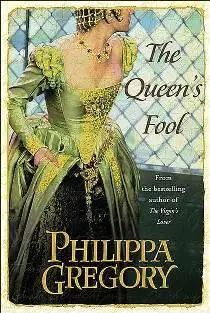
- Название:The Queen's Fool
- Автор:
- Жанр:
- Год:неизвестен
- ISBN:нет данных
- Рейтинг книги:5 / 5. Голосов: 1
-
Избранное:Добавить в избранное
- Отзывы:
-
Ваша оценка:
The Queen's Fool: краткое содержание, описание и аннотация
Предлагаем к чтению аннотацию, описание, краткое содержание или предисловие (зависит от того, что написал сам автор книги «The Queen's Fool»). Если вы не нашли необходимую информацию о книге — напишите в комментариях, мы постараемся отыскать её.
The Queen's Fool — читать онлайн ознакомительный отрывок
Ниже представлен текст книги, разбитый по страницам. Система сохранения места последней прочитанной страницы, позволяет с удобством читать онлайн бесплатно книгу «The Queen's Fool», без необходимости каждый раз заново искать на чём Вы остановились. Поставьте закладку, и сможете в любой момент перейти на страницу, на которой закончили чтение.
Интервал:
Закладка:
I shot a bemused look at Jane and she scowled at me, as if I were to blame.
“Leaving you?”
“He is going to the Low Countries. Hannah, he is leaving me… leaving me.”
I took her hands. “Your Grace…”
Her eyes were sightless, filled with tears, fixed on the empty hearth. “He is leaving me,” she said.
I went over to Jane Dormer, stabbing her needle into a linen shirt in the window seat. “How long has she been like this?”
“Since he told her his news, this morning,” she said coldly. “He sent her ladies away when she started screaming that her heart would break, then, when he could not stop her weeping, he left too. He has not come back, and they have not come back.”
“Has she not eaten? Have you brought her nothing?”
She glared at me. “He has broken her heart, as you predicted,” she said flatly. “Don’t you remember it? I do. When I brought her the portrait and I was so hopeful and she was so taken with him. You said he would break her heart and he has done so. Him with his baby that was there and then gone, him with his Spanish lords longing to go and fight the French, and forever complaining about England. Now he has told her he is going to war against the French, but not when he will come back; and she can say nothing but that he is leaving, leaving her. And she cries as if she would die of grief.”
“Shouldn’t we get her to bed?”
“Why?” she demanded. “He won’t come to her in bed for lust, if he won’t come here for pity, and his presence is the only thing that will help her.”
“Mistress Jane, we cannot just sit here and see her cry and cry like this.”
“What would you have us do?” she asked. “Her happiness is given over to a man who does not care enough for her to stay when she has lost his baby and has lost the love of her people for him. A man who does not have enough common pity to give her a word of comfort. We cannot heal this hurt with a cup of warm ale and a brick beneath her feet.”
“Well let’s get her that, at least,” I said, falling on the suggestion.
“You get it,” she said. “I’m not leaving her alone. This is a woman who could die of loneliness.”
I went to the queen and knelt beside her where she keened, soundlessly, her forehead knocking against the hearthstone as she rocked forward and back. “Your Grace, I’m going down to the kitchen, can I bring you anything to eat or drink?”
She sat back on her heels but did not look at me. Her forehead was bloody where she had grazed it against the stone. Her gaze remained fixed on the empty hearth; but she put out her cold little hand and took mine. “Don’t leave me,” she said. “Not you as well. He’s leaving me, you know, Hannah. He just told me. He’s leaving me, and I don’t know how I can bear to live.”
Dear Father,Thank you for your blessing in your letter to me. I am glad that you are well and that the shop in Calais is doing so well. I should have been glad to obey your command and come to you at once but when I went to the queen for permission to leave her service I found her so ill that I cannot leave her, at least for this month. The king has set sail for the Lowlands, and she cannot be happy without him, she is quite desolate. We have come to Greenwich and it is like a court in mourning. I will stay with her until he returns which he has promised, on his word of honor, will be very soon. When he comes back I shall come to you without delay. I hope this is agreeable to you, Father, and that you will explain to Daniel and to his mother that I would prefer to be with them, but that I feel it is my duty to stay with the queen at this time of her great unhappiness.I send you my love and duty and hope to see you soon — Your Hannah
Dear Daniel,Forgive me, I cannot come yet. The queen is in a despair so great that I dare not leave her. The king has left and she is clinging to all her other friends. She is so bereft that I fear for her mind. Forgive me, love, I will come as soon as I can. He has sworn it is a brief absence, merely to protect his interests in the Low Countries and so we expect him back within the month. September or October at the latest, I will be able to come to you. I want to be your wife, indeed I do.Hannah
Autumn 1555
The queen retreated into a private world of silent misery in the palace that had been the happiest of them all: Greenwich. Parting with the king had been an agony for her. Like a man, he had hidden from her despair in the elaborate formality of leave-taking, he had made sure they were always attended so she could not cry over him in private. He engineered it so that she said good-bye to him like a doll queen: one whose hands and feet and mouth were worked by an indifferent puppetmaster. When he was finally gone it was as if the strings were cut and she dropped to the floor, all disjointed.
Elizabeth had slid away from him with a smile which suggested to some that she had a better idea of when he would come back to England than his own wife, and was reassured by his plans. He had the decency not to hold her close on parting, but when he boarded ship and leaned over the side and waved, he kissed his hand and it was a gesture directed ambiguously: toward the princess, and the heartbroken queen.
The queen kept to her darkened rooms and would be served only by Jane Dormer or me, and the court became a place of ghosts, haunted by her unhappiness. The few Spanish courtiers left behind by their king were desperate to join him, their anxiety to leave made us all feel that the English marriage had been nothing but an interlude in their real lives, and a mistake, at that. When they applied to the queen for permission to join him she flew into a frenzy of jealousy, swearing that they were going because they secretly knew that there was no point waiting for him in England. She screamed at them, and they bowed and fled from her fury. Her ladies scuttled from the room or pressed themselves back against their seats, trying to hear and see nothing, and only Jane and I went to her, begging her to be calm. She was beside herself, while the storm lasted Jane and I had to cling to her arms to stop her beating her head against the paneled walls of her privy chamber. She was a woman deranged by her passion for him, driven by her conviction that she had lost him forever.
When the queen’s rage subsided it was worse, because she slumped to the floor and hugged her knees to her chest and buried her face, like a little girl after a beating. We could not make her stand up or even open her eyes for hours. She hid her face from us, deep in despair and filled with shame at how low she had been brought by love. Sitting beside her on the cold wooden floor, with nothing to say that could help her in her pain, I saw the skirt of her gown slowly darken as her tears soaked into the velvet, and she never made a sound.
She did not speak for a night and a day, and the day after she was stony-faced like a statue of despair. When she emerged to sit on her throne in the empty room it was to find that the Spaniards were openly rebelling against being forced to stay, and all the English men and women of the court were angry too. Life in the queen’s service was not what it had been when the king had arrived and taken her with love; not what a court should be. Instead of literature and music, sport and dancing, it was like a nunnery ruled by a mortally sick abbess. No one spoke above a whisper, no feasts ever took place, there were no entertainments or gaiety, and the queen sat on her throne with a face of blank misery and retired to her rooms to be on her own whenever she could. Life at court had become long days of hopeless waiting for the king to return. We all knew that he never would.
With no man to torment, and no chance of making the queen more miserable than she was already, Princess Elizabeth took the opportunity to leave the court at Greenwich and go to her palace at Hatfield. The queen let her go, without a word of affection. Any love she had felt for Elizabeth the child had been worn out by the disloyalty of Elizabeth the young woman. Elizabeth’s flirtation with the king while Mary had been enduring the last weeks of a failed pregnancy had been the final act of willful unkindness that would ever hurt her sister. In her heart Mary saw this as the final proof that Elizabeth was the daughter of a whore and a lute player. What other girl would treat her sister as Elizabeth had done? In her heart she denied kinship with Elizabeth, she denied her as her sister, she denied her as her heir. She took back the love that she had constantly offered the younger woman, and she excluded her from her heart. She was glad to let her go and would not have cared if she had never seen her again.
Читать дальшеИнтервал:
Закладка:
Похожие книги на «The Queen's Fool»
Представляем Вашему вниманию похожие книги на «The Queen's Fool» списком для выбора. Мы отобрали схожую по названию и смыслу литературу в надежде предоставить читателям больше вариантов отыскать новые, интересные, ещё непрочитанные произведения.



Обсуждение, отзывы о книге «The Queen's Fool» и просто собственные мнения читателей. Оставьте ваши комментарии, напишите, что Вы думаете о произведении, его смысле или главных героях. Укажите что конкретно понравилось, а что нет, и почему Вы так считаете.