Herman Wouk - The Winds of War
Здесь есть возможность читать онлайн «Herman Wouk - The Winds of War» весь текст электронной книги совершенно бесплатно (целиком полную версию без сокращений). В некоторых случаях можно слушать аудио, скачать через торрент в формате fb2 и присутствует краткое содержание. Год выпуска: 1971, Издательство: Collins, Жанр: Историческая проза, на английском языке. Описание произведения, (предисловие) а так же отзывы посетителей доступны на портале библиотеки ЛибКат.
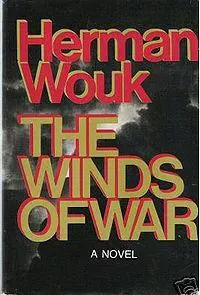
- Название:The Winds of War
- Автор:
- Издательство:Collins
- Жанр:
- Год:1971
- ISBN:нет данных
- Рейтинг книги:4 / 5. Голосов: 1
-
Избранное:Добавить в избранное
- Отзывы:
-
Ваша оценка:
The Winds of War: краткое содержание, описание и аннотация
Предлагаем к чтению аннотацию, описание, краткое содержание или предисловие (зависит от того, что написал сам автор книги «The Winds of War»). Если вы не нашли необходимую информацию о книге — напишите в комментариях, мы постараемся отыскать её.
About the Author
Herman Wouk's acclaimed novels include the Pulitzer-Prize winning
;
;
;
;
;
; and
.
The Winds of War — читать онлайн бесплатно полную книгу (весь текст) целиком
Ниже представлен текст книги, разбитый по страницам. Система сохранения места последней прочитанной страницы, позволяет с удобством читать онлайн бесплатно книгу «The Winds of War», без необходимости каждый раз заново искать на чём Вы остановились. Поставьте закладку, и сможете в любой момент перейти на страницу, на которой закончили чтение.
Интервал:
Закладка:
She had gone to the Officers’ Club dance the night before out of loneliness and boredom, accepting the invitation of a lieutenant she had dated long ago, a Pensacola washout who now served on Cincpac’s staff. Vic had had a cough for days, but his temperature had remained normal. Of course she would never have stayed out until after three, cavorting and boozing, had she known he would turn so sick. Still, she felt guilty, irritated, and bored to the bone with this idiotic existence.
Since her return from Washington, she had been growing more and more bored, realizing that she had married not a dashing rake after all, but a professional navy fanatic, who made marvellous love to her now and then and otherwise almost ignored her. Lovemaking at best took up very little time. What an end of Janice Lacouture — at twenty-three, a Navy baby-sitter! She had taken a half-day coding job at Cincpac to avoid being evacuated with the service wives, but that was dull drudgery too. Janice had spells of deep rebellion, but so far she had said nothing to Warren. She was afraid of him. But sooner or later, Janice meant to have it out, even if divorce ensued. A small general store in a green wooden shack at a crossroads stood open, with two fat Japanese children playing on the rickety porch. That was lucky; it stocked a strange jumble of things, and she might not have to drive clear into town. As she went in, she heard gunfire pop over the harbor, as it had been popping for months off and on in target practice.
The storekeeper, a black-haired little Japanese in a flowered sport shirt, stood behind his counter drinking tea. On shelves within reach of his arms, goods were neatly stacked: canned food, drugs, pans, brooms, candy, toys, soda pop, and magazines. He bobbed his head, smiling, under hanging strips of dried fish. “Lubbing acoho? Ess, ma’am.” He went through the green curtain behind him. The gunfire sounded heavier and louder, and planes thrummed overhead. A funny time for a drill, she thought, Sunday morning before colors; but maybe that was the idea.
Going to the doorway, Janice spotted the planes flying quite high, lots of them, in close order toward the harbor, amid a very heavy peppering of black puffs. She went to her car for the binoculars. At first she saw only blue sky and clouds of black smoke, then three planes flew into the field of vision in a shining silvery triangle. On their wings were solid orange-red circles. Stupefied, she followed their flight with the glasses.
“Ess, ma’am? Many pranes! Big, big drir!” The store keeper stood beside her, offering her the package with a toothy smile that almost shut his eyes. His children stood behind him on the porch, pointing at the sky and chattering in shrill Japanese.
Janice stared at him. Nearly everybody in the Navy disliked the Hawaiian Japanese and assumed they were spies. She had caught the feeling. Now here was this Jap grinning at her, and overhead Jap planes were actually flying! Flying over Hawaii! What could it mean? The nerve of these Japs! She took the package and abruptly, rudely offered him the binoculars. The man bobbed his head and peered upward at the planes, now beginning to peel off and dive, one by one, glinting silver amid the thickening black puffs. With a queer noise in his throat, he pulled himself erect and held out the binoculars to her, regarding her with a blank face, his slant eyes like black glass. More than the unreal, startling sight of the orange-marked planes, the look on his face told Janice Henry what was happening in Pearl Harbor. She snatched the binoculars, jumped into her car, slammed the door, and whirred the ignition. He hammered on the door, holding out his hand, palm up, and shouting. She had not paid him. Janice was an honest young lady, but now with a pulse of pleasurable childish excitement she shouted harshly — using the sailor epithet for the first time in her life — “ Fuck you! ” and shot off up the road.
That was how the war came to Janice Henry, and that was the story she told down the years after a few drinks in suitable company, usually to laughter and applause.
Accelerator to the floor, she careered and screeched uphill and around curves to the top of the ridge, jammed on the brakes, and leaped out into roadside grass. She was all alone here. Below, silver planes were flitting and diving about the peaceful Navy base, where the morning mist still lay pearly pink around the ships. Columns of water were shooting up, a couple of ships were on fire, and here and there guns were flashing pale yellow. But it still looked much more like a drill than like war.
Then she saw a very strange and shocking sight. A battleship vanished! One instant the vessel stood in the outer row and the next second nothing was there but a big red ball surrounded by black and yellow smoke. A cracking explosion hit and hurt her ears; the pressure wave struck her face like an errant warm breeze; and the ball of smoke and red fire climbed high into the air on a pillar of lighter smoke, and exploded again, in a beautiful giant burst of orange and purple, with another delayed BOOM! The vanished battleship dimly appeared again in the binoculars, a vast broken twisted wreck all on fire, sinking at a slant. Men were running around and jumping overboard, and some with their white suits on fire were moving in and out of the smoke, silently screaming. It looked like a movie, exciting and unreal, but now Janice Henry began to grow horrified. Here was one battleship actually sinking before her eyes, and the whole thing had scarcely been going on ten minutes! She saw more planes coming in overhead. Bombs began to explode in the hills. Remembering her baby, she ran to the car, backed it squealing onto the road, and raced home.
The Chinese maid sat in an armchair, dressed for church, hat on her knee, glumly leafing through the missal. “The baby’s asleep,” she said in clear English; she was island-born and convent-raised. “The Gillettes never even came. They forgot me. So I’ll have to go to ten o’clock mass. Please telephone Mrs. Fenney.”
“Anna May, don’t you know that the Japanese are attacking us?”
“What?”
“Yes! Can’t you hear the guns, the explosions?” Janice gestured nervously toward the window. “Turn on the radio. You’ll hear plenty! Jap planes are all over the harbor. They’ve already hit a battleship.”
Victor lay on his back, still doped by the cough syrup, breathing loud and fast. Janice stripped the hot, flushed little body. From the radio came the sliding twangs of Hawaiian guitars and a woman’s voice singing “Lovely Hula Hands.” As Janice sponged the infant an announcer gibbered cheerfully about Cashmere Bouquet Soap, and another Hawaiian melody began. The maid came to the doorway. “You sure about the war, ‘Mis’ Henry? There’s nothing on the radio. I think maybe you just saw a drill.”
“Oh, for heaven’s sake ! A drill! How stupid do you think I am? I saw a battleship blow up, I tell you! I saw a hundred Jap planes, maybe more! They’re all asleep or out of their minds at that radio station. Here — please give him the aspirin. He feels a lot cooler. I’ll try to call the Fenneys.”
But the line was dead. She jiggled and jiggled the hook to no avail.
“ Sheep dip — the tar that causes tobacco harshness, Lucky Strike is the only cigarette from which every trace of sheep dip has been removed,” said a rich, happy male voice. “Smoke Luckies, they’re kind to your throat—”
Janice spun the dial to another station and got organ music. “Good God! What’s the matter with them?”
The maid leaned with arms crossed in the doorway, regarding Janice with quizzical slanted eyes as she twisted the dial, hunting in vain for news.
“Why, they’re all insane ! Sailors are burning up and drowning out there! What’s that? Who’s there? Is that the Gillettes?” She heard tires rattling the driveway gravel. A fist banged at the door and the bell chimed. The maid stared at her mistress, unmoving. Janice ran to the door and opened it. Bloody-faced, Warren Henry stumbled inside, in heavy flying boots, a zipper suit, and a bloodied yellow lifejacket. “Hi, have you got twenty bucks?”
Читать дальшеИнтервал:
Закладка:
Похожие книги на «The Winds of War»
Представляем Вашему вниманию похожие книги на «The Winds of War» списком для выбора. Мы отобрали схожую по названию и смыслу литературу в надежде предоставить читателям больше вариантов отыскать новые, интересные, ещё непрочитанные произведения.








Обсуждение, отзывы о книге «The Winds of War» и просто собственные мнения читателей. Оставьте ваши комментарии, напишите, что Вы думаете о произведении, его смысле или главных героях. Укажите что конкретно понравилось, а что нет, и почему Вы так считаете.