Wallace Breem - Eagle in the Snow
Здесь есть возможность читать онлайн «Wallace Breem - Eagle in the Snow» весь текст электронной книги совершенно бесплатно (целиком полную версию без сокращений). В некоторых случаях можно слушать аудио, скачать через торрент в формате fb2 и присутствует краткое содержание. Город: London, Год выпуска: 2002, ISBN: 2002, Издательство: Phoenix, Жанр: Историческая проза, на английском языке. Описание произведения, (предисловие) а так же отзывы посетителей доступны на портале библиотеки ЛибКат.
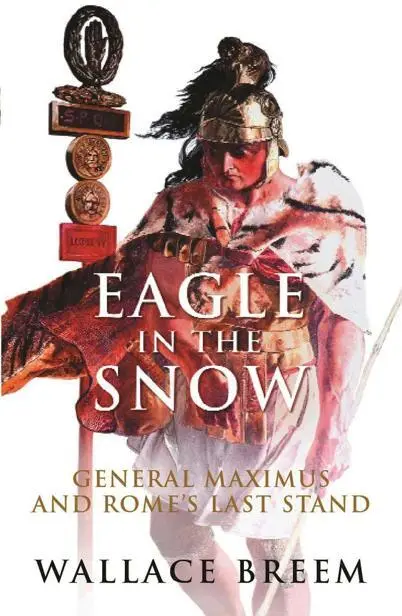
- Название:Eagle in the Snow
- Автор:
- Издательство:Phoenix
- Жанр:
- Год:2002
- Город:London
- ISBN:9781842125199
- Рейтинг книги:3 / 5. Голосов: 1
-
Избранное:Добавить в избранное
- Отзывы:
-
Ваша оценка:
Eagle in the Snow: краткое содержание, описание и аннотация
Предлагаем к чтению аннотацию, описание, краткое содержание или предисловие (зависит от того, что написал сам автор книги «Eagle in the Snow»). Если вы не нашли необходимую информацию о книге — напишите в комментариях, мы постараемся отыскать её.
On the opposite side of the Rhine River, tribal nations are uniting; hundreds of thousands mass in preparation for the conquest of Gaul, and from there, a sweep down into Rome itself. Only a wide river and a wily general keep them in check.
With discipline, deception, persuasion, and surprise, Maximus holds the line against an increasingly desperate and innumerable foe. Friends, allies, and even enemies urge Maximus to proclaim himself emperor. He refuses, bound by an oath of duty, honor, and sacrifice to Rome, a city he has never seen. But then circumstance intervenes. Now, Maximus will accept the purple robe of emperor, if his scrappy legion can deliver this last crucial victory against insurmountable odds. The very fate of Rome hangs in the balance.
Combining the brilliantly realized battle action of Gates of Fire and the masterful characterization of Mary Renault’s
,
is nothing less than the novel of the fall of the Roman empire.
Eagle in the Snow — читать онлайн бесплатно полную книгу (весь текст) целиком
Ниже представлен текст книги, разбитый по страницам. Система сохранения места последней прочитанной страницы, позволяет с удобством читать онлайн бесплатно книгу «Eagle in the Snow», без необходимости каждый раз заново искать на чём Вы остановились. Поставьте закладку, и сможете в любой момент перейти на страницу, на которой закончили чтение.
Интервал:
Закладка:
I paused and looked at the silent, hostile faces around me.
“And now,” I said gently. “I want men for the army.”
The Curator stiffened and I saw his knuckles whiten. But he kept himself admirably in check.
He said apologetically, “I don’t really think—”
“Just a moment,” I said. I took from my tunic a rolled letter than even Quintus had not seen. “I had this a week ago. It is from an old friend, a man named Saturninus, who succeeded me in command of Borcovicum, a fort on the Great Wall where I used to serve. Would you like to hear what he says?”
I had their interest now, and Quintus was looking at me with something of the old expression that I had not seen since the early days with Stilicho.
“The Wall has been abandoned, the whole seventy miles of it. Do you know what that means? The garrisons have gone and the local people use the stones to build their houses with. The great gates lie open and rattle in the wind until they drop to the ground from their rusted hinges. Nothing moves along the sentry walks except the wild cats, while the kestrels fly above the empty towers and leave their droppings on the roofs where our sentries once kept watch. The forts crumble in the rain and the slates drop from the roof of the house in which I once lived.” At my side, Quintus started violently and I saw, out of the corner of my eye, his knuckles whiten as he clenched his hands. He, too, had his memories then… “Only the inscriptions remain to commemorate the men who served there….”
I broke off and turned away and looked out at the road that led north to where my legion stood at arms. What had happened to her stone? Did it stand upright still or was it lying on the damp ground, covered with weeds? What did it matter anyway?
I thought of the words I had carved on the stone. ‘She died but not altogether.’ Saturninus had suggested them. It was what she believed and perhaps she was right. But I found it hard sometimes, to think that it could be so.
I turned and said, “Even Corstopitum is an empty husk. And Eburacum where the Sixth Legion once proclaimed an emperor of Rome, is deserted too. The troops have moved south and the great headquarters is an abandoned barrack, occupied only by mice.”
“Is that what you want to happen here? Do you want your city to sink into the ground and have the wild birds build their nests in the scrub which hides its ruins? Because if it is I will take my legion and go, and let the Alemanni do their worst.”
A senator, who owned half the vineyards in the area, said, in exasperation, “What exactly do you want?”
“What do you want, Statitius?” I said politely. “Shall I tell you—peace. You were born here, and your family before you. Your ancestors never knew peace or security till Rome came. Peace means soldiers; soldiers mean pay; pay means taxes.”
Statitius yawned. “Oh, if it’s more money then—”
“No.”
The Curator, his face pale, said hoarsely, “How can we help more than you have had us help already?”
“I want men—young men—who are willing to become soldiers. And I need educated young men who can be trained to become their future officers. Is it too much to ask that the people of Gaul learn to defend themselves?”
“That is—that is the business of the Magister Equitum per Gallias.”
“I am not concerned about the paper army of a paper general.”
“Oh! How many then?”
“As many as we can get. I want troops I command. I need at least twelve hundred for my fleet alone. I want fifteen thousand men on the Rhenus.”
“We cannot force them to take up arms,” Artorius said. “The conscription is done annually by different districts each year. It is not the city’s turn this year.”
“This is an emergency and, if necessary, I will conscript, if I have to. But with your help it may not be necessary.”
“Conscription cannot be imposed without the sanction of the Praefectus Praetorio,” he said doggedly.
“When I rode through the forum this morning there were great queues of the poor, lining up to receive their free distribution of bread and bacon that the city gives them each day.” I glanced sideways as the door opened and Mauritius, Bishop of Treverorum, entered the room. “That is charitable work indeed. But not all of those poor were either young children or old men. They could earn that food, and, by earning it, be more useful than they are. They are free men.”
The Bishop said, “It is sinful for christians to take up arms against each other.”
“You,” I said. “You live in a world where you make sins. You would not be happy without them. Would you?”
“I shall forbid it from the pulpit.”
I said, “Just what do you want from our Empire?”
He said, “Rome is the house of christianity and by our works shall you know us. I pray as do we all that, for the miracle vouchsafed to the blessed Constantine, we shall see eternal Rome ascend to heaven in a ball of fire!”
“If you are not careful you will see Augusta Treverorum ascend in the same manner. But sooner than you think.” I paused. I said, “Who has influence in this city beside our Bishop here? Who is interested in life rather than death?”
Artorius said, nervously, “Julianus Septimus.”
“Who is he?”
“He used to hold my office in the days of Valentinian. He is an old man now but he is rich, and he lives across the river, six miles up the road. He has two sons and a fine house.”
“Would he help me?”
“He is a pagan,” said the Bishop.
“Then he probably will.”
I left Quintus to read my proclamation in the forum while I set out along the twisting, hill road to visit the man who had once known Valentinian. It was a hot day, the wooded hills soaked up the heat and I could feel the sweat from my horse through the saddle cloth against my thighs. I rode through a gorge shadowed by the sun, turned right to ford a pebbled stream of bubbling water and entered a track that led between vineyards on the left and furrowed land on the right to a large, low rectangular villa whose yellow tiled roof seemed to shimmer in the heat. I dismounted, my horse was taken by servants and, as in a dream, I followed a barefoot slave through a courtyard where a fountain played and two girls laughed as they threw a ball to each other in the leaf-mottled sunlight. My host was in the large reception room in the north wing and I stood there admiring the elaborately patterned mosaic on the floor and the plastered walls against which, on pedestals, stood the busts of long dead ancestors. He did not seem surprised to see me and, while we drank wine and talked politely of nothing and everything, I thought of my bleak quarters in Moguntiacum and of how I, too, had once thought to own such a house.
I said, politely, “I seem to have made a bad beginning with the Council. They don’t like soldiers.”
A faint smile creased his face. “So I have heard. Taxes and soldiers go together,” he added cryptically.
“What of this young man who is now Curator? I find it hard to talk to him. Do you know him well?”
“Artorius. Hardly. He is young and ambitious and keen. His grandfather was a freedman, I believe.”
“Then he has done well for himself.”
“I suppose so. His father certainly managed to establish himself in the curial class. But that might well happen in a city like Mediolanum.” He spoke with a tinge of contempt.
“Is that where he comes from? I thought—”
“Oh yes. I would have thought the accent was obvious. He trained as an advocate, I believe; held one or two minor civic posts and then secured an office in the imperial service—something to do with finance. Then he came here. His appointment was unusual to say the least of it—even irregular. For, as you know, the Curator is normally appointed from out of the local council.” He paused to drink his wine delicately. “But then, you know how it is. Influence was brought to bear. I was against the appointment myself.” He shrugged. “One cannot argue with a Praefectus Praetorio.” He added grudgingly, “Still, he is efficient, so my old friends tell me.”
Читать дальшеИнтервал:
Закладка:
Похожие книги на «Eagle in the Snow»
Представляем Вашему вниманию похожие книги на «Eagle in the Snow» списком для выбора. Мы отобрали схожую по названию и смыслу литературу в надежде предоставить читателям больше вариантов отыскать новые, интересные, ещё непрочитанные произведения.










Обсуждение, отзывы о книге «Eagle in the Snow» и просто собственные мнения читателей. Оставьте ваши комментарии, напишите, что Вы думаете о произведении, его смысле или главных героях. Укажите что конкретно понравилось, а что нет, и почему Вы так считаете.