Kathleen Kent - The Outcasts
Здесь есть возможность читать онлайн «Kathleen Kent - The Outcasts» весь текст электронной книги совершенно бесплатно (целиком полную версию без сокращений). В некоторых случаях можно слушать аудио, скачать через торрент в формате fb2 и присутствует краткое содержание. Город: New York, Год выпуска: 2013, ISBN: 2013, Издательство: Little, Brown and Company, Жанр: Историческая проза, Вестерн, на английском языке. Описание произведения, (предисловие) а так же отзывы посетителей доступны на портале библиотеки ЛибКат.
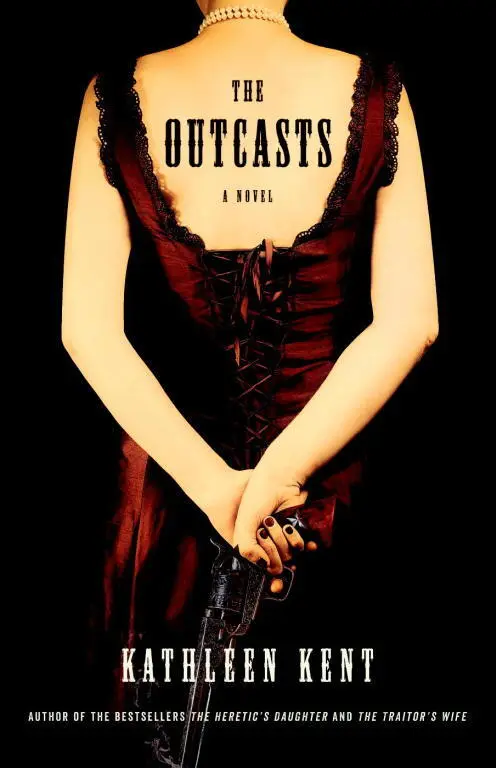
- Название:The Outcasts
- Автор:
- Издательство:Little, Brown and Company
- Жанр:
- Год:2013
- Город:New York
- ISBN:978-0-316-20613-6
- Рейтинг книги:3 / 5. Голосов: 1
-
Избранное:Добавить в избранное
- Отзывы:
-
Ваша оценка:
The Outcasts: краткое содержание, описание и аннотация
Предлагаем к чтению аннотацию, описание, краткое содержание или предисловие (зависит от того, что написал сам автор книги «The Outcasts»). Если вы не нашли необходимую информацию о книге — напишите в комментариях, мы постараемся отыскать её.
Meanwhile Nate Cannon, a young Texas policeman with a pure heart and a strong sense of justice, is on the hunt for a ruthless killer named McGill who has claimed the lives of men, women, and even children across the frontier. Who—if anyone—will survive when their paths finally cross?
As Lucinda and Nate’s stories converge, guns are drawn, debts are paid, and Kathleen Kent delivers an unforgettable portrait of a woman who will stop at nothing to make a new life for herself.
The Outcasts — читать онлайн бесплатно полную книгу (весь текст) целиком
Ниже представлен текст книги, разбитый по страницам. Система сохранения места последней прочитанной страницы, позволяет с удобством читать онлайн бесплатно книгу «The Outcasts», без необходимости каждый раз заново искать на чём Вы остановились. Поставьте закладку, и сможете в любой момент перейти на страницу, на которой закончили чтение.
Интервал:
Закладка:
He was surprised at how young Dr. Tom looked, wearing his new shirt—the old one sacrificed to the snake in the bucket—his dark hair still wet and slicked back from his forehead.
One night on the journey to the Austin jail, Lucinda had mused that she didn’t even know why Tom Goddard, an intelligent man who had attended medical school, had moved to Texas and joined the rangers. “His lungs were weak,” she had said. “I always supposed he came for the air.”
Nate had shaken his head, dismayed that she would not know this elemental thing about her husband, and he told her what his partner had told him. Dr. Tom had said that Texas was the only place he had ever found that, when it killed you, it didn’t forget about you.
When he studied Deerling’s image on the photograph, he could clearly see the resemblance to Lucinda, but he noticed what he hadn’t been mindful of at the time of the sitting. Along with placing his hand on Nate’s shoulder, Deerling had smiled. Not the engaging smile of contentment or even easy, familiar camaraderie, but rather one with a ghosting of pride.
He posted a letter to his wife, telling her of his return.
I live for the day when I can leave Texas. I think now only of our home, and I long for the day when I can stand among our own herd of horses. And if I ever leave you again, it will be to lie in the earth under their hooves, below the fields you have tended so well, for I have seen the wider world and it can offer me nothing compared to what I will find when I am returned to you.
Nate had already crossed the Red River at Colbert’s Crossing into Oklahoma before he pulled the paper that Lucinda had given him from his jacket and read by the half-light of a gray and banded sunset what was written there.
Chapter 33
Lucinda sat with the letter from General Alvord in her lap, her face half turned to the small cell window behind her. She had put her back to the window in order to capture more light on the page, but she moved her cheek towards the warmth and closed her eyes in pleasure.
With the letter, he had also enclosed his treatise on non-Euclidean geometry, “The Tangencies of Circles and Spheres,” along with diary notes from his time collecting botanical samples in the Rocky Mountains. The notes she put aside; she would read them, or not, depending on how personal or speculative they were, Lucinda being interested in only his purer observations of the heretical theorems of the European radicals Beltrami and Lobachevsky.
The tone of the general’s letter had been polite and formal but not courtly or presumptive. He was an older man, already fifty by the time he served in the war, and was fascinated by the lady geometrist who had written him, thoughtfully, intelligently, from the Huntsville women’s prison.
They began a regular correspondence, one of several she conducted. In the year that Lucinda had been incarcerated, she had become a person of note, a pilgrimage stop for the curious, the alarmists, the outraged. Sometimes the visitors would simply watch her through the cracks in the wall as she made her daily turns about the yard. The bolder ones would throw notes, of declared love or condemnation, over the walls. These she never read but rather walked over them like scattered petals of spring flowers, leaving them for the matrons to gather up and possibly read themselves for their own titillation or amusement.
As well, she had had a few of the women inmates professing their love to her, one woman even hanging herself in her cell in desperation over Lucinda’s cold and impersonal rejections.
She had taken to wearing only black—the cloth donated to her by a church group—and it made her look remorseful and pious to the believers who prayed over her. But it was an aesthetic choice more than anything else, a way to further negate the world and its troubling distractions. Her sickness had retreated along with the pressures of the corporeal world. Her life was cloistered, orderly, and, in the pursuit of the life of the mind, even comfortable. The women’s prison was new; the food healthful; the matrons, if not kind, were not cruel.
Of course, she was aware that she had been written about in newspapers as far away as Boston and New York, excoriated as the Black Widow of Texas or lauded as the Fallen Dove of Austin, but she heard about these whimsies only in fractured, incomplete pieces from the gossiping lips of the other inmates.
Over the past twelve months, she had toiled to reduce everything and everyone in her circumscribed world—from the regular, right-angled stones and bricks of her cell to the inmates, even herself—to numerical values, just as she had strived to do as a child in the asylum.
She looked up at the buffalo-rifle cartridge, perched upright on its base on the windowsill, one of two possessions from her previous life. Curiously, she had been given permission to keep the cartridge by the warden, who thought it an admonishing object from her father, being ignorant of the fact that it contained a lethal dose of cyanide.
She stared at it thoughtfully. If the equation a + b = c is offered, and if a (the cartridge) is assigned the value of 1, and c (death, the final answer) is assigned the value of 0, then what is her value if she is b ? Could a person be a negative number and still walk the earth? She thought that this could certainly be so.
The second object propped on the sill was a portrait photograph, exquisitely hand-tinted, of a girl. Lucinda ran her fingers lightly over the rich pastel colors, textured finely by the brush that had given the portrait depth and brought the girl’s face and dress to life.
Lucinda had been in Huntsville for six months when the matron had appeared at her cell door saying that inmate Goddard had a family visitor just arrived. Puzzled, she had run her hands in a smoothing motion over her hair, a hopeful thought taking shape. She had heard not one word from Nate since he had left her in Austin, but she had known it might take time to track down her daughter.
She nodded to the matron; the door was unlocked and opened, and a woman swept into the cell. She was portly and expensively dressed, but gaudily so; her hair, which showed beneath her bonnet, was the color of burned hay. Lucinda had struggled at first to put an identity to the woman, and then the woman raised her upper lip, and she knew the visitor to be Mrs. Landry, the madam from Fort Worth.
She stayed only briefly, long enough to take in the cramped, spartan cell and Lucinda’s unadorned black dress and to hand over the photograph. The subject had been posed modestly, dressed in voluminous cornflower blue, mirroring the color of eyes that were incessantly clear and triumphant, a girl beautiful beyond a simple description of lovely attributes in the singular, of teeth or lips or cheek or brow, so that even the matron, craning her neck over the madam’s shoulder, gasped.
Mrs. Landry had watched Lucinda’s face closely, looking for some strong emotion of grief or guilt, and was disappointed when Lucinda remained unresponsive.
The madam gestured to the photograph. “She asked me to come here. She wanted you to have the portrait to remember her by. And this.” She pulled out of her bag the lavender scarf that Lucinda had given May and laid it on the cot. “She died four months back. Yellow fever. We had a lovely funeral. Closed casket, of course. Ruined the face. Pity—May was my best earner.”
She paused for a moment and then, as though unable to contain herself, said, “I don’t know why she bothered. That was a dirty trick you played on her.”
Lucinda had raised her eyes to Mrs. Landry and said, “Yes. But, you see, she loved me.”
Mrs. Landry had left immediately after without a backward look or parting comment, and Lucinda sat on her bed and held the portrait, thinking of May’s soft-limbed vitality, and of her loveliness, and she wept. She then set the portrait in the window, where she could see it at all times.
Читать дальшеИнтервал:
Закладка:
Похожие книги на «The Outcasts»
Представляем Вашему вниманию похожие книги на «The Outcasts» списком для выбора. Мы отобрали схожую по названию и смыслу литературу в надежде предоставить читателям больше вариантов отыскать новые, интересные, ещё непрочитанные произведения.




Обсуждение, отзывы о книге «The Outcasts» и просто собственные мнения читателей. Оставьте ваши комментарии, напишите, что Вы думаете о произведении, его смысле или главных героях. Укажите что конкретно понравилось, а что нет, и почему Вы так считаете.