Eleanor Catton - The Luminaries
Здесь есть возможность читать онлайн «Eleanor Catton - The Luminaries» весь текст электронной книги совершенно бесплатно (целиком полную версию без сокращений). В некоторых случаях можно слушать аудио, скачать через торрент в формате fb2 и присутствует краткое содержание. Год выпуска: 2013, ISBN: 2013, Издательство: Granta Publications, Жанр: Историческая проза, Современная проза, на английском языке. Описание произведения, (предисловие) а так же отзывы посетителей доступны на портале библиотеки ЛибКат.
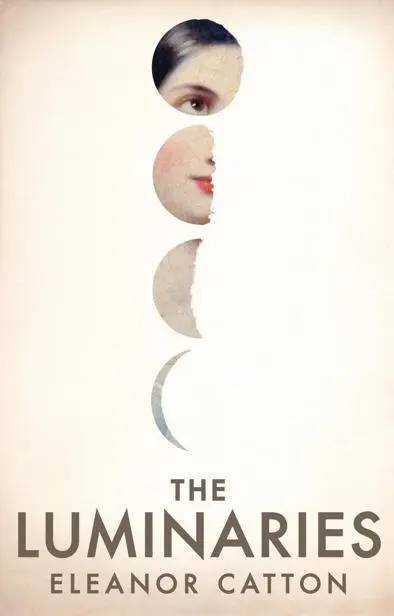
- Название:The Luminaries
- Автор:
- Издательство:Granta Publications
- Жанр:
- Год:2013
- ISBN:9781847085931
- Рейтинг книги:5 / 5. Голосов: 1
-
Избранное:Добавить в избранное
- Отзывы:
-
Ваша оценка:
The Luminaries: краткое содержание, описание и аннотация
Предлагаем к чтению аннотацию, описание, краткое содержание или предисловие (зависит от того, что написал сам автор книги «The Luminaries»). Если вы не нашли необходимую информацию о книге — напишите в комментариях, мы постараемся отыскать её.
The Luminaries — читать онлайн бесплатно полную книгу (весь текст) целиком
Ниже представлен текст книги, разбитый по страницам. Система сохранения места последней прочитанной страницы, позволяет с удобством читать онлайн бесплатно книгу «The Luminaries», без необходимости каждый раз заново искать на чём Вы остановились. Поставьте закладку, и сможете в любой момент перейти на страницу, на которой закончили чтение.
Интервал:
Закладка:
‘I intend to convert the place!’ Lydia said. ‘You know I am a worldly woman: I owned a business in Dunedin for almost ten years, and in Sydney before that. I am quite the entrepreneur, Aubert! You have not yet seen me in my element. You will think me very enterprising, when you do.’
Gascoigne looked about him. ‘What conversions will you make?’
‘We come at last to my “vision”,’ Lydia said. She leaned forward. ‘Did you see the séance advertised in this morning’s paper—with the date and location yet to be confirmed?’
‘Oh, come—no!’
Lydia raised her eyebrows. ‘Oh come no what?’
‘Table-turning and spirits?’ Gascoigne smiled. ‘A séance is an amusing foolishness—but it is not a business! You ought not to try to profit from a parlour trick! Folk get very angry when they suppose they are being cheated out of honest pay. And besides,’ he added, ‘the Church is disapproving.’
‘You speak as if the art were not an art! As if the whole business were nothing more than a swindle,’ said Lydia Wells—who was made very bored by the disapproval of the Church. ‘The realm of the paranormal is not a trick , Aubert. The ether is not a cheat .’
‘Now, come,’ Gascoigne said again. ‘This is entertainment you’re speaking of, not prophecy: let’s not go talking about realms.’
‘So you are a cynic!’ She pretended to be disappointed. ‘I would never have picked that —disillusioned, maybe; disbelieving, maybe; but tender underneath.’
‘If I am a cynic, I am a discerning cynic,’ Gascoigne said loftily. ‘I have been to several séances , Mrs. Wells; if I dismiss them as foolish superstition, I do not do it out of hand.’
She hesitated—and then her plump hand shot out, and pressed his sleeve.
‘But I am being uncourteous: the subject is of some fascination to you,’ Gascoigne said, remembering himself.
‘It’s not that.’ She stroked the fabric of his cuff a moment, and then withdrew her hand just as quickly. ‘You are not to call me Mrs. Wells—not for very much longer.’
Gascoigne bowed his head. ‘You wish to be addressed now by your maiden name?’ he asked, thinking privately that if this was true, it was a very improper wish indeed.
‘No, no.’ Lydia bit her lip, and then leaned in close and whispered, ‘I am to be married.’
‘Married?’
‘Yes—as soon as I dare; but it is a secret.’
‘A secret—from me?’
‘From everyone.’
‘I am not to know the name of your beloved?’
‘No: not you, nor anyone. It is my clandestine love affair,’ Lydia said. She giggled. ‘Look at me—like a girl of thirteen years, preparing to elope! I dare not even wear his ring—though it is a fine one: a Dunstan ruby, set in a band of Dunstan gold.’
‘I suppose I ought to offer my congratulations,’ Gascoigne said—cordially enough, but with a new reservation, for his hopes had been somewhat dashed by this news.
He felt that a shaft of possibility had closed: a light had been extinguished; a door had slammed. Virtually since he first laid eyes upon the woman, Gascoigne had fantasised that Lydia Wells might one day become his lover. He had conjured her in his cottage, had seen her shaking out her russet locks at his bedside, had watched her stoking his range in the morning, wrapped in a flannel robe; he had imagined the heady days of their early courtship, the construction of the house that they would share together, the passing years. Gascoigne dreamed all of this without shame or embarrassment, and even without conscious awareness that his mind was straying so. It had seemed, simply, natural: she was a widow, and he was a widower. They were both strangers in an unfamiliar town, and they had struck up a cordial acquaintance. It was not so very unlikely, that they might fall in love.
But now that he knew that Lydia Wells was betrothed, Gascoigne was forced to relinquish his fantasy—and to relinquish his fantasy, he had to acknowledge it, and see it for the foolishness it was. At first he felt sorry for himself, but as soon as he turned his mind upon this sorrow, he found that its shallowness amused him.
‘I am happiness itself,’ the widow said.
Gascoigne smiled. ‘What am I to call you, then, if I cannot call you Mrs. Wells?’
‘Oh, Aubert,’ said the widow. ‘We are the very best of friends. You do not have to ask. Of course, you must call me Lydia.’
(We will briefly interject with the correction that Aubert Gascoigne and Lydia Wells were not at all the very best of friends: in fact, they had known each other only three days. Gascoigne had first encountered the widow on Thursday afternoon, when the latter arrived at the Magistrate’s Court to inquire after her late husband’s fortune—a fortune that had already been found, and banked, by other men. Gascoigne filed Mrs. Wells’s request to have the sale of the cottage revoked, and over the course of this transaction, the pair fell to talking. The widow returned to the courthouse again on Friday morning, and Gascoigne, emboldened by the evident interest with which she appeared to regard him, begged to escort her to luncheon. She accepted this invitation with a coquettish astonishment, and Gascoigne, holding her parasol, accompanied her across the thoroughfare to Maxwell’s dining hall, where he ordered two plates of barley soup, the whitest bread on offer, and a small carafe of dry sherry—and then seated her in pride of place, next to the window.
It quickly transpired that Lydia Wells and Aubert Gascoigne had much to talk about, and much in common. Mrs. Wells was very curious to learn all that had happened since her late husband’s passing, a subject that naturally led Gascoigne to Anna Wetherell, and her strange brush with death in the Kaniere-road. Lydia Wells was further astonished by this—for, as she explained, Anna Wetherell was known to her. The girl had stayed some weeks at her lodging house in Dunedin, before she struck out to make her living on the Hokitika fields the previous year, and over this period the pair had become very close. It was at this point in the conversation that Lydia devised her ‘surprise’. Directly after their luncheon was cleared away, she dispatched Gascoigne to the Gridiron, where he informed Anna Wetherell that she was to be treated to a mystery shopping expedition the following afternoon, at two o’clock.)
‘If you have a fiancé—and a new enterprise,’ said Gascoigne now, ‘then perhaps I am right to hope that your sojourn in Hokitika will not be a short one?’
‘One is always right to hope,’ said Lydia Wells—who had a fine store of rhetorical set pieces just like this one, and liked to pause dramatically after uttering them.
‘Am I right to guess that your investment was made with the help of your fiancé? Perhaps he is a magnate of some kind!’
But the widow laughed. ‘Aubert,’ she said, ‘you will not draw me out!’
‘I rather thought you expected me to try.’
‘Yes—but only to try ,’ the widow said. ‘Not to succeed!’
‘I fancy that is a feminine motif,’ Gascoigne said dryly.
‘Perhaps,’ the widow returned, with a little laugh. ‘But we are a discriminating sex—and I fancy that you would not have it any other way.’
What followed was a rather saccharine exchange of compliments, a game in which both the widow and the widower found themselves extremely well matched. Rather than transcribe this sentimental interchange, we will choose to talk above it, and instead describe in better detail what otherwise might be mistaken for a profound weakness in character on the Frenchman’s part.
Gascoigne was enraptured by Lydia Wells, and much admiring of the refined flamboyance of that woman’s speech and manner—but he had not put his faith in her. He had not betrayed Anna Wetherell’s confidence, and in his narration of the latter’s story to Lydia, he had made no mention of the gold that had been discovered in Anna’s orange dress the previous week, which was now wrapped in a flour sack and stowed beneath his bed. Gascoigne had also described the events of the 14th of January as if he believed that Anna had, indeed, attempted to take her life—sensing that, until a better explanation could be reached, it was prudent not to call attention to the evening’s many mysteries. He knew very well that Anna had no notion of where on earth those midnight hours had gone—or, to phrase the matter a different way, of who on earth had stolen them—and he did not wish to place her in any kind of danger. Gascoigne therefore adhered to the ‘official’ story, which was that Anna was a would-be suicide, found insensate and wretched on the side of the road. He had adopted this perspective when discussing the event with other men, and it required no great effort to maintain it here.
Читать дальшеИнтервал:
Закладка:
Похожие книги на «The Luminaries»
Представляем Вашему вниманию похожие книги на «The Luminaries» списком для выбора. Мы отобрали схожую по названию и смыслу литературу в надежде предоставить читателям больше вариантов отыскать новые, интересные, ещё непрочитанные произведения.



Обсуждение, отзывы о книге «The Luminaries» и просто собственные мнения читателей. Оставьте ваши комментарии, напишите, что Вы думаете о произведении, его смысле или главных героях. Укажите что конкретно понравилось, а что нет, и почему Вы так считаете.