Eleanor Catton - The Luminaries
Здесь есть возможность читать онлайн «Eleanor Catton - The Luminaries» весь текст электронной книги совершенно бесплатно (целиком полную версию без сокращений). В некоторых случаях можно слушать аудио, скачать через торрент в формате fb2 и присутствует краткое содержание. Год выпуска: 2013, ISBN: 2013, Издательство: Granta Publications, Жанр: Историческая проза, Современная проза, на английском языке. Описание произведения, (предисловие) а так же отзывы посетителей доступны на портале библиотеки ЛибКат.
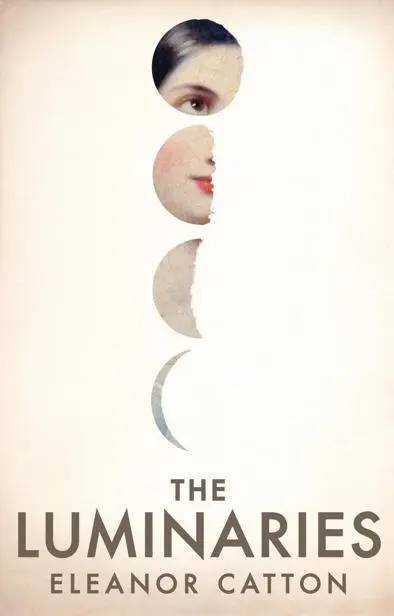
- Название:The Luminaries
- Автор:
- Издательство:Granta Publications
- Жанр:
- Год:2013
- ISBN:9781847085931
- Рейтинг книги:5 / 5. Голосов: 1
-
Избранное:Добавить в избранное
- Отзывы:
-
Ваша оценка:
The Luminaries: краткое содержание, описание и аннотация
Предлагаем к чтению аннотацию, описание, краткое содержание или предисловие (зависит от того, что написал сам автор книги «The Luminaries»). Если вы не нашли необходимую информацию о книге — напишите в комментариях, мы постараемся отыскать её.
The Luminaries — читать онлайн бесплатно полную книгу (весь текст) целиком
Ниже представлен текст книги, разбитый по страницам. Система сохранения места последней прочитанной страницы, позволяет с удобством читать онлайн бесплатно книгу «The Luminaries», без необходимости каждый раз заново искать на чём Вы остановились. Поставьте закладку, и сможете в любой момент перейти на страницу, на которой закончили чтение.
Интервал:
Закладка:
She shook her head, and in the sharpness of the movement Pritchard caught what was different about her. He strode forward, covering the space between them in three quick strides, and grabbed her sleeve.
‘Where is it?’ he said. ‘Where’s the tar?’
She pulled free of him. ‘I ate it,’ she said. ‘I ate the last of it last night, if you must know.’
‘You didn’t—you couldn’t have!’
Pritchard followed her, and turned her by the shoulders so she faced him. He placed the pad of his thumb on her chin and tilted her head back, to better see her eyes.
‘You’re lying,’ he said. ‘You’re dry.’
‘I ate it,’ Anna repeated. She shook herself free.
‘Did you give it back to Sook? Did he take it back?’
‘I ate it. Same as ever.’
‘Come off it, Ann. Don’t be a liar.’
‘I’m not a liar.’
‘You ate a lump of poisoned tar and your eyes are clear as dawn?’
She narrowed her eyes. ‘Who’s to say it was poisoned?’
‘Even if it wasn’t—’
‘You know that it was poisoned? You’re sure ?’
‘I don’t know a d—ned thing about this d—ned business, and I don’t like your tone,’ Pritchard snapped. ‘I just want a piece of it back so I can look at it, for heaven’s sake!’
She was roused again. ‘And who poisoned it, Jo? Who tried to kill me? What’s your guess?’
Pritchard waved his arm. ‘Ah Sook, maybe.’
‘Accuse the man who’s accusing you?’ She laughed. ‘That’s a guilty man’s game!’
‘I’m trying to help you!’ Pritchard said furiously. ‘I’m trying to help !’
‘There’s nothing to help!’ Anna cried. ‘No one to help! For the last time: there was no suicide, Joseph, and no—bloody— poison !’
‘Then explain to me why you ended up half-dead in the middle of the Christchurch-road!’
‘ I can’t explain it !’
For the first time that day Pritchard saw real emotion on her face: fear, fury.
‘You took a pipe that night—same as usual?’
‘And every day since I made bail.’
‘Today?’
‘No. I ate the last of it last night. I told you.’
‘What time last night?’
‘Late. Midnight, maybe.’
Pritchard wanted to spit. ‘Don’t call me a fool. I’ve seen you when you’re under, and I’ve seen you coming up. Right now you’re sober as a nun.’
Her face crumpled. ‘If you don’t believe me, go away.’
‘I won’t. I won’t go.’
‘D—n you, Jo Pritchard!’
‘D—n you. ’
She burst into tears again. Pritchard turned away. Where would she keep it? He strode to the armoire, opened it, and began rifling through the contents. Her empty dresses, hanging from the rail. Her petticoats. Her bloomers, most of them tattered and stained. Handkerchiefs, shawls, stays, stockings; her button boots. There was nothing. He moved to the dresser, where a spirit lamp sat upon a cracked china plate—this would be her opium lamp—and beside it, a wadded pair of gloves, a comb, a pincushion, an opened package of soap, sundry jars of cream and powder. These items he picked up and then replaced, roughly; he meant to turn the whole room over.
‘What are you doing?’ Anna said.
‘You’re hiding it—only you won’t tell me why!’
‘Those are my things.’
He laughed. ‘Keepsakes, are they? Precious mementos? Antiques?’
He wrenched the drawer from her dresser, and upended it over the floor. A cascade of trinkets rattled out. Coins, wooden spools of thread, ribbons, covered buttons, a pair of dressmaker’s shears. Three rolling champagne corks. A man’s shaving brush—she must have stolen that from somewhere. Matches, stays. The ticket from her passage to New Zealand. Wads of cloth. A silver-backed looking glass. Pritchard raked the pile. There was Anna’s pipe—and there ought to be a little box to match it, or perhaps a little pouch, inside of which her resin would be folded in a square of waxed paper, like toffee purchased from a store. He cursed.
‘You’re a beast,’ Anna said. ‘You’re detestable.’
He ignored her, and picked up the pipe.
It was of Chinese making, fashioned from bamboo, and about as long as Pritchard’s forearm. The bowl of the pipe sat some three inches away from its end; it protruded like a doorknob, and was fixed to the wood by means of a metal saddle. Pritchard weighed the thing in his hands, holding it as a flautist holds a flute. He sniffed it. There was a dark residue around the rim of the bowl—so someone had partaken of the pipe, and recently.
‘Happy?’ she said.
‘Watch your lip. Where’s the needle?’
‘There.’ She pointed at a square of cloth among the sorry detritus on the floor, through which was pushed a long hatpin, stained black at the tip. Pritchard sniffed this also. He then inserted the hatpin into the aperture of the bowl and rolled the tip about.
‘You’re going to break it.’
‘Be doing you a favour, then.’
(Pritchard deplored Anna’s craving for the drug—but why? He himself had taken opium many times. He had taken it in Kaniere, in fact, with Ah Sook, in the tiny hut that Sook had hung with Oriental fabrics, to still the air so that his precious lamps would not flicker in a draught.)
At last Pritchard tossed the pipe aside—but carelessly, so that the bowl struck the floorboards, and rang out.
‘Beast,’ Anna said again.
‘I’m a beast, am I?’
He lunged for her, not really intending to hurt her, but merely to grab her by the shoulders and shake her, until she told him the truth. But he was clumsy, and she wrenched away, and for the third time that afternoon, Pritchard’s nostrils were filled with the rich, briny smell of the ocean—and, impossibly, the metallic taste of cold —as if a wind had slapped him in the face, as if a sail had snapped above him, as if a storm was in the air. He faltered.
‘Get back,’ she said. She was holding her hands before her face, her fingers half-curled into fists. ‘I mean it, Joseph. I won’t be called a liar. Get back and get out.’
‘I’ll call you a liar if you d—ned well lie.’
‘Get back.’
‘Tell me where you’ve hidden it.’
‘Get back !’
‘Not until you tell me where it is!’ he shouted. ‘ Tell me, you useless bloody whore!’
He lunged for her again, in desperation; he saw her eyes flash, and in the next moment she had reached into her breast and withdrawn a muff pistol, the single-loading kind. It was a slip of a piece, hardly longer than Pritchard’s finger, but from a distance of two paces it could shatter his chest. Instinctively he put up his hands. The piece was facing backward, with the muzzle pointing up towards her chin, and Anna had to spin the piece to fit it into her hand—but she was frantic, and in that moment three things happened at once. Pritchard stepped backwards, and stumbled on the edge of the rattan rug; behind him, the door burst open, and someone gave a cry; and Anna half-turned at the noise, started forwards, and shot herself in the breast.
The report from the small gun was hollow, even unremarkable—like the cracking of a topsail far above a deck. It seemed an echo of itself, as if the real shot had fired somewhere much further away, and this noise was just a copy. Stupidly Pritchard wheeled about, turning his back on Anna, to confront the figure at the door. His mind felt full of fog; he registered, in some distant way, that the man who had just entered was Aubert Gascoigne, the new clerk at the Magistrate’s Court. Pritchard did not know Gascoigne at all well. Some three weeks ago the clerk had come to his laboratory, seeking to fill a prescription for a bowel complaint—absurdly, Pritchard thought of that now. He wondered whether his tincture had helped the other man as he had promised it would.
Читать дальшеИнтервал:
Закладка:
Похожие книги на «The Luminaries»
Представляем Вашему вниманию похожие книги на «The Luminaries» списком для выбора. Мы отобрали схожую по названию и смыслу литературу в надежде предоставить читателям больше вариантов отыскать новые, интересные, ещё непрочитанные произведения.



Обсуждение, отзывы о книге «The Luminaries» и просто собственные мнения читателей. Оставьте ваши комментарии, напишите, что Вы думаете о произведении, его смысле или главных героях. Укажите что конкретно понравилось, а что нет, и почему Вы так считаете.