Eleanor Catton - The Luminaries
Здесь есть возможность читать онлайн «Eleanor Catton - The Luminaries» весь текст электронной книги совершенно бесплатно (целиком полную версию без сокращений). В некоторых случаях можно слушать аудио, скачать через торрент в формате fb2 и присутствует краткое содержание. Год выпуска: 2013, ISBN: 2013, Издательство: Granta Publications, Жанр: Историческая проза, Современная проза, на английском языке. Описание произведения, (предисловие) а так же отзывы посетителей доступны на портале библиотеки ЛибКат.
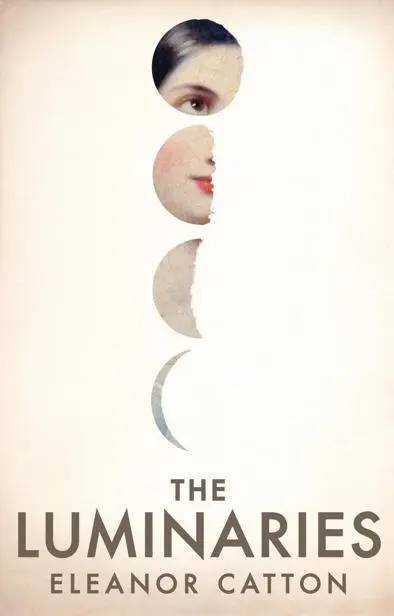
- Название:The Luminaries
- Автор:
- Издательство:Granta Publications
- Жанр:
- Год:2013
- ISBN:9781847085931
- Рейтинг книги:5 / 5. Голосов: 1
-
Избранное:Добавить в избранное
- Отзывы:
-
Ваша оценка:
The Luminaries: краткое содержание, описание и аннотация
Предлагаем к чтению аннотацию, описание, краткое содержание или предисловие (зависит от того, что написал сам автор книги «The Luminaries»). Если вы не нашли необходимую информацию о книге — напишите в комментариях, мы постараемся отыскать её.
The Luminaries — читать онлайн бесплатно полную книгу (весь текст) целиком
Ниже представлен текст книги, разбитый по страницам. Система сохранения места последней прочитанной страницы, позволяет с удобством читать онлайн бесплатно книгу «The Luminaries», без необходимости каждый раз заново искать на чём Вы остановились. Поставьте закладку, и сможете в любой момент перейти на страницу, на которой закончили чтение.
Интервал:
Закладка:
Anna Wetherell was painfully and perpetually conscious of the impression she created, and as a consequence of this abiding self-consciousness, her self-regard was critical to the point of fantasy. She had the inconsolable sense that there was something visible about her own character that she herself could not see, and this anxiety could not be appeased by persuasion, proof, or compliment. She was certain, when in conversation, that the unvoiced conclusions formed by those around her were both censorious and wholly apt, and because the shame she felt at this imagined censure was very real, she sought all the harder to court the good opinion of those whom she met—feeling, as she did so, that even in this project her intentions were all too visible.
Believing herself uniformly criticised, Anna would have been very surprised to learn that the impressions others formed of her were not uniform in the slightest. The artless simplicity with which she most often spoke indicated to some that she possessed an alarming store of private opinions, the frank expression of which was even more alarmingly unfeminine; to others, her speech was entirely without artifice, and refreshing for that reason. Likewise her tendency to squint upon the world was suggestive to some of fearfulness, and to others, of calculation. To Crosbie Wells, she was merely, and very simply, sweet: he found her frequent embarrassments very amusing, and had told her so more than once.
‘You’d do well in a camp, my girl,’ he said. ‘A breath of fresh air, is what you are. Unspoiled. Nothing worse than a woman with a ready answer. Nothing worse than a woman who’s forgotten how to blush.’
Lydia Wells—a woman with a great many ready answers, and who very rarely blushed—had been only infrequently seen at number 35, Cumberland-street since her husband’s unexpected return. She left the house in the late morning, and often did not return until the dusk, when the gambling parlour opened for the night. Wells, in her absence, kept mostly to the first-floor boudoir, where the decanters on the sideboard were refilled daily. Drink softened him. Anna found that she liked him best in the late afternoons, when three or four glasses of whisky had turned him pensive, but not yet sad.
Wells, it transpired, had no desire to return to the fields at Dunstan. Anna learned that he had made a strike of significant value the previous year, and he now desired to put that fortune to some use: he was considering various investments, both in Dunedin and beyond, and he spent a great deal of time poring over the local papers, comparing prices for gold, and tracking the rise and fall of various stocks. ‘Would you fancy me better as a flockmaster, or as a timber man, Miss Wetherell?’ he said, and then laughed very freely at her rising blush.
Whether Mrs. Wells comprehended Anna’s embarrassment, or the reason for it, Anna did not know. The older woman was no less warm, and her speech no less conspiratorial, than at the scene of their first meeting; but it seemed to Anna that her manner had acquired a glaze of distance—as though she were steeling herself, privately, for an impending breach in their relations. With her husband, she was similarly removed. Whenever Wells spoke she simply gazed at him, unsmiling, and then turned the conversation to an unrelated theme. Anna was devastated by these subtle tokens of displeasure, and as a consequence she strove to secure her mistress’s good opinion all the more. By now she knew very well that she had been, as Crosbie Wells had phrased it, ‘euchred’, but any energy that she might have expended in confronting her mistress on the matter of the fictitious Elizabeth Mackay (who was never again mentioned) had been directed, instead, into a disgusted self-admonishment, and a belief, privately held, that she alone could make restitution for what she and Crosbie Wells had done.
The operations of the House of Many Wishes had been revealed to Anna gently, and in degrees. The morning after her arrival in Dunedin, Mrs. Wells had showed her the downstairs parlour, and Anna had loved it at once: the velvet booths, the green glass bottles behind the bar, the card tables, the gambling wheel, the small confessional with the saloon-style doors where Mrs. Wells occasionally told fortunes for a fee. In the daylight the room seemed somehow preserved: the motes of dust, trapped in the shafts of light that fell through the high windows, had a patient, potent feel. Anna was quite awed. At her mistress’s invitation, she stepped onto the podium, and spun the gambling wheel—watching the rubber needle clack, clack, clack, towards the jackpot, only to fall, with a final clack, past it.
Mrs. Wells did not invite her to attend the evening parties immediately. From her bedroom window Anna watched the men arrive, stepping down from carriages, removing their gloves, striding up the walk to rap upon the door; soon afterwards, cigar smoke began to seep through the floorboards into her room, lending a spicy, acrid tint to the air, and turning the lamplight grey. By nine the hum of conversation had thickened to a hubbub, punctuated by snatches of laughter and applause. Anna could hear only what came up through the floor, though every time someone opened the door to the downstairs passage the noise intensified, and she could make out individual voices. Her curiosity was roused to the point of disconsolation, and after several days she inquired of Mrs. Wells, very tentatively and with much apology, whether she might be permitted to tend bar. She now did so every night, though Mrs. Wells had imposed two regulations: none of the patrons was to address her directly, and she was not permitted to dance.
‘She’s raising your value,’ Wells explained. ‘The longer they have to wait, the more you’ll fetch, when it comes time to go to market.’
‘Oh, Crosbie,’ snapped Mrs. Wells. ‘Nobody’s going to market. Don’t be absurd.’
‘Farming,’ said Wells. ‘There’s an enterprise. I could be a farmer—and you could be my farmer wife.’ To Anna he said, ‘It’s quite all right. My old ma was a whore, God rest her.’
‘He’s only trying to frighten you,’ said Mrs. Wells. ‘Don’t listen to him.’
‘I’m not frightened,’ said Anna.
‘She’s not frightened,’ said Wells.
‘There’s nothing to be frightened about,’ said Mrs. Wells.
In fact Anna thought the dancing girls quite marvellous. They were incurious about her, calling her either ‘Sydney’ or ‘Port Jackson’ if they addressed her at all, but she did not possess pride enough to be offended; in any case, their air of weary indifference was a sophistication to which she privately aspired. They brought up the drinks orders from the gentlemen playing cards, and waited as Anna set out the glasses and poured. ‘A dash and a splash,’ they said, for whisky-and-water, and ‘a hard dash’, for whisky poured neat. When the drinks were poured, they slid the tray onto their hip, or hoisted it high above their heads, and sashayed back through the crowd, leaving behind them the powdery-sickly scent of greasepaint and perfume.
On the 12th of May the inhabitants of number 35, Cumberland-street rose early. The House of Many Wishes was to host a party that evening in honour of naval officers and ‘gentlemen with marine connexions’, and there was much to be done in preparation for this grand event. Mrs. Wells had hired a fiddler, and put in an order at the store for lemons, spruce liquor, rum, and several hundred yards of rope, which she planned to cut into lengths and plait, so as to adorn each table with a knotted wreath as a centrepiece.
‘I shall make the first wreath, as a template,’ she said to Anna, ‘and you can do the rest this afternoon: I will guide you through the steps, and show you how to tuck the ends away.’
Читать дальшеИнтервал:
Закладка:
Похожие книги на «The Luminaries»
Представляем Вашему вниманию похожие книги на «The Luminaries» списком для выбора. Мы отобрали схожую по названию и смыслу литературу в надежде предоставить читателям больше вариантов отыскать новые, интересные, ещё непрочитанные произведения.






Обсуждение, отзывы о книге «The Luminaries» и просто собственные мнения читателей. Оставьте ваши комментарии, напишите, что Вы думаете о произведении, его смысле или главных героях. Укажите что конкретно понравилось, а что нет, и почему Вы так считаете.