Stewart Binns - Crusade
Здесь есть возможность читать онлайн «Stewart Binns - Crusade» весь текст электронной книги совершенно бесплатно (целиком полную версию без сокращений). В некоторых случаях можно слушать аудио, скачать через торрент в формате fb2 и присутствует краткое содержание. Город: London, Год выпуска: 2012, ISBN: 2012, Издательство: Penguin Books, Жанр: Историческая проза, на английском языке. Описание произведения, (предисловие) а так же отзывы посетителей доступны на портале библиотеки ЛибКат.
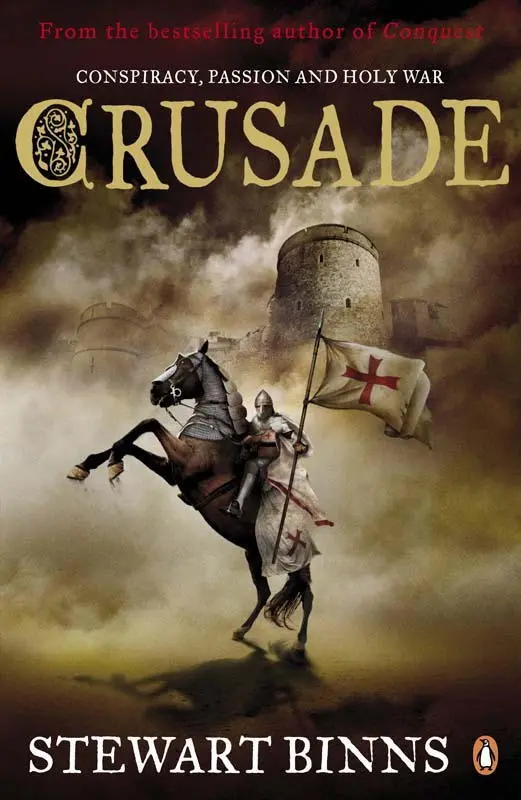
- Название:Crusade
- Автор:
- Издательство:Penguin Books
- Жанр:
- Год:2012
- Город:London
- ISBN:978-0-241-95758-5
- Рейтинг книги:3 / 5. Голосов: 1
-
Избранное:Добавить в избранное
- Отзывы:
-
Ваша оценка:
Crusade: краткое содержание, описание и аннотация
Предлагаем к чтению аннотацию, описание, краткое содержание или предисловие (зависит от того, что написал сам автор книги «Crusade»). Если вы не нашли необходимую информацию о книге — напишите в комментариях, мы постараемся отыскать её.
In the face of chaos and death, Edgar and his allies form a secret brotherhood, pledging to fight for justice and freedom wherever they are denied. But soon they are called to fight for an even greater cause: the plight of the Holy Land. Embarking on the epic First Crusade to recapture Jerusalem, together they will participate in some of the cruellest battles the world has ever known, the savage Siege of Antioch and the brutal Fall of Jerusalem, and together they will fight to the death.
Crusade — читать онлайн бесплатно полную книгу (весь текст) целиком
Ниже представлен текст книги, разбитый по страницам. Система сохранения места последней прочитанной страницы, позволяет с удобством читать онлайн бесплатно книгу «Crusade», без необходимости каждый раз заново искать на чём Вы остановились. Поставьте закладку, и сможете в любой момент перейти на страницу, на которой закончили чтение.
Интервал:
Закладка:
‘They look like Englishmen! They’re carrying shields and axes like housecarls!’
‘Many of them are. Norse, Danes, Balts, English; they are highly paid mercenaries, the best infantry you’ll ever see. The one at the prow of the first ship, giving orders in the scarlet cloak, that’s the Captain of the Guard, the finest soldier in your world and mine.’
He looked English too. I could see long blond hair trailing beneath his helmet, and the distinctive decorated circular shield of a housecarl. Then he fell backwards, struck by an arrow which pierced his hauberk at the top of his shoulder, and then by another which hit him in the chest.
‘That is a piece of very good fortune. The Captain of the Varangians leads the army unless the Emperor is present. We have just killed their general.’
Ibn Hamed was smiling broadly. Arrows were now falling on the Varangians like hailstones and the order was issued for sails to be unfurled and for the oarsmen to row the Byzantine ships away. As soon as the men on the beaches saw their fleet turn seawards, there was panic and a mass retreat towards the ships. Roger immediately ordered his own cavalry squadrons and all his reserves to attack.
The Norman destriers flowed into the bay like a tidal bore. It was a mass slaughter. The Byzantines had no defence and a stark choice: stand and fight in a hopeless final redoubt, or discard their weapons and armour and try to swim to the ships.
Most chose the latter option. Many were drowned, and the rest were killed by the arrows and quarrels from the unremitting onslaught unleashed by the Norman archers and bowmen.
Those who chose to stand their ground fared little better. Initially, the separate themes formed their own redoubts, the Macedonians distinctive with their black-plumed helmets, the Thracians in their blue tunics and the Greeks wielding small, highly decorated shields. But soon, as numbers diminished rapidly, the three redoubts became one.
After about an hour, with Byzantine numbers reduced to under a hundred, Count Roger ordered his men to cease the attack. He then stood high in his stirrups and spoke to his foes in fluent Greek.
‘I offer you quarter. Lay down your weapons, and you will not be harmed or enslaved. You are brave men, the most noble of a great army; you are free to find passage to your homes or to stay here in Sicily and make new lives. All are welcome here: Muslims, Christians, Jews. Our taxes are fair and our people are happy. You are even free to join my own army – we will gladly have you, if you will swear your allegiance to Sicily. It is your choice.’
In the many battles these men had fought, such generous terms were rare – especially the offer to continue their lives as professional soldiers. There was a little muttering in the Byzantine ranks, but it did not take long for swords and shields to be thrown on to the ground to the sound of widespread cheering from Count Roger’s forces.
The Count ordered that the Byzantines be fed and quartered and rode among them to greet as many as he could. The effect he had on them was charismatic, and many rushed forward to kneel before him and kiss his ring. I reflected that we had been very fortunate so far in Sicily; we had met two remarkable men and found a haven of just and benign rule.
The Count soon made his way over to us.
‘Ibn Hamed, I owe you a great debt. Your eagle eye in spotting the Varangians and alerting me turned the battle.’
‘My Lord Count, it is your archers you should thank. Hitting their Captain, probably killing the most important warrior in the empire, won the day for you. Their accuracy and speed of shot is a credit to your training and discipline.’
‘Thank you, it is good to have the Emir of Calatafimi at my side; long may it last. Tonight we will celebrate our victory and toast our future together. I will tap a butt of the finest Sicilian wine and, for you, I will prepare a deliciously sweet punch made from my own orchards in Palermo. But first, I want to meet the English knights who carried the vital message. Prince Edgar, will you oblige?’
‘I will be delighted. Edwin of Glastonbury you have already met, one of England’s most senior knights. This is Sweyn of Bourne and his wife, who is also a knight in her own right, Adela of Bourne.’
‘Edwin told me a good deal about you as we rode to Ibn Hamed’s camp together, but I want to hear much more – especially about Hereward Great Axe, as he was known to me.’
Adela responded to the Count’s invitation.
‘Then we can exchange stories, my Lord. We are keen to learn about Hereward’s time with you in Melfi and your early campaigns here in Sicily.’
Roger looked at Adela, almost in awe.
‘Agreed – and you can also tell me more about you and Sweyn. You have my greatest respect to have become a Knight of Islam. Perhaps, one day, the Christian orders of knighthood will accept women into their ranks.’
‘Only if we deserve it, my Lord; we do not crave charity.’
‘Nor should you, Adela. I believe all people should make progress by merit. It has been the story of my family; my father was the modest lord of a small estate in Normandy, now we rule the whole of Italy south of the Tiber.’
Sweyn then spoke to the Count. ‘My Lord, Hereward taught us that if a man or woman has suitable merit, there should be no limit to what they can achieve. That is why Adela and I follow the Mos Militum, a code that stresses talent above privilege and honour beyond self-interest.’
‘I like the new code; I encourage it among my knights and follow it myself. Chivalry is the measure of a man. When we celebrate our victory, we will sing the songs of the troubadours about the love between a knight and his lady… in your case, of course, between a knight and a fellow knight.’
Little did the Count know that his well-meaning attempt at gentle humour was so wide of the mark as to be hurtful. I looked at Adela and Sweyn, who gave no hint of any discomfort. They had become very practised at disguising the true nature of their relationship.
There was a long and raucous celebration in Mazara that night, and several more over the following days in Palermo.
Count Roger invited all the lords of the various cities of Sicily, as well as its major landholders, merchants and knights, to a series of feasts to celebrate the submission of Ibn Hamed, the last Saracen to resist in the north and west of the island.
Desperate to spread the word about the beneficence of the new Sicily, the feasts and attendant performances were as lavish as anything I had ever seen.
There was an endless supply of the finest food and drink, numerous tumblers, jugglers and clowns, and songs – the highlight of every evening – composed by William, Duke of Aquitaine, the finest troubadour of the day. Adela, Sweyn and Edwin knew the songs well because their home at St Cirq Lapopie, near Cahors, was at the heart of the lyrical tradition of the troubadour.
During the ensuing winter and spring we filled our time helping Count Roger build and train his army and oversee the building of new fortifications and defences. By the summer of 1085, much of Calatafimi had been rebuilt and the Emir reciprocated the Count’s frequent hospitality by hosting a celebration of the progress.
Ibn Hamed strove to emulate the feasts of Palermo and even included in the fare wild pig and the best Sicilian wine for his guests – although, in the case of the pork, he had to ask some of his Christian Armenians to prepare and roast the meat.
One of the principal guests was Themistius, a strategoi of the Thracian theme of the army of Byzantium, the most senior man captured at the Battle of Mazara the previous year. He had chosen to settle close to Calatafimi, and Ibn Hamed had given him land in exchange for service as the leader of his knights, a vacancy that had been created when Sweyn put an end to Hassan Taleb’s swaggering ways.
Читать дальшеИнтервал:
Закладка:
Похожие книги на «Crusade»
Представляем Вашему вниманию похожие книги на «Crusade» списком для выбора. Мы отобрали схожую по названию и смыслу литературу в надежде предоставить читателям больше вариантов отыскать новые, интересные, ещё непрочитанные произведения.







Обсуждение, отзывы о книге «Crusade» и просто собственные мнения читателей. Оставьте ваши комментарии, напишите, что Вы думаете о произведении, его смысле или главных героях. Укажите что конкретно понравилось, а что нет, и почему Вы так считаете.