Vladimir Bartol - Alamut
Здесь есть возможность читать онлайн «Vladimir Bartol - Alamut» весь текст электронной книги совершенно бесплатно (целиком полную версию без сокращений). В некоторых случаях можно слушать аудио, скачать через торрент в формате fb2 и присутствует краткое содержание. Город: Berkeley, Год выпуска: 2012, ISBN: 2012, Издательство: North Atlantic Books, Жанр: Историческая проза, на английском языке. Описание произведения, (предисловие) а так же отзывы посетителей доступны на портале библиотеки ЛибКат.
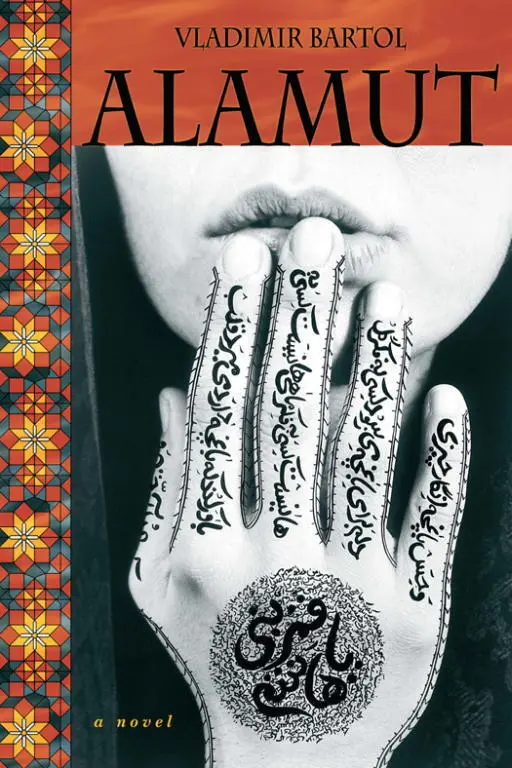
- Название:Alamut
- Автор:
- Издательство:North Atlantic Books
- Жанр:
- Год:2012
- Город:Berkeley
- ISBN:9781583946954
- Рейтинг книги:2.8 / 5. Голосов: 5
-
Избранное:Добавить в избранное
- Отзывы:
-
Ваша оценка:
Alamut: краткое содержание, описание и аннотация
Предлагаем к чтению аннотацию, описание, краткое содержание или предисловие (зависит от того, что написал сам автор книги «Alamut»). Если вы не нашли необходимую информацию о книге — напишите в комментариях, мы постараемся отыскать её.
Alamut — читать онлайн бесплатно полную книгу (весь текст) целиком
Ниже представлен текст книги, разбитый по страницам. Система сохранения места последней прочитанной страницы, позволяет с удобством читать онлайн бесплатно книгу «Alamut», без необходимости каждый раз заново искать на чём Вы остановились. Поставьте закладку, и сможете в любой момент перейти на страницу, на которой закончили чтение.
Интервал:
Закладка:
The emir left and soon returned with Jafar.
The feday prostrated himself before the sultan.
“Get up, son of Omar!”
When the sultan saw Jafar’s face, he exclaimed, “How are you, Halef? But speak, speak! Tell me how the murderer of the mountain received you. What message did he give you for me?”
Everything was blurring before Jafar’s eyes. The objects around him were assuming monstrous shapes. The hashish had him fully in its power. “I have to carry out my order,” he told himself. “The houris are waiting for me.”
He remembered what Halef had said about how to speak to the sultan.
“Majesty! Glory and joy of the realm!” he stammered. “I have been to Alamut. Their leader attacked me…”
He felt for the dagger concealed in his sleeve. He let it drop down into his hand, took firm hold of it by the handle, and with a supreme effort of will lunged straight at the sultan.
Instinctively the ruler drew back. He shook all over. An arm swung at him and a sharpened writing implement scratched him behind the ear. Jafar raised his arm again, but at that instant the emir’s sword split his head open.
The scribe shrieked.
“Be quiet!” the emir commanded him. He helped the sultan, colorless and still shaking all over, to lie back down on his pillows.
“The man was obviously mad,” he said then. He bent down over the dead man and wiped his bloody saber on his clothing.
“He was out of his mind,” the sultan observed, his voice shaking. “Everything that comes from Alamut is either criminal or insane.”
At the scribe’s shriek several guards and courtiers had come into the hall. The sultan drew one sleeve across his sweaty face, then discovered blood stains on it.
“What is this?”
Crazed fear showed in his eyes.
His scribe leapt to his side.
“His Majesty is bleeding! His Majesty is wounded!”
At this point the emir discovered the sharpened writing implement on the floor. He picked it up and inspected it closely. He remembered the murder of the grand vizier and a shudder coursed through his bones. He looked back at the dead man lying in a pool of blood in front of him. The blood had dissolved the glue on his face. The emir pulled at his beard and mustache, which came off into his hand.
“This wasn’t Halef,” he whispered.
The sultan looked at him and understood. An indescribable horror seized at his heart. The murdered vizier came to his mind, and it dawned on him that he would also have to die.
Everyone gathered around the corpse.
“No, this really wasn’t Halef,” they whispered.
They called the sultan’s personal physician. When he arrived, the emir whispered to him, “I’m afraid he’s been wounded with a poisoned weapon. Work fast!”
The physician examined the sultan.
“It’s not a large wound,” he said, trying to comfort him. “But it’s a good idea to burn it out in any case.”
“Are you sure it isn’t fatal?”
The sultan’s voice was as scared as a child’s.
“Let’s hope for the best,” the doctor replied.
He sent for his assistant, who brought him his equipment. Everything was ready quickly.
By then the emir had fully assessed the situation, and he gave an order.
“No one who is in the building may leave, and we will let no one in. We must all keep quiet about everything that has happened here. I am assuming command.”
Guards carried the dead body out of the room. Servants quickly removed the bloodstains.
The doctor heated up a steel blade. As he brought it close to the sultan’s neck, the sultan asked, “Will this hurt very much?”
“Your Majesty should drink several cups of wine. Then it will hurt less.”
A servant quickly brought it to him, and the sultan fell into a stupor.
The doctor touched the wound with the white-hot blade. The sultan howled in pain.
“Patience, Your Majesty,” the doctor pleaded.
“I’ll have your head if you keep torturing me like that.”
“As Your Majesty wishes. But the wound has to be burned out.”
The sultan gained control of himself. The doctor finished his work.
“That hurt a lot,” the sultan sighed. His face was waxen.
Servants carried him into his bedroom on a litter. The doctor offered him something to help him regain his strength, then he ordered the curtains drawn, and the sultan fell asleep, exhausted.
His entourage withdrew to an antechamber. From time to time the doctor checked in on his patient. Each time he came back out, the worried eyes of those in attendance met him.
“It doesn’t look bad,” he said several times.
Then, suddenly, he came back looking panicked.
“His Majesty has a fever, a very high fever. He’s beginning to rave. I’m afraid the poison has made its way into his circulatory system, despite everything.”
“Allah, what a disaster,” the emir said in a whisper.
The sultan began shouting out loud.
The emir and the doctor rushed into the bedroom. They threw the curtains aside, so that some light shone into the room.
The sultan briefly regained consciousness.
“Save me! Save me!” he moaned. “It feels like I have burning coals running through my veins!”
He slipped back into his delirium. Everyone who had been waiting in the antechamber surrounded his bed. They looked at each other, their faces pale.
The patient began to sing. Everyone present knelt down and touched their foreheads to the floor.
“Terrible, terrible,” they murmured.
The sultan lifted himself up on his pillows. He looked around, confused, and tried to get up.
The doctor restrained him. He nodded for the others to leave.
In the antechamber, the emir said, “When he regains consciousness, we have to ask him who he wants to succeed him. There’s still some time. Mohammed is barely four years old, and there’s no way he can rule over the whole empire at a time like this.”
“Let’s wait a while longer,” an old courtier suggested.
The scribe warned, “It wouldn’t be good for the sultana and Taj al-Mulk to gain power.”
“But we mustn’t let the sultan see that we’re anticipating the worst,” one nobleman said.
“The fate of Iran hangs on it,” the emir replied grimly.
“We should bring his sister here. He doesn’t have any other relatives close by.”
“We’re not going to let anyone see him who isn’t already in this building,” the emir said firmly. “No one must find out that the sultan has fallen victim to an Ismaili dagger. If it comes to the worst, we’ll announce that he died of a fever. Because if all of Iran finds out that the sultan, like the grand vizier, has fallen victim to another killer from Alamut, then not only will we all have to answer for it, but the people will be so terrified of these murderers that no one will agree to fight them anymore.”
All that night until morning the sultan’s entourage kept watch over him. His fever steadily rose. The emir tried in vain to raise the question of the succession. Eventually the sultan lost consciousness completely. As dawn came, his death throes began and lasted until second prayers. Then the doctor confirmed that his heart had stopped beating. They all burst out crying in despair. Iran had lost its most powerful ruler.
Baghdad—thriving, dynamic Baghdad, which had been in a festive, happy mood until the previous day—suddenly fell silent and sank into mourning. But news of the sultan’s death hadn’t yet reached the furthest outskirts of the city when the courtiers began fighting over the successor to the throne. Express messengers galloped in all directions with the sad news. The commander of the bodyguard sent his men to see Barkiarok, thinking that he was still campaigning on the border with India, and to the sons of the murdered grand vizier. Mohammed’s supporters sent their men to Isfahan, to see the sultan’s widow and Taj al-Mulk. Obedient princes from Syria and other neighboring provinces who had just gathered in Baghdad to honor the sultan raced home at breakneck speed, hoping to exploit the opportunity to shake themselves free of Iranian rule. The caliph himself, who had just decreed a half year’s mourning for the deceased, was secretly pleased at this turn of events. Now he was free to choose a successor as he pleased, and once again he designated his first-born son. The confidants of all the many kings, princes and grandees sent messengers to their masters with the news.
Читать дальшеИнтервал:
Закладка:
Похожие книги на «Alamut»
Представляем Вашему вниманию похожие книги на «Alamut» списком для выбора. Мы отобрали схожую по названию и смыслу литературу в надежде предоставить читателям больше вариантов отыскать новые, интересные, ещё непрочитанные произведения.








Обсуждение, отзывы о книге «Alamut» и просто собственные мнения читателей. Оставьте ваши комментарии, напишите, что Вы думаете о произведении, его смысле или главных героях. Укажите что конкретно понравилось, а что нет, и почему Вы так считаете.