Vladimir Bartol - Alamut
Здесь есть возможность читать онлайн «Vladimir Bartol - Alamut» весь текст электронной книги совершенно бесплатно (целиком полную версию без сокращений). В некоторых случаях можно слушать аудио, скачать через торрент в формате fb2 и присутствует краткое содержание. Город: Berkeley, Год выпуска: 2012, ISBN: 2012, Издательство: North Atlantic Books, Жанр: Историческая проза, на английском языке. Описание произведения, (предисловие) а так же отзывы посетителей доступны на портале библиотеки ЛибКат.
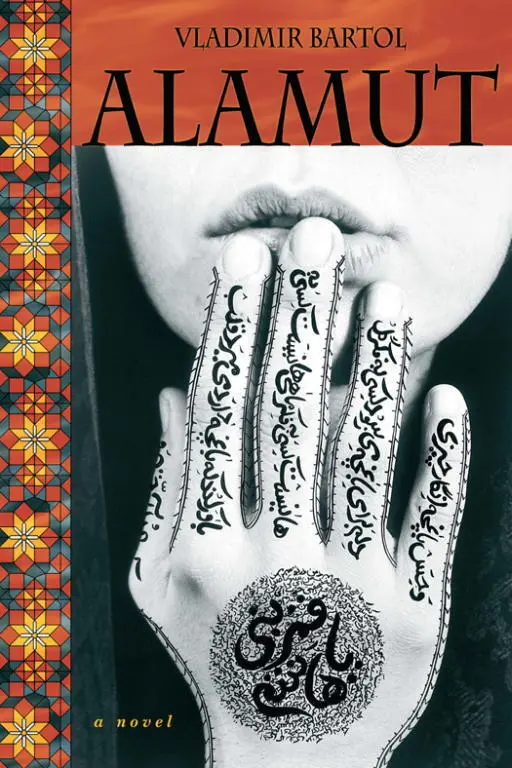
- Название:Alamut
- Автор:
- Издательство:North Atlantic Books
- Жанр:
- Год:2012
- Город:Berkeley
- ISBN:9781583946954
- Рейтинг книги:2.8 / 5. Голосов: 5
-
Избранное:Добавить в избранное
- Отзывы:
-
Ваша оценка:
Alamut: краткое содержание, описание и аннотация
Предлагаем к чтению аннотацию, описание, краткое содержание или предисловие (зависит от того, что написал сам автор книги «Alamut»). Если вы не нашли необходимую информацию о книге — напишите в комментариях, мы постараемся отыскать её.
Alamut — читать онлайн бесплатно полную книгу (весь текст) целиком
Ниже представлен текст книги, разбитый по страницам. Система сохранения места последней прочитанной страницы, позволяет с удобством читать онлайн бесплатно книгу «Alamut», без необходимости каждый раз заново искать на чём Вы остановились. Поставьте закладку, и сможете в любой момент перейти на страницу, на которой закончили чтение.
Интервал:
Закладка:
“At last,” he whispered. “The death of that devil is the beginning of good fortune.”
The three of them remained silent for a time. Then he asked, “Have you heard what happened to the one who did it?”
Buzurg Ummid shrugged.
“We haven’t heard. What other possibility could there be, but one?”
Hasan looked them in the eyes, trying to read their thoughts. Abu Ali’s face showed loyalty and trust. Buzurg Ummid’s expressed approval verging on admiration.
He relaxed.
“Tell the Ismailis that from this day forward they’re to revere ibn Tahir as our most illustrious martyr. In addition to his name, they should also mention Suleiman’s and Yusuf’s in their prayers. This is my order. From here on, our path leads relentlessly upwards. All of the besieged castles will be liberated. Send a messenger to Gonbadan immediately. Husein Alkeini must be avenged. As soon as Kizil Sarik retreats from the fortress, have them send a caravan with my son in it here to Alamut.”
He dismissed them and went to the top of his tower, where he watched the emir’s forces retreating.
The next morning messengers were dispatched at a gallop to all the Ismaili fortresses. Ibn Vakas’s assignment was to reestablish contact with Rudbar.
As the day began to incline toward evening, a breathless Abu Ali came running in to see the supreme commander.
“Something incredible has happened,” he said when he was still a long way off. “Ibn Tahir has returned to the castle.”
The night after his attack on the grand vizier was the most horrible night in ibn Tahir’s life. Beaten and battered, his arms and legs bound, he lay chained to the tent’s middle pole. Desperate thoughts gnawed at him. He thought he could hear the mocking guffaws of the old man of Alamut. How could he have been so blinded that he didn’t see through the deception from the very start? Allah, Allah! How could he have ever guessed that a religious leader, whose devoted followers all thought he served justice and truth, could be such a vile fraud! Such a cold-blooded, calculating cheat! And that Miriam, that creature of angelic beauty, could be his helper, ten times more despicable than he, because she exploited love for her vile purposes. How limitlessly he despised her now!
The night dragged on to infinity. The excruciating pain refused to pass and sleep refused to come. Was Miriam that horrible old man’s lover? Did the two of them laugh at his childish gullibility together? He, ibn Tahir, had written poems to her. He had dreamed about her, longed for her, expired for her. And all that time that vile old man had probably been using her as his plaything, slaking his lust on her, glutting himself on wine and her charms, while those who believed in him, who revered and loved him, got sent to their deaths. Allah, Allah, what a horrible revelation this was!
But how had all this been possible? Was there no one above us to punish such a crime? No one to set limits on such revolting behavior?
Miriam, a whore! This was the most intolerable thought of all. Her beauty, her intelligence, her kindness—all just decoys for the idiot he had been! He couldn’t live after a humiliation like this. This is why he had to go to Alamut and settle things with the old man. He had to, and this would earn him death too. What did he have to be afraid of?
Ah, but still! Hadn’t Miriam’s beauty been the most delightful miracle? What a powerful fire she had ignited! She had triggered a hundred new and unknown powers in him. And now, finally, this realization. Oh, if only he could press her close again. And in a moment of delight crush her, strangle her!
The next day they told him that the grand vizier had died. They held off sending him to Alamut and waited for what the sultan would do.
Sultan Malik Shah, who was already halfway to Baghdad, immediately interrupted his trip when he heard that Nizam al-Mulk had been murdered. Within two days he was back at Nehavend.
On a mighty platform, beneath a sky-blue canopy, and amid countless banners, wreaths and decorations, the vizier’s body lay, perfumed, anointed, and preliminarily embalmed, dressed in scarlet and adorned with a magnificent turban. A black fez and quiver with ink and pen, the symbols of the vizier’s station, were laid out at his feet. His waxen face, framed by its handsome white beard, expressed nobility and peaceful dignity.
One after the other, his sons arrived from all corners of the realm, riding the swiftest horses. They kneeled down before their dead father and kissed his cold, stiffened fingers. Moans and wails echoed around the funeral bier.
When the sultan saw the dead body of his vizier, he broke into tears like a child. For thirty years the deceased had served his country! “The king’s father”— ata beg —how that title suited him! Now he bitterly regretted his harsh treatment of him over the past year. Why had he let a woman meddle with affairs of state?! He ought to have kept her locked up in a harem like all the others.
At the camp he learned the details of the horrible murder. So this was Hasan’s true face! The murderer could just as easily have found him out instead of the vizier! He shuddered. No, he wasn’t going to let this criminality spread. He had to get rid of Hasan! And all the Ismailis with him. His castles would all have to be razed to the ground.
He permitted the vizier’s sons to transport their father’s body to Isfahan and hold the burial ceremony there. As for the murderer, the general sense was to have him carry out the dying vizier’s last command. “He’ll die at Alamut one way or the other,” they said. And so the sultan ordered ibn Tahir brought before him.
They shoved him into the tent, bound and still swollen from his beating and bloody from his wounds. The sultan was amazed when he saw him. In all the many years of his rule he had learned to judge people quickly. There was nothing at all murderous about this Ismaili.
“How were you able to commit such a terrible crime?”
Ibn Tahir gradually confessed. There was nothing invented or distorted in his words. The sultan broke into a cold sweat. He knew history well, but this was the most frightening tale he had ever heard.
“Do you see now that you were just a pawn in the hands of the vile old man of the mountain?” he asked him at the end of his story.
“My only desire is to atone for my crime and save the world from the monster of Alamut.”
“I trust you and will let you go. Thirty men will escort you to Alamut. Make sure you don’t give yourself away too soon. Rein in your anger until they let you see the leader. You’re a determined and bright young man. Your plan has to succeed.”
When he had taken care of everything, the sultan continued his journey to Baghdad.
The thirty men escorting ibn Tahir traveled with remarkable speed. Even so, news of the vizier’s death preceded them by a full day. Between Rai and Qazvin they came across whole bands of soldiers returning from the siege of Alamut. From them they heard how the news had affected the emir and his army. There was some risk that they might fall into the hands of some troop of Ismailis.
Ibn Tahir spoke up.
“I know a secret path on the far side of Shah Rud. That would be the safest route for us to travel.”
He led them to a shallows where they could easily ford the river. They came to a path at the base of the mountains which wended uphill amid gravel and scrub alongside the riverbed. They rode toward Alamut, until the lead rider announced that a horseman was approaching from the opposite direction. They hid in the bushes on both sides of the path and prepared their ambush.
Then ibn Tahir caught sight of the horseman approaching them and recognized ibn Vakas. He felt strangely anxious. Sayyiduna must be sending him to Rudbar , he thought. As much as he reproached himself for it, something in him still wanted the feday to escape from the trap set for him. “It’s not his fault, after all,” he reassured himself. “He’s just as much a victim of the deceitful old man as I was.” Moreover, he still felt some odd connection to the world of Alamut.
Читать дальшеИнтервал:
Закладка:
Похожие книги на «Alamut»
Представляем Вашему вниманию похожие книги на «Alamut» списком для выбора. Мы отобрали схожую по названию и смыслу литературу в надежде предоставить читателям больше вариантов отыскать новые, интересные, ещё непрочитанные произведения.







Обсуждение, отзывы о книге «Alamut» и просто собственные мнения читателей. Оставьте ваши комментарии, напишите, что Вы думаете о произведении, его смысле или главных героях. Укажите что конкретно понравилось, а что нет, и почему Вы так считаете.