Tim Bowling - The Tinsmith
Здесь есть возможность читать онлайн «Tim Bowling - The Tinsmith» весь текст электронной книги совершенно бесплатно (целиком полную версию без сокращений). В некоторых случаях можно слушать аудио, скачать через торрент в формате fb2 и присутствует краткое содержание. Город: Toronto, Год выпуска: 2012, ISBN: 2012, Издательство: Brindle & Glass, Жанр: Историческая проза, на английском языке. Описание произведения, (предисловие) а так же отзывы посетителей доступны на портале библиотеки ЛибКат.
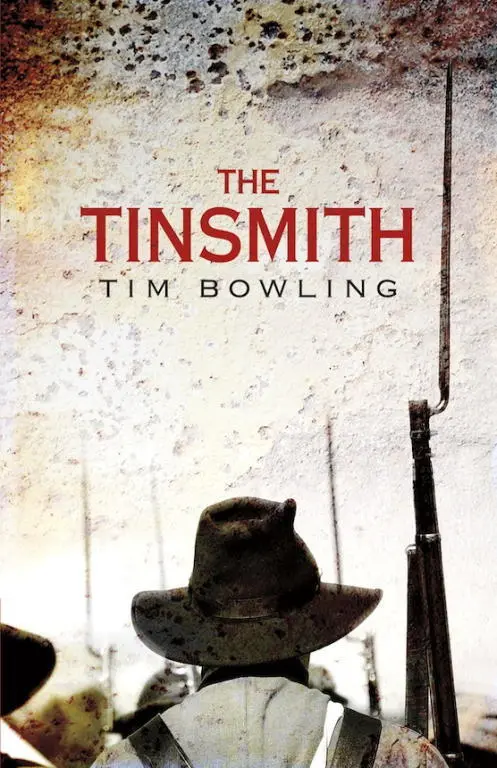
- Название:The Tinsmith
- Автор:
- Издательство:Brindle & Glass
- Жанр:
- Год:2012
- Город:Toronto
- ISBN:978-1-926972-43-5
- Рейтинг книги:3 / 5. Голосов: 1
-
Избранное:Добавить в избранное
- Отзывы:
-
Ваша оценка:
The Tinsmith: краткое содержание, описание и аннотация
Предлагаем к чтению аннотацию, описание, краткое содержание или предисловие (зависит от того, что написал сам автор книги «The Tinsmith»). Если вы не нашли необходимую информацию о книге — напишите в комментариях, мы постараемся отыскать её.
Twenty years later on the Fraser River in British Columbia, Anson arrives to find his old comrade-in-arms mysteriously absent, an apparent victim of the questionable business ethics of the pioneer salmon canners. Haunted by the violence of his past, and disillusioned with his present, Anson is compelled to discover the fate of his missing friend, a fate inextricably linked to his own.
The Tinsmith — читать онлайн бесплатно полную книгу (весь текст) целиком
Ниже представлен текст книги, разбитый по страницам. Система сохранения места последней прочитанной страницы, позволяет с удобством читать онлайн бесплатно книгу «The Tinsmith», без необходимости каждый раз заново искать на чём Вы остановились. Поставьте закладку, и сможете в любой момент перейти на страницу, на которой закончили чтение.
Интервал:
Закладка:
“Be thankful,” Richardson said, still meeting Anson’s eyes, “that you do not live among negroes. A country free of their treachery must indeed be a country of opportunity.”
Anson looked down without responding. In a few seconds, once he had composed himself, he raised his head again. The bitterness, he acknowledged, was understandable. After all, his side had won the war and he had tasted the dregs of the victory; he could only imagine how much greater was the bitterness of the defeat. Suddenly, Ambrose Richardson, standing there in his honour, missing one arm and who knew what else, seemed a pitiable figure. Anson had no desire to continue the verbal gamesmanship.
He didn’t have to. Henry Lansdowne said with surprising coolness, almost vehemence, “We do not sit in judgment, sir, but it would be best not to speak of your country’s unfortunate history of enslavement.”
“Brother,” Thomas Lansdowne said as he stepped in front of him to address the Southerner. “It’s been a trying evening. My wife, as you can see, is ill. Dr. Baird has, I believe, been too long among us and we have been perhaps too preoccupied with daily matters to be sufficiently hospitable. As well, the time of preparing for the next salmon run is difficult and puts us all on edge. An early evening, I think, is advisable.”
This was the longest and most articulate speech Anson had heard from the younger Lansdowne, and it was remarkably effective. Ambrose Richardson soon deferred to it with a nod and a few curt words.
“I’ve not come all this way to discuss negroes with those who have no knowledge of them. You’re experts on the subject of the salmon, and about the canning of them for market. That is why I’m here. Tomorrow you’ll show me your operations and we’ll discuss business.”
He bowed stiffly, his arm across his waist.
“I’ll walk back with you,” Thomas Lansdowne said.
“And your good lady?”
Henry Lansdowne explained that he would accompany his sister-in-law home after she’d rested a while. Then his brother and Ambrose Richardson departed. Anson found himself alone with the elder Lansdowne. They stood in uncomfortable silence for a moment until the Englishman finally excused himself. Anson, understanding the man’s embarrassment, waited briefly before walking into the front hall and putting on his coat. Then he stepped outside.
It was a clear night, the sky star-clustered, a small full moon shedding wan light over the fields and slough. The figures of Thomas Lansdowne and Ambrose Richardson, a dog at their sides, were just visible against the black backdrop of the woodlot. Anson lit a cigar as he watched them diminish, and inhaled gratefully. Though he disliked to admit it, he conceded that the Virginian had a point; it had been improper to confront the Lansdownes about Dare in that company. First, one of the ladies was indisposed. Second, he had only just made Richardson’s acquaintance. Anson accepted that his timing had not been propitious. He blew smoke at the stars and stepped slowly along the veranda. Fifty yards to the west loomed the bulk of a ridge-roofed barn. Just beyond it, along the dike, began the cluster of cannery buildings, and beyond those there was only river and marsh. Much closer, thirty yards to the north of where he stood, the Lansdownes’ gangway and wharf hung, tiny as children’s toys, at the edge of the great muddy river.
Anson exhaled another plume of smoke and tried to orient himself. Two miles up the river, on the opposite bank, was the city of New Westminster. Dare’s settlement was almost as distant, though on the near bank. It seemed hard to imagine any single human life, not to mention whole communities of them, out there in the thick, brinish dark. Anson gazed at it until the heavy sameness forced him to blink. If nothing else, he thought, a man had plenty of quiet for reflection here. Other than the intermittent hooting of owls and lowing of cattle beneath the wind, the night was still. The Chinese, of course, were by now well ensconced in their melancholic sojourns along the opium trail, and it was all Anson could do to keep his thoughts from becoming regretted actions. Dare had made life unexpectedly difficult for him, but perhaps the trial had a purpose, perhaps he was meant to endure it for a greater good he could not yet foresee. Even so, Anson was not sure that he should wait any longer for a Victoria-bound steamer. It might be a pleasant diversion to visit New Westminster, even if for only a week. Someone there might be able to provide more information about Dare’s conflict with the two Englishmen; it couldn’t be a large city, after all.
He put his hands on the veranda railing and stared at the red end of the cigar in his fingers. In the surrounding dark, the tiny light was like one of the soldiers’ meek fires in the days after the Battle of Antietam. How fragile they had seemed after all the carnage, and how welcome too—ever since, Anson had never ceased to be attracted to a good fire; it seemed at once a refuge and an escape. In those long nights of misery, his hands and feet aching, his bowels loose and stomach cramped, his lungs filled with the spreading miasma of death, how powerfully the soldiers’ weakest fires had fortified him. Between the comfort and hope inherent in the flames and the equally vital presence of goodness in William Dare’s character, Anson had found his survival. Was he, then, to feel chagrined by his continuing loyalty? No, he would not apologize for that. But a man of his years ought to practise greater diplomacy.
He lifted the cigar to his lips again and considered the immediate future. Thomas Lansdowne must be warned about the perils of his wife’s condition; she clearly required more than a few hours of rest. And Anson realized it was indeed advisable that he should take the next steamer out of Chilukthan, no matter which direction it was headed. In the meantime, he’d stay discreetly out of Ambrose Richardson’s company and he’d limit his conversations with the Lansdownes, especially on the subject of Dare.
Satisfied, Anson flicked the cigar into the muddy yard and was about to return inside the house when he heard a faint, curious tinkling sound coming from the direction of the river. It was an eerily familiar sound, and at first he doubted that he’d really heard it. He strained to shut out the wind. Yes, there it came again, a glassy shivering. Anson closed his hands to keep them from shaking. All the calm he’d gathered from the cigar was evaporating with each repetition of the sound. He looked dully into the moonlit dark, expecting… what? He knew that glassy shivering, but it took him a moment to see the wagon in his mind’s eye and the burly photographer with the heavy brogue and pointed questions. It had been some time since Anson had recollected that image. Ah, but it was too much, fanciful—the product, he knew, of futile brooding. A man could find the past everywhere if he wasn’t vigilant against it.
Self-knowledge. Anson had never considered himself a fool, and he wasn’t about to change. And yet, there was a reason for the patterns the mind assumed, just as there were reasons for the rhythms in nature. If he’d come to the delta of the Fraser River to find again the battlefield of Antietam, so be it. And why should that even be a surprise? In twenty years Dare had never asked for him to come anywhere, had only sent telegrams and brief letters regarding business matters after their last meeting, when Dare had stayed at Anson’s home. So, out of loyalty and genuine faith in the man, Anson had come to this Canadian river. There was misery and tension all around him, his old longing for opium had returned, and a former enemy bearing the physical evidence of defeat had opened the painful wounds of his country’s severance. Why should all this not be photographed like a battlefield? It would make a fine study of the dissolution of the years. Anson could see the grinning Scotsman making a square of his fingers before his eyes.
Читать дальшеИнтервал:
Закладка:
Похожие книги на «The Tinsmith»
Представляем Вашему вниманию похожие книги на «The Tinsmith» списком для выбора. Мы отобрали схожую по названию и смыслу литературу в надежде предоставить читателям больше вариантов отыскать новые, интересные, ещё непрочитанные произведения.




Обсуждение, отзывы о книге «The Tinsmith» и просто собственные мнения читателей. Оставьте ваши комментарии, напишите, что Вы думаете о произведении, его смысле или главных героях. Укажите что конкретно понравилось, а что нет, и почему Вы так считаете.