Evan Hunter - Lizzie
Здесь есть возможность читать онлайн «Evan Hunter - Lizzie» весь текст электронной книги совершенно бесплатно (целиком полную версию без сокращений). В некоторых случаях можно слушать аудио, скачать через торрент в формате fb2 и присутствует краткое содержание. Год выпуска: 1984, ISBN: 1984, Издательство: Hamish Hamilton, Жанр: Историческая проза, Триллер, на английском языке. Описание произведения, (предисловие) а так же отзывы посетителей доступны на портале библиотеки ЛибКат.
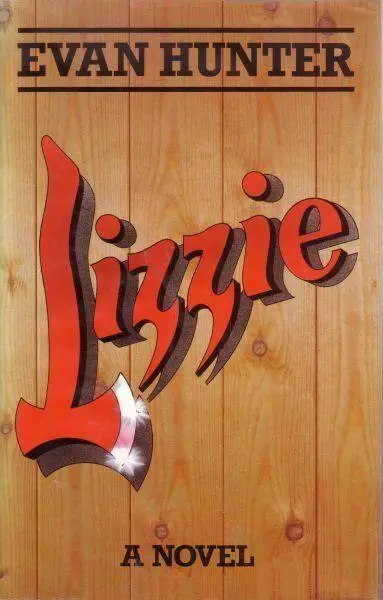
- Название:Lizzie
- Автор:
- Издательство:Hamish Hamilton
- Жанр:
- Год:1984
- ISBN:978-0-24111-172-7
- Рейтинг книги:4 / 5. Голосов: 1
-
Избранное:Добавить в избранное
- Отзывы:
-
Ваша оценка:
Lizzie: краткое содержание, описание и аннотация
Предлагаем к чтению аннотацию, описание, краткое содержание или предисловие (зависит от того, что написал сам автор книги «Lizzie»). Если вы не нашли необходимую информацию о книге — напишите в комментариях, мы постараемся отыскать её.
In recreating the events of that fateful day. August 4. 1892. in Fall River. Massachusetts, and the extraordinary circumstances which led up to them. Evan Hunter spins a breathtakingly imaginative tale of an enigmatic spinster whose secret life would eventually force her to the ultimate confrontation with her stepmother and father.
Here is Lizzie Borden freed of history and legend — a full-bodied woman of hot blood and passion. fighting against her prim New England upbringing. surrendering to the late-Victorian hedonism of London. Paris and the Riviera, yet fated to live out her meager life in a placid Massachusetts town.
Seething with frustration and rage, a prisoner of her appetites, Lizzie Borden finally, on that hot August day... but how and why she was led into her uncompromising acts is at the heart of this enthralling, suspenseful work of the imagination.
Alternating the actual inquest and trial of Lizzie Borden with an account of her head-spinning, seductive trip to Europe. Evan Hunter port rays with a master craftsmans art the agony of a passionate woman, the depths of a murdering heart.
Lizzie — читать онлайн бесплатно полную книгу (весь текст) целиком
Ниже представлен текст книги, разбитый по страницам. Система сохранения места последней прочитанной страницы, позволяет с удобством читать онлайн бесплатно книгу «Lizzie», без необходимости каждый раз заново искать на чём Вы остановились. Поставьте закладку, и сможете в любой момент перейти на страницу, на которой закончили чтение.
Интервал:
Закладка:
The chambermaid said, “ Je crois que ça va mieux maintenant.”
They lifted her out of the tub. The chambermaid supported her limp body while Alison toweled her dry, and then they carried her to the sofa, and Alison sat on the edge of it, holding Lizzie’s hand while the chambermaid put fresh, clean sheets on the bed. Together they carried her back to the bed again, and Alison said to the chambermaid, “ Merci, madame, vous m’avez rendu un grand service,” and the chambermaid answered, “ Mon plaisir, madame” and left the room as quickly as she could.
Lying on the bed, Lizzie was vaguely aware of Alison standing beside it. She opened her eyes. Alison was staring down at her. She closed her eyes again a moment before Alison raised the top sheet over her naked body.
She could later remember very little about her immersion in that tub of icy cold water, except that, oddly and contradictorily, the first touch of it had felt scaldingly hot to her. She confided to Alison, too, that she had imagined she was being abducted by a pair of swarthy French bandits who were intent on drowning her, this until she looked up into Alison’s face and saw her green eyes wide in alarm as great as her own had been. But, as little as she could recall, she knew for certain that somehow, as the waters closed about her naked body, she felt the fever magically breaking, and she had sighed in relief with the knowledge that the worst of her illness was behind her.
She became now an undemanding convalescent who gratefully accepted Alison’s mother-hen fussing. Alison was with her constantly — fluffing up a pillow, smoothing a sheet, feeding her (though she wasn’t yet quite up to eating anything much), helping her to change her nightdress, reading to her from the English-language books she found in the stalls along the Seine, taking her temperature at regular intervals to make certain the recovery was not an illusion — and Lizzie was beginning to realize that she had never had such a friend in her life and possibly might never have again.
In the evenings, after their meal had been served and Alison had changed into her own nightdress, they sat listening to the sounds of the Parisian night flooding through the open courtyard windows, and they talked together — talked as Lizzie had never before spoken to another woman, indeed to any other human being. She was surprised to learn that she was not alone in the mixed feelings she felt about her stepmother, with whom her relationship was cordial, but not what she would have termed “loving”. Alison’s own mother — the German woman who had so influenced her early years — had died when she was barely fifteen, admittedly much older than Lizzie had been when she’d lost her mother, but her father’s subsequent remarriage had had the same profound effect upon her. Lizzie was quick to point out that she had never, before this moment, given much thought to her relationship with Abby, as her stepmother was called—
“Is that short for Abigail?” Alison asked.
“No, it’s Abby,” Lizzie said. “That’s the whole of it.”
“What odd names you Americans have,” Alison said.
— and that she would hardly call her father’s remarriage an event that had had a “profound effect” upon her, since she could, in all honesty, not remember her true mother at all. Of course, her sister Emma remembered her well, and often told stories of their childhood, but as for any personal knowledge—
“And yet, you call her your ‘true’ mother,” Alison said.
“Well, she is,” Lizzie said. “Or, rather, was.”
“And what do you mean by loving ?” Alison asked.
“Abby’s not a particularly demonstrative or affectionate woman,” Lizzie said, “Not that I would particularly want her to be.”
“Are you?”
“Affectionate, yes... I suppose. I’m very fond of my sister, and I can’t begin to tell you how much I appreciate all you’ve done for me.”
“Ah, but appreciation isn’t quite affection, is it?”
“One who denies a compliment only seeks the same compliment twice,” Lizzie quoted, smiling.
“How quickly my dear Lizzie learns,” Alison said, and burst into laughter. “But demonstrative? Do you consider yourself demonstrative?”
“Well, I don’t go about hugging and kissing total strangers,” Lizzie said, “but, yes, I should say I’m affectionate and demonstrative with people I know, good friends, yes. I should think it strange, wouldn’t you, if we failed to embrace in greeting? Or when saying good-bye?”
“I should think so, yes,” Alison said.
Lizzie found herself talking of Fall River then, the city as it was now and the city as her father recalled it when he was growing up there. She explained that the town stood at the head of what was called Mount Hope Bay, on both sides of the Quequechan River, which was the Indian word for—
“I keep forgetting you still have Indians in America,” Alison said.
“Yes, but not in Fall River.”
“But you said...”
“There were Indians there, yes, but very long ago. Quequechan is the Indian word for Fall River...”
... from which the town had taken its name, and from which it derived the power that drove its mills and factories. She described in glowing terms the rapid waters of the river, the fish that could still be seen leaping over the falls, the two big lakes—
“Well, we call them ponds,” Lizzie said, “but actually they’re lakes. North Watuppa and South Watuppa...”
“Indian names as well?”
“Yes, but I don’t know what they mean. They’re quite pretty, actually, the ponds. And, of course, the town is surrounded by beautiful hills and valleys, and at certain times of the year — the spring and fall — it can all be very lovely.”
But she spoke far less generously of the cotton mills, and the rolling and slitting mills, and the nail factory and the ironworks and the oil manufactory, and the granite quarries, and all the various other commercial enterprises that had turned what had been a peaceful village in her father’s youth to what was now a bustling port of entry concerned only with business. She rather imagined it had all changed after the Great Fire of ’43, which had consumed the town and necessitated its reconstruction.
Her father (and she smiled now with the memory) had told her stories of what it had been like to be a boy back then, walking the dusty sidewalks of the village, listening for the sound of the fire-alarm bell — fire was always a hazard in a town constructed almost entirely of wood, as it was then — rushing out into the streets, barefooted more often than not, to race after the horse-drawn engines. Back then, all of the engines — even those still drawn by hand — had names as well as numbers, mysterious names that conjured all sorts of derring-do for Lizzie when her father repeated them, names like Hydraulion Number Two and Cataract Number Four and Torrent Number Two and — her favorite because she always visualized an Indian lashing the horses — Mazeppa Number Seven.
Whenever her father heard the cry “Fire!” he would rush through the streets echoing it, “Fire!” Fire!”, hoping to be the first to reach the bell rope and ring the alarm bell, the hero who would save the town from destruction. He could vividly recall — and recreated for Lizzie as she did now for Alison — the two men who drove horse-drawn wagons in the performance of street-work for the city. Whenever the fire bell rang, those two would leap down from their high seats, unhook the whiffletrees, leave the wagons wherever they stood and drive their horses bareback — the horizontal wooden crossbars clattering behind them — to the nearest station, there to harness them to engines and race off to the conflagration. Her father—
Читать дальшеИнтервал:
Закладка:
Похожие книги на «Lizzie»
Представляем Вашему вниманию похожие книги на «Lizzie» списком для выбора. Мы отобрали схожую по названию и смыслу литературу в надежде предоставить читателям больше вариантов отыскать новые, интересные, ещё непрочитанные произведения.



Обсуждение, отзывы о книге «Lizzie» и просто собственные мнения читателей. Оставьте ваши комментарии, напишите, что Вы думаете о произведении, его смысле или главных героях. Укажите что конкретно понравилось, а что нет, и почему Вы так считаете.