Evan Hunter - Lizzie
Здесь есть возможность читать онлайн «Evan Hunter - Lizzie» весь текст электронной книги совершенно бесплатно (целиком полную версию без сокращений). В некоторых случаях можно слушать аудио, скачать через торрент в формате fb2 и присутствует краткое содержание. Год выпуска: 1984, ISBN: 1984, Издательство: Hamish Hamilton, Жанр: Историческая проза, Триллер, на английском языке. Описание произведения, (предисловие) а так же отзывы посетителей доступны на портале библиотеки ЛибКат.
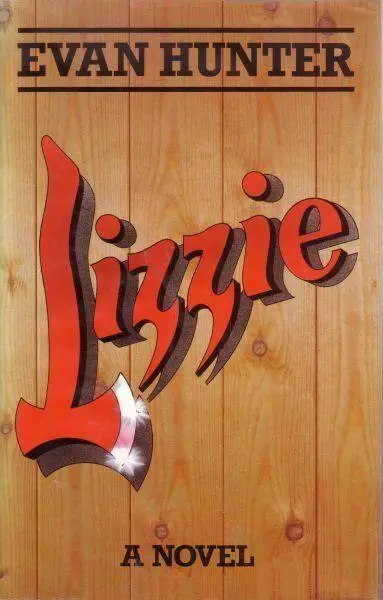
- Название:Lizzie
- Автор:
- Издательство:Hamish Hamilton
- Жанр:
- Год:1984
- ISBN:978-0-24111-172-7
- Рейтинг книги:4 / 5. Голосов: 1
-
Избранное:Добавить в избранное
- Отзывы:
-
Ваша оценка:
Lizzie: краткое содержание, описание и аннотация
Предлагаем к чтению аннотацию, описание, краткое содержание или предисловие (зависит от того, что написал сам автор книги «Lizzie»). Если вы не нашли необходимую информацию о книге — напишите в комментариях, мы постараемся отыскать её.
In recreating the events of that fateful day. August 4. 1892. in Fall River. Massachusetts, and the extraordinary circumstances which led up to them. Evan Hunter spins a breathtakingly imaginative tale of an enigmatic spinster whose secret life would eventually force her to the ultimate confrontation with her stepmother and father.
Here is Lizzie Borden freed of history and legend — a full-bodied woman of hot blood and passion. fighting against her prim New England upbringing. surrendering to the late-Victorian hedonism of London. Paris and the Riviera, yet fated to live out her meager life in a placid Massachusetts town.
Seething with frustration and rage, a prisoner of her appetites, Lizzie Borden finally, on that hot August day... but how and why she was led into her uncompromising acts is at the heart of this enthralling, suspenseful work of the imagination.
Alternating the actual inquest and trial of Lizzie Borden with an account of her head-spinning, seductive trip to Europe. Evan Hunter port rays with a master craftsmans art the agony of a passionate woman, the depths of a murdering heart.
Lizzie — читать онлайн бесплатно полную книгу (весь текст) целиком
Ниже представлен текст книги, разбитый по страницам. Система сохранения места последней прочитанной страницы, позволяет с удобством читать онлайн бесплатно книгу «Lizzie», без необходимости каждый раз заново искать на чём Вы остановились. Поставьте закладку, и сможете в любой момент перейти на страницу, на которой закончили чтение.
Интервал:
Закладка:
The man behind the bar told them that the theater in the room above opened at precisely nine-thirty, and then sold them tickets at five francs each. They went up a narrow flight of stairs (a painted board halfway up read Passant, sois moderne) and into the theater itself, where there were a good many women present — but all of them French, Lizzie decided, since the place seemed hardly the sort any lady might come to, even accompanied by a gentleman. “Mesdames et messieurs,” the proprietor said to the gathered audience, “bienvenue aux Ombres Chinoises,” which Rebecca instantly translated as “Welcome to the Chinese Shadows,” mysterious enough until Alison explained they were about to see a series of shadow plays, quite popular in France at the moment.
The effect, she said (while the proprietor rattled on in French), was achieved by puppeteers manipulating cutouts between a bright light and the screen before which they now sat. Even as she spoke (the proprietor had stopped his prologue now, and bowed toward the screen), the lights lowered, and the first of the little plays began. The proprietor marched up and down the middle aisle, hoarsely describing in French the story of the silhouetted action they were viewing. Alison was hard put to keep up with a translation; laughing at one point, she said that the proprietor was really quite witty. The shadows on the screen caused Rebecca to blush and Anna to cough uncontrollably. Felicity watched in rapt but uncharacteristically silent fascination; Lizzie noticed that Albert’s arm was around the back of her chair.
Between each of the shadow plays, a poet or a singer came out to perform one of his original compositions. “They all look like broken-down French masters in a fourth-rate English school,” Albert commented, but Alison explained that they were for the most part students in ardent revolt against the reputations of the day, and that their compositions were moderne in every sense. The proprietor, realizing that they were speaking English, deferred to his foreign guests and announced, in a heavily accented voice, “I should like now to introduce my comrade, the good poet Henri Chaulet, who will recite one of his small poems. Do not laugh, please, at his Languedoc accent; it is his only defect.”
He repeated the same introduction in French, and a young man in a tight and seedy frock coat came up to stand by the piano. Fixing his soulful eyes on the ceiling, he began a long and seemingly endless poem which Alison could not possibly translate simultaneously without distracting others in the audience. When at last he concluded, she said merely, “It was all about joy and life and seizing the flying hours,” and Albert snorted and said, “Nothing very modern in all that, is there, Felicity?” and patted her knee.
The last of the shadow plays was, in Lizzie’s estimation, the best — and least objectionable — of the lot. It was called La Marche a L’Etoile (which Rebecca translated as The Walk of the Star) and it depicted, surprisingly enough, the progress of the star of Bethlehem across the sky to its position above the holy manger. A ringing tenor voice accompanied the graceful silhouettes. She sat transfixed.
On the way out of the theater, Alison said drily, “The French have a strange mania at present for sacred subjects. The exhibition of the Champ de Mars is full of them — do you think you might enjoy seeing it tomorrow?”
But more than anything else, Lizzie enjoyed the single afternoon she and Alison spent alone together. The women were eager to have clothes made in Paris, and sought Alison’s advice as to which of the dressmakers they should visit. She promptly popped them into two victorias and had them driven to an area she described as “a neutral ground which French politeness abandons to its guests,” somewhere near the center of the city, where she led them through a courtyard lined with Doric columns, and up a private staircase into an ebony-walled anteroom, and from there into a larger room walled with mirrors and paneled with Gobelin tapestries.
A receptionist showed the ladies to one of the mirror-lined galleries at the farther end, where they sat on brocaded seats in palm-enshrouded nooks. The air was redolent of a subtle perfume. The lighting was soft and unobtrusive. Beneath a cloud-filled sky-ceiling painted by Mademoiselle Abbema (or so they were informed in charmingly accented English), the models of the house glided past in exquisite gowns, languidly, imperturbably — and somewhat somnolently, it seemed to Lizzie. She had every intention of buying couturier clothes in Paris, and had indeed left space in her bags for new acquisitions. But she found as the showings progressed that she was feeling — not quite ill, but somehow uneasy with her own body. And before long she was surprised to find herself becoming a trifle headachey. In fact, all at once, she seemed to ache all over, and her throat felt suddenly sore. Alison, forever alert to her comfort, detected this at once, and suggested that she might like to step outside for a bit of fresh air, an invitation Lizzie pounced upon as though her very life depended upon it.
Making certain the ladies were in good hands, giving Rebecca the cards of several other couturiers should they not find anything to their liking here, Alison rehearsed again the fares they should expect to pay for hiring a victoria, asked repeatedly if they were sure they could find their way back to the hotel without assistance (“You take a cab with either a red or a green glass in its lantern — not the blue or the yellow, as their stables will be in other quarters of the city”) and, finally convinced that her charges could manage without her, led Lizzie out into the street again.
Arm in arm, they walked.
It was Friday, and a so-called bargain day at the Bon Marche in the rue du Bac. Hordes of determined women marched in and out of the doors, discouraging Lizzie and Alison from even entertaining the thought of shopping. As they passed the glittery shop windows with their array of merchandise, Alison said, “There’s a perhaps apocryphal story I’ve heard,” and placed her hand on Lizzie’s arm and leaned closer to her. “About the young American girl who, when asked what she had most admired in the Louvre, replied that on the whole she had preferred the gloves there to those at the Bon Marche.” She laughed, and then said, “There is a store called the Magasin du Louvre, you know, so perhaps her error was genuine — if the story has any merit at all.”
In a charcuterie on a small and twisting side street away from the roar of the boulevards, they bought a cold roast chicken, and from another shop nearby a bottle of vin ordinaire. They wandered down to the Seine then, and sat on the embankment where men and women alike fished beneath signs that read Ustensile de pêche, and in the distance on the river they could see the floating baths side by side, with laundries for the poor. There, under an intensely blue and cloudless sky, they removed their gloves and tore apart the chicken with almost savage intensity. They ate in ravenous silence for several moments. Alison lifted the wine bottle to her lips, drank and then offered the bottle to Lizzie.
“I don’t drink alcohol,” Lizzie said.
“Don’t be ridiculous,” Alison said. “Wine?”
“It would be against my principles?”
“Principles? A mild white wine?”
“I belong to the WCTU.”
“Ah, yes, that sober lot. I’m afraid we English, when thirsty, drink wine, beer or something stronger. Have you not been drinking all along? How unobservant of me. But you shall choke on your chicken, Lizzie. Do have at least a swallow.”
Читать дальшеИнтервал:
Закладка:
Похожие книги на «Lizzie»
Представляем Вашему вниманию похожие книги на «Lizzie» списком для выбора. Мы отобрали схожую по названию и смыслу литературу в надежде предоставить читателям больше вариантов отыскать новые, интересные, ещё непрочитанные произведения.






Обсуждение, отзывы о книге «Lizzie» и просто собственные мнения читателей. Оставьте ваши комментарии, напишите, что Вы думаете о произведении, его смысле или главных героях. Укажите что конкретно понравилось, а что нет, и почему Вы так считаете.