Calvin Baker - Dominion
Здесь есть возможность читать онлайн «Calvin Baker - Dominion» весь текст электронной книги совершенно бесплатно (целиком полную версию без сокращений). В некоторых случаях можно слушать аудио, скачать через торрент в формате fb2 и присутствует краткое содержание. Год выпуска: 2007, Издательство: Grove Press, Жанр: Историческая проза, на английском языке. Описание произведения, (предисловие) а так же отзывы посетителей доступны на портале библиотеки ЛибКат.
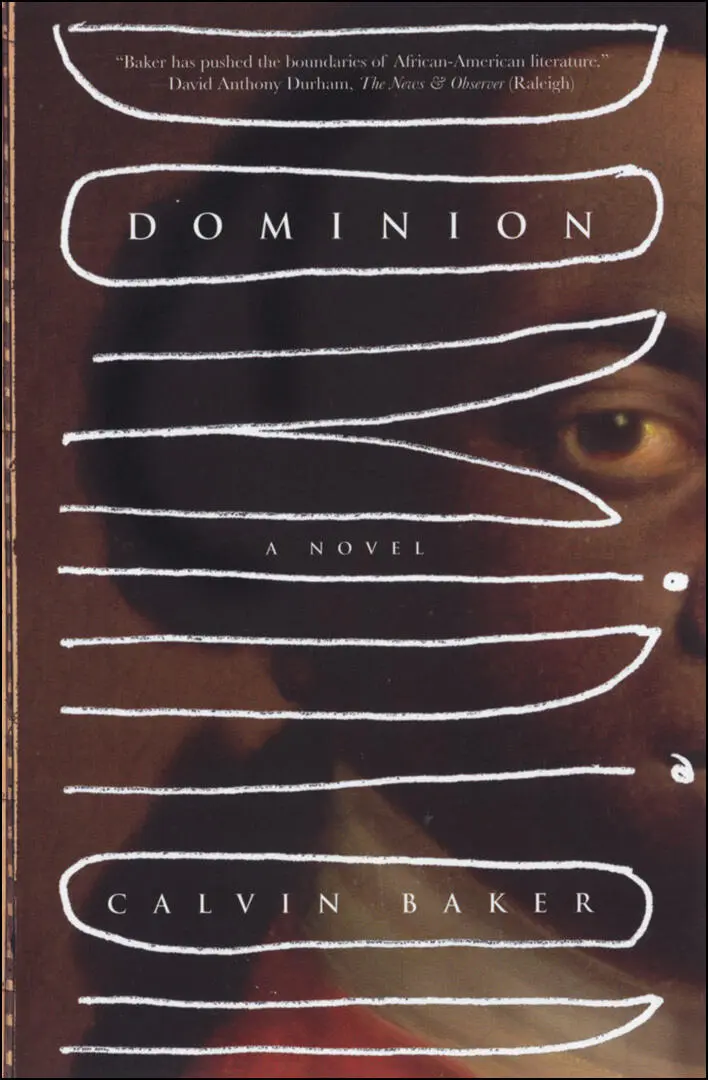
- Название:Dominion
- Автор:
- Издательство:Grove Press
- Жанр:
- Год:2007
- ISBN:нет данных
- Рейтинг книги:5 / 5. Голосов: 1
-
Избранное:Добавить в избранное
- Отзывы:
-
Ваша оценка:
Dominion: краткое содержание, описание и аннотация
Предлагаем к чтению аннотацию, описание, краткое содержание или предисловие (зависит от того, что написал сам автор книги «Dominion»). Если вы не нашли необходимую информацию о книге — напишите в комментариях, мы постараемся отыскать её.
, he was named a “Notable First Novelist” by Time magazine. Since his second novel,
, Baker has continued to be acclaimed by the major media from the
to
. Now, with Dominion, Baker has written a lush, incantatory novel about three generations of an African American family in the years leading up to the Revolutionary War. Dominion tells the story of the Merian family who, at the close of the seventeenth century, settle in the wilderness of the Carolinas. Jasper is the patriarch, freed from bondage, who manages against all odds to build a thriving estate with his new wife and two sons — one enslaved, the other free. For one hundred years, the Merian family struggles against the natural (and occasionally supernatural) world, colonial politics, the injustices of slavery, the Revolutionary War and questions of fidelity and the heart. Footed in both myth and modernity, Calvin Baker crafts a rich, intricate and moving novel, with meditations on God, responsibility, and familial legacies. While masterfully incorporating elements of the world’s oldest and greatest stories, the end result is a bold contemplation of the origins of America.
Dominion — читать онлайн бесплатно полную книгу (весь текст) целиком
Ниже представлен текст книги, разбитый по страницам. Система сохранения места последней прочитанной страницы, позволяет с удобством читать онлайн бесплатно книгу «Dominion», без необходимости каждый раз заново искать на чём Вы остановились. Поставьте закладку, и сможете в любой момент перейти на страницу, на которой закончили чтение.
Интервал:
Закладка:
Libbie was even less certain what shape the events unfolding would take and still had hope they might reverse their seeming course. She began in secret nonetheless to make her own war preparations and to craft for her husband a new suit of clothes for the winter months, including a hunting shirt and a greatcoat, the inside of which was decorated with a scene from Stonehouses, with everyone who lived there represented. There was but one face she could not weave in yet, as she had never seen it, but left a space for it to be filled in later.
Caleum himself worked all day long, as if nothing were out of the ordinary, even though there was a weighty congress taking place in Philadelphia that summer, which would determine the future of the colonies. At night, though, heeding Stanton’s suggestion, he would read books borrowed from the library at Acre, which made his positions better reasoned, as he considered what his own future, and that of Stonehouses, should be. He struck on many plans in those days, each of them fired by a sense of new possibilities and in its own way utopic.
Because Stanton approved of his young intellect, Caleum had complete access to the books at Acre and was free to go and borrow a volume even when Stanton himself was not home. Caleum was at first intimidated by the big airy rooms. He had thought when he finished at Miss Boutencourt’s that he was educated, and he had always carried himself as such. In the library at Acre for the first time, though, he felt his immense ignorance hit him like a storm wave slapping an untested vessel. It took all his self-control then to keep from showing untoward emotion, for his first instinct was to cry.
He threw himself at the books with zeal then, so he should be as strong in mind as in body. However, even in his enthusiasm, he took care not to go softheaded with their pleasures and also not to become like some men, who read only part of a book or, worse yet, learned only its reputation, then prattled on as if they had read the entire volume.
He moved slowly through the shelves, letting one book lead him to the next by way of suggestion, so that this folio would take him to that folio and in turn to such and such octavo; from there it was on to a certain quarto or duodecimo, then back to the original folio, and so on. When he could not find a clear answer to something using this method, he was scrupulous in questioning Stanton, especially about Greek or Latin terms.
“Mr. Stanton, what is the difference between a priori and a posteriori knowledge?” he might ask in those early days.
Stanton always answered these questions with the utmost patience and care, so that if the young man was led astray in his thinking it would not be because he had been provided faulty maps and teaching but because he had sought to go wandering in too curious a place.
One day while returning a philosophy text, a slim leather book with gilt lettering caught his eye because of its great beauty. When he removed it from its shelf, he realized it bore the name — Antigone — his grandfather had once told him to give his daughter should he ever be so blessed. Although he was not usually one for made-up stories, he opened the little book, intending to read it. As he gazed at the first line, however, he felt he was doing something wrong. “I have heard this story,” he reasoned to himself. “What if the second telling changes its original meaning?”
Although it was contrary to his usual discipline with books and their information, he had read enough by then to know stories that have been heard or otherwise interrupted were often very different than those seen with one’s own eyes and mind. In this case he preferred Jasper Merian’s rendering, with whatever faults of interpretation and possible misinterpretation, so chose but once ignorance over knowledge.
Once was a powerful king, whom the gods did favor.
Not that one needed books to receive a political education that summer. Everywhere people debated what was happening at Philadelphia, even as they prepared for the seasonal harvest. Slaves, hired men, landowners, and governors all argued among themselves, and sometimes with each other, whether they should break from the mother country and chart a separate course or hold to the path they were on. All men then were expert on the subject, and each held either that war was anathema to their interests or else the only way to secure their rights and rightful consideration.
The debate raged on even after the Congress voted for independence in midsummer. After the harvest games that year, which had become tradition, Caleum and Magnus drove into town to buy such winter supplies as they could not produce themselves on their farm.
What he paid that year incensed Magnus, as there was a tax on nearly everything he needed, which cut deeply into his cash profits. After loading the cart with wares, though, they headed to Content’s, to forget the labors they had just completed, as well as the sting of giving money for nothing in return. The tavern was emptier than was usual for that time of the year, and the two of them sat looking out on the square in reflective silence for quite some time, before Magnus said to Caleum at last. “You know I will die some day.”
Caleum was at first taken aback by this pronouncement and wondered whether something was the matter. “Are you ill, Uncle Magnus?” he asked, with gravest concern.
“No,” Magnus replied evenly, drinking from his mug. “But I will die one day all the same.”
Caleum thought about it for some time again before answering. “I understand.” They continued drinking their beers in silence for a while, before Caleum asked, “Do you think they will rebel?”
“I don’t know. You?”
“I suspect.”
Magnus was thoughtful and withdrawn into himself then, reflecting on all the change he had seen and the change he knew he would not see. It was true that he was not ill, at least not in any immediate manner, but he had been aware since that spring of his mortality in a new way, and the mortality of their way of life as well. He wanted to impart some sense to Caleum of how it was, how it had been for him and his father — and Caleum’s own father as well — when they were all there on the land together, and what Stonehouses was for all of them. He settled instead on asking, “Do you think the eastern field is getting overworked?”
“It would not hurt to rest it,” Caleum answered. “But it is still good land and only needs fertilizing and a rest.”
“It was always the most productive field.”
He asked next after Libbie and her condition.
“She will not stay off her feet, though she is otherwise well and good,” Caleum replied. “She says she isn’t due until September, and might as well do now what she won’t be able to then.”
“Well, I suppose you have to trust she knows best in this.”
“I suppose so.”
At last he put forth his question about the militia, very casually.
“There is nothing new to report,” Caleum answered, “but Stanton has us drilling in secret now, so I think he knows something we do not.”
“He is always first with news.”
They returned to the discussion of the past harvest, then finished their beers and went outside to claim the wagon. Magnus mounted on one side of the vehicle very carefully, and Caleum took the reins on the other, neither of them self-conscious or apologetic about his age, yet both enjoying where they were in life at that moment. They rode leisurely then, back to the country, stopping to enjoy the great swells of greenery and lushness and the fields all under cultivation. When they arrived home, each of them went to his own place feeling somehow they had had a very meaningful conversation that settled something of great import that day. As each ate dinner with his wife and discussed his plans, both knew that the future would arrive only after a rupture with the past. That is the understanding that had blossomed between them, that they were in the final moment of that shared past, and as for the other part — what the future would be — that would be decided only in time. For what it was, though, and what they themselves believed in, they were very clear on that.
Читать дальшеИнтервал:
Закладка:
Похожие книги на «Dominion»
Представляем Вашему вниманию похожие книги на «Dominion» списком для выбора. Мы отобрали схожую по названию и смыслу литературу в надежде предоставить читателям больше вариантов отыскать новые, интересные, ещё непрочитанные произведения.




Обсуждение, отзывы о книге «Dominion» и просто собственные мнения читателей. Оставьте ваши комментарии, напишите, что Вы думаете о произведении, его смысле или главных героях. Укажите что конкретно понравилось, а что нет, и почему Вы так считаете.