Talbot Reed - The Willoughby Captains
Здесь есть возможность читать онлайн «Talbot Reed - The Willoughby Captains» весь текст электронной книги совершенно бесплатно (целиком полную версию без сокращений). В некоторых случаях можно слушать аудио, скачать через торрент в формате fb2 и присутствует краткое содержание. Жанр: Детская проза, на английском языке. Описание произведения, (предисловие) а так же отзывы посетителей доступны на портале библиотеки ЛибКат.
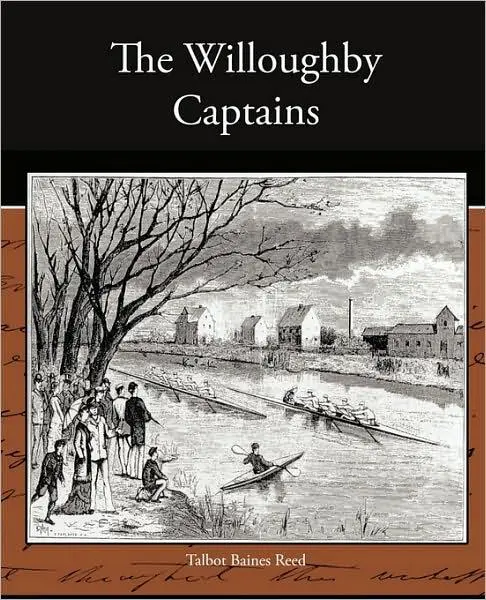
- Название:The Willoughby Captains
- Автор:
- Жанр:
- Год:неизвестен
- ISBN:нет данных
- Рейтинг книги:5 / 5. Голосов: 1
-
Избранное:Добавить в избранное
- Отзывы:
-
Ваша оценка:
The Willoughby Captains: краткое содержание, описание и аннотация
Предлагаем к чтению аннотацию, описание, краткое содержание или предисловие (зависит от того, что написал сам автор книги «The Willoughby Captains»). Если вы не нашли необходимую информацию о книге — напишите в комментариях, мы постараемся отыскать её.
Of course, there are numerous small dramas being acted out as the book proceeds, but the main one concerns a boat-race between two of the Houses. Along the course there is a very tight bend. The boat on the outside of the bend is slightly in the lead but will probably lose this due to the inside boat having less far to travel to the next straight.
At a most crucial moment, when maximum power is being exerted by the cox on the rudder-lines, one of them snaps, and the boat goes out of control. The cox shouts the instructions for an emergency stop, and to back water. The other boat proceeds to the end of the course. It can now be seen that the rudder-line had been deliberately half cut through, so that it would snap at that tight bend on the river.
For the rest of the book people are trying to work out who had done this deed. At one stage we think we know the answer. We become quite convinced we know the answer, in fact. But we are wrong, and we do not find out till almost the end of the book. And it is to be hoped that at that point the promised re-row takes place.
There is some confusion with names in respect of Merrison and Morrison, but I suspect that to be a printer's error. It is not of great importance, since he is (or they are) not front-line characters in the action.
The punctuation becomes very difficult in the reporting of the proceedings of the school parliament, because not only do you have the current speaker, but interspersed with it are comments by the raconteur and by the noisier of the boys. The printed book settled for a simplified version here, but we have done our best to give you a version that is more according to rule.
The Willoughby Captains — читать онлайн бесплатно полную книгу (весь текст) целиком
Ниже представлен текст книги, разбитый по страницам. Система сохранения места последней прочитанной страницы, позволяет с удобством читать онлайн бесплатно книгу «The Willoughby Captains», без необходимости каждый раз заново искать на чём Вы остановились. Поставьте закладку, и сможете в любой момент перейти на страницу, на которой закончили чтение.
Интервал:
Закладка:
“What?” asked Riddell, too rejoiced that his friend was safe to be over-curious as to the exact consequence of his sentence.
“Why!” exclaimed Wyndham, “it’s all up with the second-eleven!”
It was a blow undoubtedly — perhaps the next hardest blow to expulsion — but so much less hard that not even the boy himself could for long regard it as a crushing infliction.
He had had his lesson, and after the suspense of the last few weeks he was ready to expiate his transgression manfully, if sorrowfully.
“Anyhow,” said he, after pouring out all his disappointment into the captain’s sympathetic ear, “it’s not as bad as being sent off home. And if it hadn’t been for you that’s what might have happened. I say, and think of my brother coming down to umpire, too! What a fool I shall look! Never mind; it can’t be helped. I’m sure to get into the eleven next season. I say, by the way, I’ve no right to be standing out here. I shall have to go in.”
And so ended the story of young Wyndham’s transgressions.
Riddell had to officiate at yet one more investigation that eventful day.
Scarcely had Wyndham disappeared when a message reached him that the doctor wished to see him again.
With no doubt this time as to the purport of the summons, he obeyed.
He found Gilks standing in the doctor’s presence, where Silk had stood an hour or so earlier.
“Riddell,” said the doctor, whose face was grave, and whose voice was more than unusually solemn, “Gilks here has just been making a very serious statement about an accident that happened early in the term — the breaking of the line at the boat-race, which he confesses was his doing. I wish you to hear it.”
“Gilks told me of it just before he came to you, sir,” said the captain.
“I never expected to hear such a confession from a Willoughby boy,” said the doctor. “The honour of the whole school has suffered by this disgraceful action, and if I were to allow it to pass without the severest possible punishment I should not be doing my duty. Gilks has done the one thing possible to him to show his remorse for what has occurred. He has confessed it voluntarily, but I have told him he must leave the school to-morrow morning.”
Gilks remained where he was, with his eyes on the ground, while the doctor was speaking, and attempted no plea to mitigate the sentence against him.
“I find,” continued the doctor, “that if he tells the truth he has not been the only, and perhaps not the principal, culprit. He says he did what he did at the suggestion of Silk. Perhaps you will send for Silk now, Riddell.”
Riddell went off to discharge the errand. When he returned Gilks looked up and said, nervously, “Need I stay, sir? I don’t want to see Silk.”
The doctor looked at him doubtfully, and replied, “Yes, you must stay.”
A long, uncomfortable pause followed, during which no one spoke or stirred. At length the silence was broken by a knock on the door, and Silk entered.
He glanced hurriedly round, and seemed to take in the position of affairs with moderate readiness, though he was evidently not quite sure whether Gilks or the captain was his accuser.
The doctor, however, soon made that clear.
“Silk,” he said, “Gilks accuses you of being a party to the cutting of the rudder-links of one of the boats in the race last May. Repeat your story, Gilks.”
“He needn’t do it,” said Silk, “I’ve heard it already.”
“He says you suggested it,” said the doctor.
“That’s a lie,” said Silk sullenly; “I never heard of it till afterwards.”
“You know you did,” said Gilks. “When I was turned out of the boat, and couldn’t baulk the race that way, it was you suggested cutting the lines, and I was glad enough to do it.”
“So you were,” snarled Silk, incautiously—“precious glad.”
“Then you did suggest it?” said the doctor, sharply.
Silk saw his mistake, and tried to cover it, but his confusion only made the case against him worse.
“No, I didn’t — he told me about it afterwards — that is, I heard about it — I never suggested it. He said he knew how to get at the boats, and I said—”
“Then you did speak about it beforehand?” said the doctor.
“No — that is — we only said—”
“Silk,” said the doctor, sternly, “you’re not speaking the truth. Let me implore you not to make your fault greater by this denial.”
Silk gave in. He knew that his case was hopeless, and that when Gilks had said all, Riddell could corroborate it with what had been said last night.
“Well — yes, I did know of it,” said he, doggedly.
“Yes,” said the doctor; “I’m glad at least you do not persist in denying it. You must quit Willoughby, Silk; I shall telegraph to your father this afternoon. You must be ready to leave by this time to-morrow.”
Silk hesitated for a moment, then with a look round at Riddell, he said, “Before I go, sir, I think you ought to know that Wyndham junior—”
“What about him?” asked the doctor, coldly.
“He is in the habit, as Riddell here knows, of frequenting low places of amusement in Shellport. I have not mentioned it before; but now I am leaving, and Riddell is not likely to tell you of it, I think you ought to know of it, sir.”
“The matter has already been reported,” said the doctor, almost contemptuously. “You can go, Silk.”
The game was fairly played out at last, and Silk slunk off, followed shortly afterwards by the captain and Gilks.
Chapter Thirty Five
A Transformation Scene
Willoughby little dreamed that night, as it went to bed, of the revolutions and changes of the day which had just passed.
It knew that Silk and Gilks had been reported for fighting, and naturally concluded that they had also been punished. It had heard, too, a rumour of young Wyndham’s having been “gated” for breaking bounds.
But beyond that it knew nothing. Nothing of the treaty of peace between the two captains, of the discovery of the boat-race mystery, of the double expulsion that was impending.
And still less did it dream of the unwonted scene which was taking place that evening in the captain’s study.
Riddell and Gilks sat and talked far into the night.
I am not going to describe that talk. Let the reader imagine it.
Let him imagine all that a sympathetic and honest fellow like Riddell could say to cheer and encourage a broken-down penitent like Gilks. And let him imagine all that that forlorn, expelled boy, who had only just discovered that he had a friend in Willoughby, would have to say on this last night at the old school.
It was a relief to him to unburden his mind, and Riddell encouraged him to do it. He told all the sad history of the failures, and follies, and sins which had reached their catastrophe that day; and the captain, on his side, in his quiet manly way, strove all he could to infuse some hope for the future, and courage to bear his present punishment.
Whether he succeeded or not he could hardly tell; but when the evening ended, and the two finally betook themselves to bed in anticipation of Gilks’s early start in the morning, it was with a feeling of comfort and relief on both sides.
“If only I had known you before!” said Gilks. “I don’t know why you should be so kind to me. And now it’s too late to be friends.”
“I hope not,” said Riddell, cheerily. “We needn’t stop being friends because you’re going away.”
“Needn’t we! — will you write to me now and then?” asked Gilks, eagerly.
“Of course I will, and you must do the same. I’ll let you know all the news here.”
Gilks sighed.
“I’m afraid the news here won’t be very pleasant for me to hear,” said he. “What a fury the fellows will be in when they hear about it. I say, Riddell, if you get a chance tell them how ashamed and miserable I was, will you?”
Читать дальшеИнтервал:
Закладка:
Похожие книги на «The Willoughby Captains»
Представляем Вашему вниманию похожие книги на «The Willoughby Captains» списком для выбора. Мы отобрали схожую по названию и смыслу литературу в надежде предоставить читателям больше вариантов отыскать новые, интересные, ещё непрочитанные произведения.







Обсуждение, отзывы о книге «The Willoughby Captains» и просто собственные мнения читателей. Оставьте ваши комментарии, напишите, что Вы думаете о произведении, его смысле или главных героях. Укажите что конкретно понравилось, а что нет, и почему Вы так считаете.