Talbot Reed - The Willoughby Captains
Здесь есть возможность читать онлайн «Talbot Reed - The Willoughby Captains» весь текст электронной книги совершенно бесплатно (целиком полную версию без сокращений). В некоторых случаях можно слушать аудио, скачать через торрент в формате fb2 и присутствует краткое содержание. Жанр: Детская проза, на английском языке. Описание произведения, (предисловие) а так же отзывы посетителей доступны на портале библиотеки ЛибКат.
- Название:The Willoughby Captains
- Автор:
- Жанр:
- Год:неизвестен
- ISBN:нет данных
- Рейтинг книги:5 / 5. Голосов: 1
-
Избранное:Добавить в избранное
- Отзывы:
-
Ваша оценка:
The Willoughby Captains: краткое содержание, описание и аннотация
Предлагаем к чтению аннотацию, описание, краткое содержание или предисловие (зависит от того, что написал сам автор книги «The Willoughby Captains»). Если вы не нашли необходимую информацию о книге — напишите в комментариях, мы постараемся отыскать её.
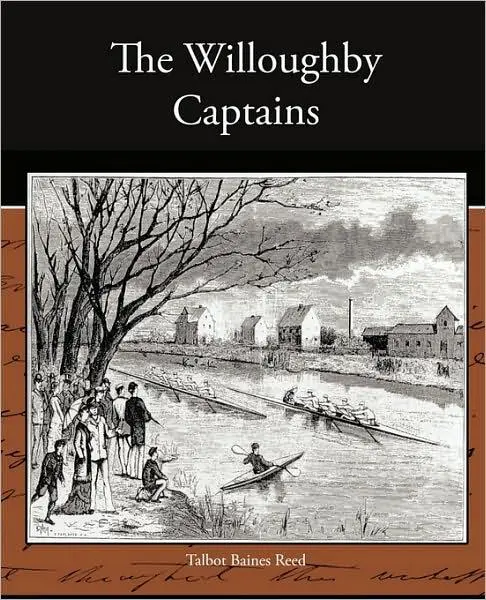
Of course, there are numerous small dramas being acted out as the book proceeds, but the main one concerns a boat-race between two of the Houses. Along the course there is a very tight bend. The boat on the outside of the bend is slightly in the lead but will probably lose this due to the inside boat having less far to travel to the next straight.
At a most crucial moment, when maximum power is being exerted by the cox on the rudder-lines, one of them snaps, and the boat goes out of control. The cox shouts the instructions for an emergency stop, and to back water. The other boat proceeds to the end of the course. It can now be seen that the rudder-line had been deliberately half cut through, so that it would snap at that tight bend on the river.
For the rest of the book people are trying to work out who had done this deed. At one stage we think we know the answer. We become quite convinced we know the answer, in fact. But we are wrong, and we do not find out till almost the end of the book. And it is to be hoped that at that point the promised re-row takes place.
There is some confusion with names in respect of Merrison and Morrison, but I suspect that to be a printer's error. It is not of great importance, since he is (or they are) not front-line characters in the action.
The punctuation becomes very difficult in the reporting of the proceedings of the school parliament, because not only do you have the current speaker, but interspersed with it are comments by the raconteur and by the noisier of the boys. The printed book settled for a simplified version here, but we have done our best to give you a version that is more according to rule.
The Willoughby Captains — читать онлайн бесплатно полную книгу (весь текст) целиком
Ниже представлен текст книги, разбитый по страницам. Система сохранения места последней прочитанной страницы, позволяет с удобством читать онлайн бесплатно книгу «The Willoughby Captains», без необходимости каждый раз заново искать на чём Вы остановились. Поставьте закладку, и сможете в любой момент перейти на страницу, на которой закончили чтение.
Интервал:
Закладка:
This spectacle, as may be imagined, afforded intense gratification to the curious onlookers, and many and hilarious were the shouts which fell on the ears of the unlucky captain.
“Oh, well coxed there!” one voice cried.
“Well steered in a circle!” shouted another.
“Mind you don’t knock the bank down,” yelled a third.
“Pull your right there!”
“Try him without the rudder. See if he don’t steer better that way.”
In the midst of these uncomplimentary shouts the boat slowly wended its erratic course up the river, amidst crowds of boys on either bank.
“Riddell, old man,” said Fairbairn, leaning forward from his place at stroke, “what’s the row?”
It only needed a friendly voice to recall the captain to himself. By an effort he forgot about the crowds and turned a deaf ear to the shouts, and straightening himself, and taking the lines steadily in his hands, looked up quietly at his friend. Richard was himself again.
“Now then!” cried Fairbairn to his men behind, “row all!” and he led them off with a long steady stroke.
For a little distance the boat travelled well. Riddell kept a good course, and the whole crew worked steadily. The scoffers on the bank were perplexed, and their jeers died away feebly. This was not a crew of muffs assuredly. Those first twenty or thirty yards were rowed in a style not very far short of the Parrett’s standard, and Parson himself, the best cox of Parrett’s house, could hardly have taken the boat down that reach in a better course.
There was something ominous in this. But, to the great relief of the unfriendly critics, this showy lead was not maintained. Before a hundred yards were completed something seemed to go wrong in the boat. It rolled heavily and wavered in its course. What was wrong?
The fault was certainly not in Fairbairn, who kept doggedly to work in perfectly even style. Nor, to all appearance, was it in Riddell. He was evidently puzzled by the sudden unsteadiness of the boat, but no one could lay it to his charge.
“Who’s that digging behind?” cried Fairbairn over his shoulder.
None of the other three owned the soft impeachment, and the boat seemed to right itself of its own accord.
Fairbairn, whose temper was never improved by perplexities, quickened his stroke, and gave his men a spell of hard work for a bit to punish them.
This seemed to have a good effect, and once again the onlookers were startled to see how steadily and fast the boat was travelling. But once again the mysterious disturbance interrupted their progress.
This time Fairbairn stopped short, and turning round demanded angrily who it was who was playing the fool, for an effect like this could only be put down to such a course. Porter, Coates, and Gilks all repudiated the suggestion, and once more, amid the ironical cheers of the onlookers, Fairbairn resumed his work and lashed viciously out with his oar.
This last protest of his seemed to have had the desired effect, for during the rest of the journey up to the Willows the boat travelled fairly well, though it was evident plenty of work was needed before the crew could be considered in proper racing trim. But no sooner had they turned and started for the home journey than once again the rolling suddenly became manifest. Fairbairn rowed on a stroke or two without apparently noticing it, then turning sharply round in the middle of a stroke he discovered the reason.
The blade of Gilks’s oar was about a foot under the surface, and he himself was lurching over his seat, with the handle of the oar up to about his chin.
“What on earth do you mean by it?” demanded Fairbairn, angrily.
“Mean by what?” asked Gilks.
“By playing the fool like that; that’s what I mean,” retorted Fairbairn.
“Who was playing the fool?” snarled Gilks. “How can I help catching a crab when he’s constantly turning the boat’s head in the middle of a stroke?”
“All rot!” said Fairbairn.
“All very well for you at stroke,” said Gilks, viciously. “You come and row bow and see if you don’t feel it. I’d like to know who could keep his oar straight with such steering.”
“If you’d row half as well as he steers,” said Fairbairn, “you’d row a precious sight better than you do! You’d better take care, Gilks.”
“Take care of what, you fool?” demanded Gilks, whose temper was now fairly gone.
“Ready all, you fellows!” cried Fairbairn, stretching forward.
This brief conversation had been heard only by those in the boat, but its purport had been gathered by those on the bank who had watched the angry looks and heard the angry voices of the speakers.
“Bravo! fight it out!” cried some one, and the news that there was a quarrel in the schoolhouse boat added greatly to the zest of the critics’ enjoyment.
Fairbairn’s caution — whether purposely, or because he could not help it — was lost upon the offending bow oar. The boat had scarcely started again when Gilks caught another crab, which for the moment nearly upset the crew. Fairbairn rowed on, with thunder in his face, regardless of the incident, and Riddell kept as straight a course as he could, despite the unsteadiness. In due time the unsatisfactory practice came to an end, and the crew stood together again on the steps of the boat-house.
Gilks seemed to expect, and every one else expected, that Fairbairn would once more take the defaulter to task for his performance that morning, and Fairbairn did not disappoint him; though he dealt with the matter in a rather unexpected manner.
“I shall want the tub-pair after third school,” said he to the boatman. “Riddell, will you come and cox. Crossfield and me?”
“Who — Crossfield?” asked Coates.
“Yes; I shall try him for bow.”
“You mean to say,” exclaimed Gilks, taking the matter in, “you’re going to turn me out of the boat?”
“Certainly,” said Fairbairn, coolly.
“What for?” demanded Gilks, threateningly.
“Because,” replied Fairbairn, taking Riddell’s arm and walking slowly off—“because we can do better without you.”
Gilks stared at him a moment as though he meditated flying at him. If he did, he thought better of it, and turned away, muttering to himself that he would pay them all out, let them see if he did not.
Threats of this sort were not unheard-of things from Gilks, and no one was greatly disturbed by them. On the whole, Fairbairn’s decision was approved of by most of the schoolhouse partisans, particularly those who had watched the proceedings of the morning. A few thought Gilks might have been accorded a second chance, but the majority argued that if a fellow caught crabs like that in a practice he would probably do it in the race, and they did not want the risk of that.
As to his excuse about the steering, every one who knew anything about that knew it meant nothing, and Gilks did not repeat it.
As he reached the school Silk met him with angry looks.
“Is it true what I hear,” said he, “that you’re out of the boat?”
“Yes, it is,” growled Gilks.
“Why, you idiot! whatever have you done this for?”
“I did nothing. They wanted to get rid of me, and they did.”
“Yes, because you hadn’t the ordinary sense to keep up appearances till the race, and must begin to practise your tricks a month beforehand!” said Silk, greatly enraged, for him.
“All very well,” said Gilks, sullenly. “I should have liked to see you rowing your best with that puppy steering; thinking he’s doing it so wonderfully, the prig!”
“And just because you hadn’t the patience to hold out a week or two you go and spoil everything. I didn’t think you were such a fool, upon my word.”
Gilks was cowed by the wrath of his friend.
Читать дальшеИнтервал:
Закладка:
Похожие книги на «The Willoughby Captains»
Представляем Вашему вниманию похожие книги на «The Willoughby Captains» списком для выбора. Мы отобрали схожую по названию и смыслу литературу в надежде предоставить читателям больше вариантов отыскать новые, интересные, ещё непрочитанные произведения.






Обсуждение, отзывы о книге «The Willoughby Captains» и просто собственные мнения читателей. Оставьте ваши комментарии, напишите, что Вы думаете о произведении, его смысле или главных героях. Укажите что конкретно понравилось, а что нет, и почему Вы так считаете.