Dan Wakefield - Home Free
Здесь есть возможность читать онлайн «Dan Wakefield - Home Free» весь текст электронной книги совершенно бесплатно (целиком полную версию без сокращений). В некоторых случаях можно слушать аудио, скачать через торрент в формате fb2 и присутствует краткое содержание. Год выпуска: 2016, ISBN: 2016, Издательство: Open Road Media, Жанр: Проза, на английском языке. Описание произведения, (предисловие) а так же отзывы посетителей доступны на портале библиотеки ЛибКат.
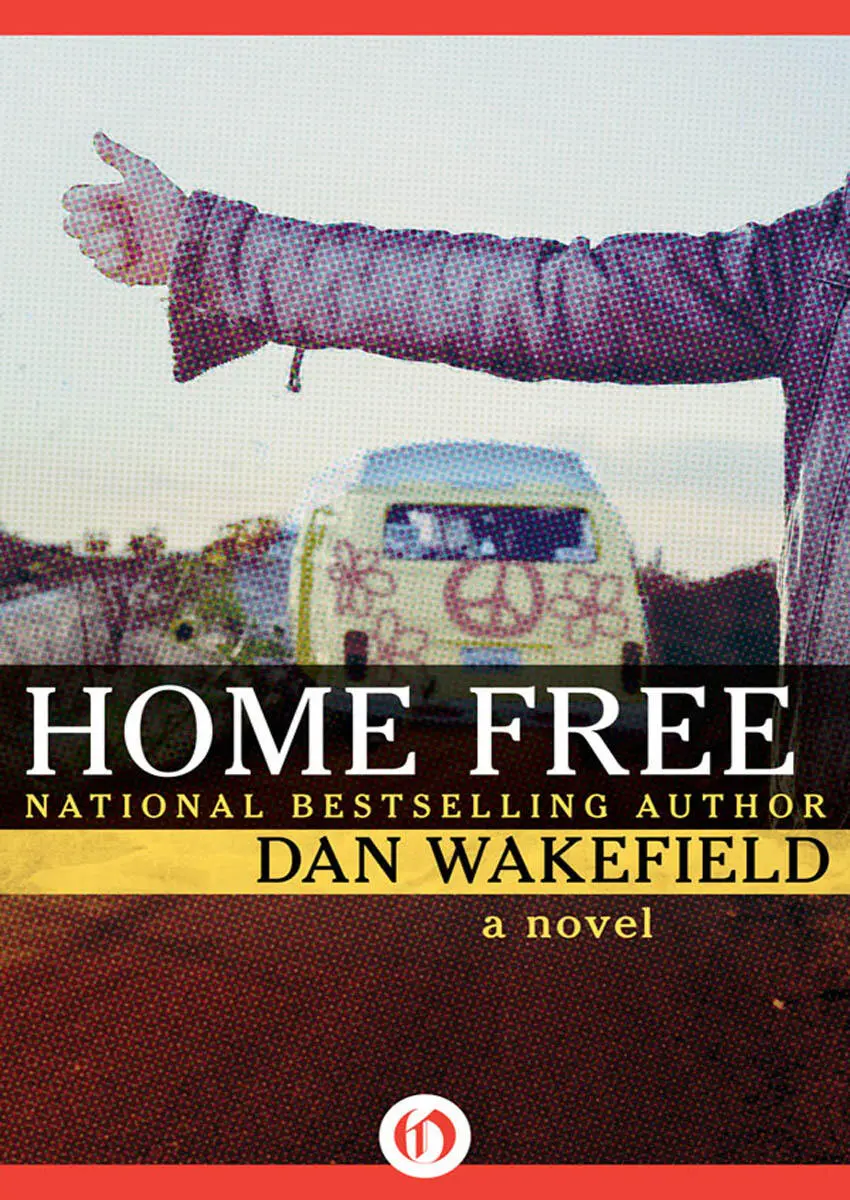
- Название:Home Free
- Автор:
- Издательство:Open Road Media
- Жанр:
- Год:2016
- ISBN:978-1-5040-2621-5
- Рейтинг книги:4 / 5. Голосов: 1
-
Избранное:Добавить в избранное
- Отзывы:
-
Ваша оценка:
Home Free: краткое содержание, описание и аннотация
Предлагаем к чтению аннотацию, описание, краткое содержание или предисловие (зависит от того, что написал сам автор книги «Home Free»). Если вы не нашли необходимую информацию о книге — напишите в комментариях, мы постараемся отыскать её.
More than a freewheeling jaunt through the sixties, though,Home Freesheds light on the universal desire for love and belonging. Amidst the haze of drugs and free-loving hippies, Gene is forced to look inward and face his deeply human flaws—because eventually, his life will depend on it. With national bestselling author Dan Wakefield’s trademark fusion of gritty, journalistic prose and richly evocative language, Gene’s story is an engaging, somber meditation on self-awareness, responsibility, and growing up.
Home Free — читать онлайн бесплатно полную книгу (весь текст) целиком
Ниже представлен текст книги, разбитый по страницам. Система сохранения места последней прочитанной страницы, позволяет с удобством читать онлайн бесплатно книгу «Home Free», без необходимости каждый раз заново искать на чём Вы остановились. Поставьте закладку, и сможете в любой момент перейти на страницу, на которой закончили чтение.
Интервал:
Закладка:
He was glad there was still a Donnelly’s to go to the day he hitched into town and happened to look at the pile of newspapers in the drugstore. He hadn’t been buying or reading papers since he went to Maine, he figured it eliminated a lot of junk from the general accumulation in his head, but he sometimes glanced at a headline to see if anything big was up like the war or the world ending, something that made any difference. On this particular day when he looked down at a paper from Des Moines what caught his eye was not a headline but a picture of Janis Joplin. He figured maybe she was coming to give a concert somewhere around there so he picked up the paper to find the details. Maybe Lizzie would like to go. But the picture was not because of a concert. It was because Janis Joplin was dead. In a motel room in Los Angeles. Of an overdose.
He went to Donnelly’s and drank straight whiskey at the bar. He felt like someone he knew had died. She’d been scary, yeh, but real, and special. You always heard about this or that writer or politician “speaking for” some group of people or other. That’s what Gene thought Janis had done, besides make real good music. She spoke for a lot of people—not just young people or hip people or hippie people. She spoke for the people who hurt bad.
Even in a town like Iowa City you could find bad news. After finding out about Janis Joplin dying, Gene stayed out at the farm for a while. He went for long walks, sometimes to a creek where he’d “dry-fish,” just sit there and concentrate the way he’d do if he had a pole and line and bait. Sometimes he watched the weather. The fog was like a whole other element, the way it came so quick, rolling up over the hills and around the house, spreading across the roads so thick that cars would have to pull over to the side, waiting for it to pass. Gene chopped wood for the iron stove in the kitchen, played records, read books—not the grad students’ books, but the ones that must belong to the farmers who owned the place— Mutiny on the Bounty, Rebecca by Daphne Du Maurier, The Prisoner of Zenda . It wasn’t lonely because he knew Lizzie would be back. He didn’t mind waiting. He trusted her. She came.
One night she took him to a chili dinner at Mulligan’s house. Mulligan was this big red-bearded poet who lived in a farmhouse a few miles from Gene’s. He reminded Gene more of a ballplayer than a poet, one who’d make a good high-school coach. His teams wouldn’t win a lot but the kids would all dig him. As well as being a poet he was a chili freak, and he had asked a bunch of people over for a batch of his favorite, which he said was a recipe he’d created from the best of Iowa and Mexican chili methods and ingredients.
He must have leaned heavy on the Mexican. The chili was so hot that only Mulligan could eat it. The rest of the room looked like a Red Cross station for people who’d just escaped a burning building and were suffering from smoke inhalation. They were coughing and wheezing, calling for water, tears rolling down their cheeks. Gene had taken one big bite and it nearly did him in. Mulligan was enjoying the chili so much he didn’t notice for a moment, but then he looked around the room and said, “Oh, shit. I guess I did it again.”
Mulligan’s wife got up and went to the kitchen. She was tall, slim, with black hair and dark, lively eyes that seemed as if they could penetrate walls. Gene thought her incredibly beautiful, like some kind of Navajo princess or something, and he found it hard to get used to matching her up with the name Mulligan called her by. Her real name was Melanie but he called her Mama. She was, of course, they had two kids.
When she came out of the kitchen she was carrying a big tray with cold chicken and potato salad. She was very quiet and solemn-looking but every once in a while the corners of her straight thin mouth would start wriggling in betrayal of some inner hilarity as they did now when she put down the food and said, “I made it just in case.”
Mulligan loved to make chili but he couldn’t help making it so hot that no one but him could eat it.
No one minded. Mama’s dinner was swell, and Mulligan consumed most of the other chili, then leaned back and played from the fifties jazz records he collected, guys like Getz and Desmond and Monk and everyone listened and smoked some gentle grass.
That was nice and then someone asked one of the other poets there to recite some of his new poems. It was his girlfriend. Who asked him.
Mulligan turned the music off and this young guy, with a big swatch of blond hair that he kept brushing back off his eyes, recited some of his poems. When he recited, his voice changed, but then Gene found that all the poets’ voices changed when they recited, even Mulligan’s.
Besides his voice changing, this young guy stomped one foot as he recited, like he was playing the rhythm to it.
Gene didn’t dig the poems. They seemed very angry, like the poet, and full of pictures that didn’t go together. When the guy finished reciting he gave a little lecture about how all poetry written before the last five years was archaic, and that the poets who still wrote the way poems were written five years ago were dead.
“Did they all die at once?” Lizzie asked.
There were some snickers, but the young poet managed a sneer in return.
Lizzie asked Mulligan to say one of his poems, and named one she especially liked.
Mulligan had his poetry-reciting voice too, like they all did, but at least he didn’t stomp his foot or keep brushing his hair back all the time he was saying it. He sat there like a regular person would, and even though his poetry voice was different it was quiet and perfectly pleasant.
Gene liked the way Mulligan said his poem, and he liked the poem a lot, too. It was about an ordinary day, at Mulligan’s place that was formerly a farm but now a poet’s house; it was about Mulligan trying to write a particular poem but being distracted by looking out the window and seeing his wife and children. Without saying so, it was about how he loved them. It was also about how he didn’t want his poetry life and his family life to be separated, and the last line was:
“Mama, come into my poem.”
Gene liked it a lot. He liked Mulligan and “Mama,” and they visited back and forth. Gene called sometimes and if Mulligan wasn’t wrapped up in a poem he might fall over and drink or get high with Gene.
At first Mulligan’s setup struck Gene kind of funny—a farm with a poet on it instead of a farmer. But then he began to see others like it and see how it made sense around there.
Some of the farms still operated as working farms but a lot of them were rented out or the people had retired and sold the place, it was harder all the time to run a little farm and make it pay. But people from the cities liked the farmhouses and the land around them that provided space if not crops and that had become valuable now, the space itself. Poets seemed to prize it more than ordinary people. There were four or five poets anyway living on farms within a ten or so mile radius of Gene.
Instead of producing food anymore, the farms produced poems. Food production was mainly done now in huge scientific operations. Gene never saw one but felt the food in super markets didn’t grow like it used to, that now lima beans and corn and spinach came out of the ground in cans with appropriate labels, or in giant freezing chambers the boxes of Brussels sprouts and broccoli and peas grew from tiny cardboard seeds, nourished by infrared rays till they got to be just the right size for scientific sealing and selling.
So what better use for the old small idle farms than to let the poets work on them, sowing their words out there in the necessary silence, nurturing rhymes with the help of nature and reaping at harvest whole sonnets, odes, ballads, books of poems?
Читать дальшеИнтервал:
Закладка:
Похожие книги на «Home Free»
Представляем Вашему вниманию похожие книги на «Home Free» списком для выбора. Мы отобрали схожую по названию и смыслу литературу в надежде предоставить читателям больше вариантов отыскать новые, интересные, ещё непрочитанные произведения.



Обсуждение, отзывы о книге «Home Free» и просто собственные мнения читателей. Оставьте ваши комментарии, напишите, что Вы думаете о произведении, его смысле или главных героях. Укажите что конкретно понравилось, а что нет, и почему Вы так считаете.