Литагент HarperCollins - Unfinished Tales
Здесь есть возможность читать онлайн «Литагент HarperCollins - Unfinished Tales» — ознакомительный отрывок электронной книги совершенно бесплатно, а после прочтения отрывка купить полную версию. В некоторых случаях можно слушать аудио, скачать через торрент в формате fb2 и присутствует краткое содержание. Жанр: unrecognised, на английском языке. Описание произведения, (предисловие) а так же отзывы посетителей доступны на портале библиотеки ЛибКат.
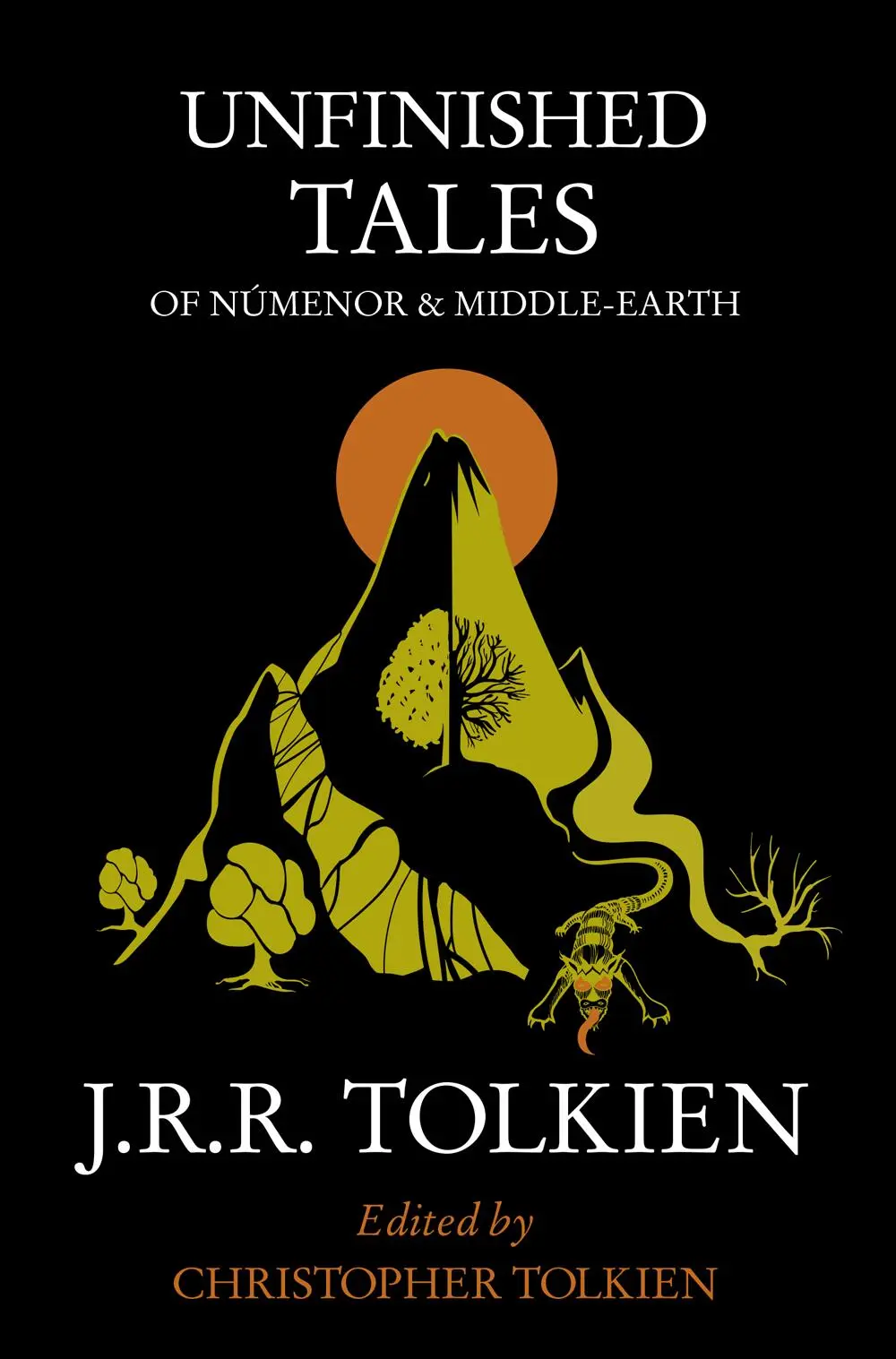
- Название:Unfinished Tales
- Автор:
- Жанр:
- Год:неизвестен
- ISBN:нет данных
- Рейтинг книги:3 / 5. Голосов: 1
-
Избранное:Добавить в избранное
- Отзывы:
-
Ваша оценка:
Unfinished Tales: краткое содержание, описание и аннотация
Предлагаем к чтению аннотацию, описание, краткое содержание или предисловие (зависит от того, что написал сам автор книги «Unfinished Tales»). Если вы не нашли необходимую информацию о книге — напишите в комментариях, мы постараемся отыскать её.
Unfinished Tales — читать онлайн ознакомительный отрывок
Ниже представлен текст книги, разбитый по страницам. Система сохранения места последней прочитанной страницы, позволяет с удобством читать онлайн бесплатно книгу «Unfinished Tales», без необходимости каждый раз заново искать на чём Вы остановились. Поставьте закладку, и сможете в любой момент перейти на страницу, на которой закончили чтение.
Интервал:
Закладка:
‘But if you do not,’ said Sador, ‘soon there will be an end of the House of Hador for ever, as you must understand now. Labadal does not want you to go; but Sador servant of Húrin will be happier when Húrin’s son is out of the reach of the Easterlings. Well, well, it cannot be helped: we must say farewell. Now will you not take my knife as a parting gift?’
‘No!’ said Túrin. ‘I am going to the Elves, to the King of Doriath, my mother says. There I may get other things like it. But I shall not be able to send you any gifts, Labadal. I shall be far away and all alone.’ Then Túrin wept; but Sador said to him: ‘Hey now! Where is Húrin’s son? For I heard him say, not long ago: I shall go as a soldier with an Elf-king, as soon as I am able .’
Then Túrin stayed his tears, and he said: ‘Very well: if those were the words of the son of Húrin, he must keep them, and go. But whenever I say that I will do this or that, it looks very different when the time comes. Now I am unwilling. I must take care not to say such things again.’
‘It would be best indeed,’ said Sador. ‘So most men teach, and few men learn. Let the unseen days be. Today is more than enough.’
Now Túrin was made ready for the journey, and he bade farewell to his mother, and departed in secret with his two companions. But when they bade Túrin turn and look back upon the house of his father, then the anguish of parting smote him like a sword, and he cried: ‘Morwen, Morwen, when shall I see you again?’ But Morwen standing on her threshold heard the echo of that cry in the wooded hills, and she clutched the post of the door so that her fingers were torn. This was the first of the sorrows of Túrin.
Early in the year after Túrin was gone Morwen gave birth to her child, and she named her Nienor, which is Mourning; but Túrin was already far away when she was born. Long and evil was his road, for the power of Morgoth was ranging far abroad; but he had as guides Gethron and Grithnir, who had been young in the days of Hador, and though they were now aged they were valiant, and they knew well the lands, for they had journeyed often through Beleriand in former times. Thus by fate and courage they passed over the Shadowy Mountains, and coming down into the Vale of Sirion they passed into the Forest of Brethil; and at last, weary and haggard, they reached the confines of Doriath. But there they became bewildered, and were enmeshed in the mazes of the Queen, and wandered lost amid the pathless trees, until all their food was spent. There they came near to death, for winter came cold from the North; but not so light was Túrin’s doom. Even as they lay in despair they heard a horn sounded. Beleg the Strongbow was hunting in that region, for he dwelt ever upon the marches of Doriath, and he was the greatest woodsman of those days. He heard their cries and came to them, and when he had given them food and drink he learned their names and whence they came, and he was filled with wonder and pity. And he looked with liking upon Túrin, for he had the beauty of his mother and the eyes of his father, and he was sturdy and strong.
‘What boon would you have of King Thingol?’ said Beleg to the boy.
‘I would be one of his knights, to ride against Morgoth, and avenge my father,’ said Túrin.
‘That may well be, when the years have increased you,’ said Beleg. ‘For though you are yet small you have the makings of a valiant man, worthy to be a son of Húrin the Steadfast, if that were possible.’ For the name of Húrin was held in honour in all the lands of the Elves. Therefore Beleg gladly became the guide of the wanderers, and he led them to a lodge where he dwelt at that time with other hunters, and there they were housed while a messenger went to Menegroth. And when word came back that Thingol and Melian would receive the son of Húrin and his guardians, Beleg led them by secret ways into the Hidden Kingdom.
Thus Túrin came to the great bridge over the Esgalduin, and passed the gates of Thingol’s halls; and as a child he gazed upon the marvels of Menegroth, which no mortal Man before had seen, save Beren only. Then Gethron spoke the message of Morwen before Thingol and Melian; and Thingol received them kindly, and set Túrin upon his knee in honour of Húrin, mightiest of Men, and of Beren his kinsman. And those that saw this marvelled, for it was a sign that Thingol took Túrin as his foster-son; and that was not at that time done by kings, nor ever again by Elf-lord to a Man. Then Thingol said to him: ‘Here, son of Húrin, shall your home be; and in all your life you shall be held as my son, Man though you be. Wisdom shall be given you beyond the measure of mortal Men, and the weapons of the Elves shall be set in your hands. Perhaps the time may come when you shall regain the lands of your father in Hithlum; but dwell now here in love.’
Thus began the sojourn of Túrin in Doriath. With him for a while remained Gethron and Grithnir his guardians, though they yearned to return again to their lady in Dorlómin. Then age and sickness came upon Grithnir, and he stayed beside Túrin until he died; but Gethron departed, and Thingol sent with him an escort to guide him and guard him, and they brought words from Thingol to Morwen. They came at last to Húrin’s house, and when Morwen learned that Túrin was received with honour in the halls of Thingol her grief was lightened; and the Elves brought also rich gifts from Melian, and a message bidding her return with Thin-gol’s folk to Doriath. For Melian was wise and foresighted, and she hoped thus to avert the evil that was prepared in the thought of Morgoth. But Morwen would not depart from her house, for her heart was yet unchanged and her pride still high; moreover Nienor was a babe in arms. Therefore she dismissed the Elves of Doriath with her thanks, and gave them in gift the last small things of gold that remained to her, concealing her poverty; and she bade them take back to Thingol the Helm of Hador. But Túrin watched ever for the return of Thingol’s messengers; and when they came back alone he fled into the woods and wept, for he knew of Melian’s bidding and he had hoped that Morwen would come. This was the second sorrow of Túrin.
When the messengers spoke Morwen’s answer, Melian was moved with pity, perceiving her mind; and she saw that the fate which she foreboded could not lightly be set aside.
The Helm of Hador was given into Thingol’s hands. That helm was made of grey steel adorned with gold, and on it were graven runes of victory. A power was in it that guarded any who wore it from wound or death, for the sword that hewed it was broken, and the dart that smote it sprang aside. It was wrought by Telchar, the smith of Nogrod, whose works were renowned. It had a visor (after the manner of those that the Dwarves used in their forges for the shielding of their eyes), and the face of one that wore it struck fear into the hearts of all beholders, but was itself guarded from dart and fire. Upon its crest was set in defiance a gilded image of the head of Glaurung the dragon; for it had been made soon after he first issued from the gates of Morgoth. Often Hador, and Galdor after him, had borne it in war; and the hearts of the host of Hithlum were uplifted when they saw it towering high amid the battle, and they cried: ‘Of more worth is the Dragon of Dor-lómin than the gold-worm of Angband!’
But in truth this helm had not been made for Men, but for Azaghâl Lord of Belegost, he who was slain by Glaurung in the Year of Lamentation. 4 It was given by Azaghâl to Maedhros, as guerdon for the saving of his life and treasure, when Azaghâl was waylaid by Orcs upon the Dwarf-road in East Beleriand. 5 Maedhros afterwards sent it as a gift to Fingon, with whom he often exchanged tokens of friendship, remembering how Fingon had driven Glaurung back to Ang-band. But in all Hithlum no head and shoulders were found stout enough to bear the dwarf-helm with ease, save those of Hador and his son Galdor. Fingon therefore gave it to Hador, when he received the lordship of Dor-lómin. By ill-fortune Galdor did not wear it when he defended Eithel Sirion, for the assault was sudden, and he ran barehead to the walls, and an orc-arrow pierced his eye. But Húrin did not wear the Dragon-helm with ease, and in any case he would not use it, for he said: ‘I would rather look on my foes with my true face.’ Nonetheless he accounted the helm among the greatest heirlooms of his house.
Читать дальшеИнтервал:
Закладка:
Похожие книги на «Unfinished Tales»
Представляем Вашему вниманию похожие книги на «Unfinished Tales» списком для выбора. Мы отобрали схожую по названию и смыслу литературу в надежде предоставить читателям больше вариантов отыскать новые, интересные, ещё непрочитанные произведения.









Обсуждение, отзывы о книге «Unfinished Tales» и просто собственные мнения читателей. Оставьте ваши комментарии, напишите, что Вы думаете о произведении, его смысле или главных героях. Укажите что конкретно понравилось, а что нет, и почему Вы так считаете.