C. Lewis - How to Pray
Здесь есть возможность читать онлайн «C. Lewis - How to Pray» — ознакомительный отрывок электронной книги совершенно бесплатно, а после прочтения отрывка купить полную версию. В некоторых случаях можно слушать аудио, скачать через торрент в формате fb2 и присутствует краткое содержание. Жанр: unrecognised, на английском языке. Описание произведения, (предисловие) а так же отзывы посетителей доступны на портале библиотеки ЛибКат.
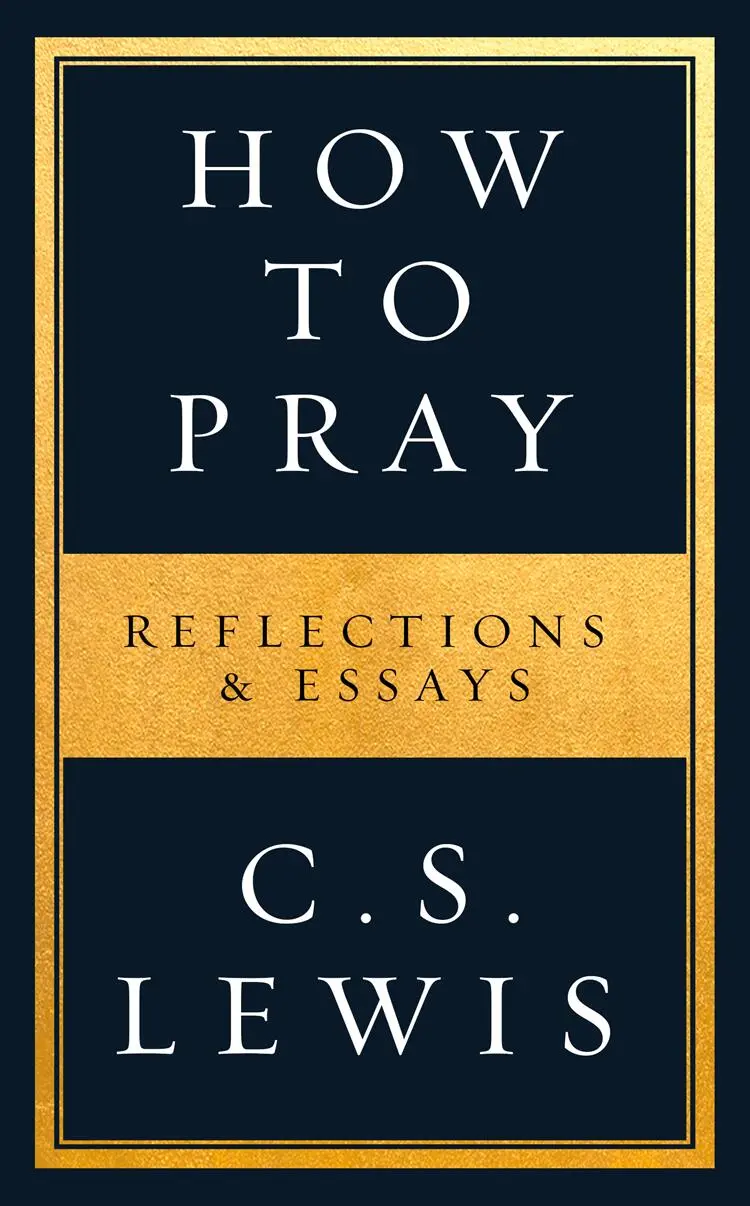
- Название:How to Pray
- Автор:
- Жанр:
- Год:неизвестен
- ISBN:нет данных
- Рейтинг книги:3 / 5. Голосов: 1
-
Избранное:Добавить в избранное
- Отзывы:
-
Ваша оценка:
How to Pray: краткое содержание, описание и аннотация
Предлагаем к чтению аннотацию, описание, краткое содержание или предисловие (зависит от того, что написал сам автор книги «How to Pray»). Если вы не нашли необходимую информацию о книге — напишите в комментариях, мы постараемся отыскать её.
How to Pray — читать онлайн ознакомительный отрывок
Ниже представлен текст книги, разбитый по страницам. Система сохранения места последней прочитанной страницы, позволяет с удобством читать онлайн бесплатно книгу «How to Pray», без необходимости каждый раз заново искать на чём Вы остановились. Поставьте закладку, и сможете в любой момент перейти на страницу, на которой закончили чтение.
Интервал:
Закладка:
The two methods by which we are allowed to produce events may be called work and prayer. Both are alike in this respect—that in both we try to produce a state of affairs which God has not (or at any rate not yet) seen fit to provide “on His own”. And from this point of view the old maxim laborare est orare (work is prayer) takes on a new meaning. What we do when we weed a field is not quite different from what we do when we pray for a good harvest. But there is an important difference all the same.
You cannot be sure of a good harvest whatever you do to a field. But you can be sure that if you pull up one weed that one weed will no longer be there. You can be sure that if you drink more than a certain amount of alcohol you will ruin your health or that if you go on for a few centuries more wasting the resources of the planet on wars and luxuries you will shorten the life of the whole human race. The kind of causality we exercise by work is, so to speak, divinely guaranteed, and therefore ruthless. By it we are free to do ourselves as much harm as we please. But the kind which we exercise by prayer is not like that; God has left Himself a discretionary power. Had He not done so, prayer would be an activity too dangerous for man and we should have the horrible state of things envisaged by Juvenal: “Enormous prayers which Heaven in anger grants” ( Satires , Book IV, Satire x, line 111).
Prayers are not always—in the crude, factual sense of the word—“granted”. This is not because prayer is a weaker kind of causality, but because it is a stronger kind. When it “works” at all it works unlimited by space and time. That is why God has retained a discretionary power of granting or refusing it; except on that condition prayer would destroy us. It is not unreasonable for a headmaster to say, “Such and such things you may do according to the fixed rules of this school. But such and such other things are too dangerous to be left to general rules. If you want to do them you must come and make a request and talk over the whole matter with me in my study. And then—we’ll see.”
DO OUR PRAYERS DEPEND ON HOW DEEPLY WE FEEL OR MEAN THEM?
Surprised by Joy (from chapter 4, “I Broaden My Mind”).
ONE REASON WHY the Enemy found this so easy was that, without knowing it, I was already desperately anxious to get rid of my religion; and that for a reason worth recording. By a sheer mistake—and I still believe it to have been an honest mistake—in spiritual technique I had rendered my private practice of that religion a quite intolerable burden. It came about in this way. Like everyone else I had been told as a child that one must not only say one’s prayers but think about what one was saying. Accordingly, when (at Oldie’s) I came to a serious belief, I tried to put this into practice. At first it seemed plain sailing. But soon the false conscience (St Paul’s ‘Law’, Herbert’s ‘prattler’) came into play. One had no sooner reached ‘Amen’ than it whispered, ‘Yes. But are you sure you were really thinking about what you said?’; then, more subtly, ‘Were you, for example, thinking about it as well as you did last night?’ The answer, for reasons I did not then understand, was nearly always No. ‘Very well,’ said the voice, ‘hadn’t you, then, better try it over again?’ And one obeyed; but of course with no assurance that the second attempt would be any better.
To these nagging suggestions my reaction was, on the whole, the most foolish I could have adopted. I set myself a standard. No clause of my prayer was to be allowed to pass muster unless it was accompanied by what I called a ‘realisation’, by which I meant a certain vividness of the imagination and the affections. My nightly task was to produce by sheer willpower a phenomenon which willpower could never produce, which was so ill-defined that I could never say with absolute confidence whether it had occurred, and which, even when it did occur, was of very mediocre spiritual value. If only someone had read to me old Walter Hilton’s warning that we must never in prayer strive to extort ‘by maistry’ what God does not give! But no one did; and night after night, dizzy with desire for sleep and often in a kind of despair, I endeavoured to pump up my ‘realisations’. The thing threatened to become an infinite regress. One began of course by praying for good ‘realisations’. But had that preliminary prayer itself been ‘realised’? This question I think I still had enough sense to dismiss; otherwise it might have been as difficult to begin my prayers as to end them. How it all comes back! The cold oil-cloth, the quarters chiming, the night slipping past, the sickening, hopeless weariness. This was the burden from which I longed with soul and body to escape. It had already brought me to such a pass that the nightly torment projected its gloom over the whole evening, and I dreaded bedtime as if I were a chronic sufferer from insomnia. Had I pursued the same road much further I think I should have gone mad.

“Whether it is any good praying for actual things”—the first question is what one means by “any good”. Is it a good thing to do? Yes: however we explain it, we are told to ask for particular things such as our daily bread. Does it “work”? Certainly not like a mechanical operation or a magical spell. It is a request which of course the Other Party may or may not, for His own good reasons, grant. But how can it change God’s will? Well—but how v. odd it would be if God in His actions towards me were bound to ignore what I did (including my prayers). Surely He hasn’t to forgive me for sins I didn’t commit or to cure me of errors into which I have never fallen? In other words His will (however changeless in some ultimate metaphysical sense) must be related to what I am and do. And once grant that, and why should my asking or not asking not be one of the things He takes into account? At any rate He said He would—and He ought to know. (We often talk as if He were not very good at Theology!)
I certainly believe (now really, long since with a merely intellectual assent) that a sin once repented and forgiven, is gone, annihilated, burnt up in the fire of Divine Love, white as snow. There is no harm in continuing to “bewail” it, i.e., to express one’s sorrow, but not to ask for pardon, for that you already have—one’s sorrow for being that sort of person. Your conscience need not be “burdened” with it in the sense of feeling that you have an unsettled account, but you can still in a sense be patiently and (in a sense) contentedly humbled by it …
—COLLECTED LETTERS , JANUARY 8, 1952, TO MRS. LOCKLEY
This ludicrous burden of false duties in prayer provided, of course, an unconscious motive for wishing to shuffle off the Christian faith; but about the same time, or a little later, conscious causes of doubt arose. One came from reading the classics. Here, especially in Virgil, one was presented with a mass of religious ideas; and all teachers and editors took it for granted from the outset that these religious ideas were sheer illusion. No one ever attempted to show in what sense Christianity fulfilled Paganism or Paganism prefigured Christianity. The accepted position seemed to be that religions were normally a mere farrago of nonsense, though our own, by a fortunate exception, was exactly true. The other religions were not even explained, in the earlier Christian fashion, as the work of devils. That I might, conceivably, have been brought to believe. But the impression I got was that religion in general, though utterly false, was a natural growth, a kind of endemic nonsense into which humanity tended to blunder. In the midst of a thousand such religions stood our own, the thousand and first, labelled True. But on what grounds could I believe in this exception? It obviously was in some general sense the same kind of thing as all the rest. Why was it so differently treated? Need I, at any rate, continue to treat it differently? I was very anxious not to.
Читать дальшеИнтервал:
Закладка:
Похожие книги на «How to Pray»
Представляем Вашему вниманию похожие книги на «How to Pray» списком для выбора. Мы отобрали схожую по названию и смыслу литературу в надежде предоставить читателям больше вариантов отыскать новые, интересные, ещё непрочитанные произведения.






Обсуждение, отзывы о книге «How to Pray» и просто собственные мнения читателей. Оставьте ваши комментарии, напишите, что Вы думаете о произведении, его смысле или главных героях. Укажите что конкретно понравилось, а что нет, и почему Вы так считаете.