Agatha Christie - Giant’s Bread
Здесь есть возможность читать онлайн «Agatha Christie - Giant’s Bread» — ознакомительный отрывок электронной книги совершенно бесплатно, а после прочтения отрывка купить полную версию. В некоторых случаях можно слушать аудио, скачать через торрент в формате fb2 и присутствует краткое содержание. Жанр: unrecognised, на английском языке. Описание произведения, (предисловие) а так же отзывы посетителей доступны на портале библиотеки ЛибКат.
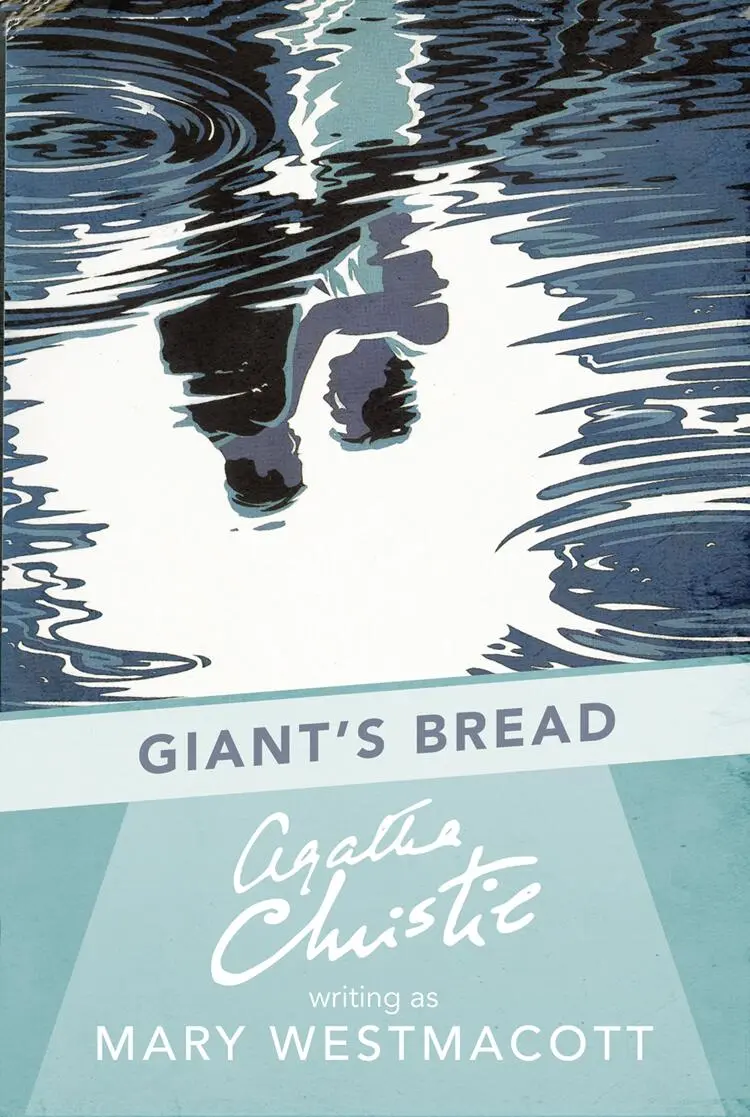
- Название:Giant’s Bread
- Автор:
- Жанр:
- Год:неизвестен
- ISBN:нет данных
- Рейтинг книги:5 / 5. Голосов: 1
-
Избранное:Добавить в избранное
- Отзывы:
-
Ваша оценка:
Giant’s Bread: краткое содержание, описание и аннотация
Предлагаем к чтению аннотацию, описание, краткое содержание или предисловие (зависит от того, что написал сам автор книги «Giant’s Bread»). Если вы не нашли необходимую информацию о книге — напишите в комментариях, мы постараемся отыскать её.
Giant’s Bread — читать онлайн ознакомительный отрывок
Ниже представлен текст книги, разбитый по страницам. Система сохранения места последней прочитанной страницы, позволяет с удобством читать онлайн бесплатно книгу «Giant’s Bread», без необходимости каждый раз заново искать на чём Вы остановились. Поставьте закладку, и сможете в любой момент перейти на страницу, на которой закончили чтение.
Интервал:
Закладка:
Everyone was excited and upset. For the first time, Vernon heard of some people called the Boers. They were the people that Father was going to fight.
His father came home for a few days. He looked younger and more alive and a great deal more cheerful. He and Mummy were quite nice to each other and there weren’t any scenes or quarrels.
Once or twice, Vernon thought, his father squirmed uneasily at some of the things his mother said. Once he said irritably:
‘For God’s sake, Myra, don’t keep talking of brave heroes laying down their lives for their country. I can’t stand that sort of cant.’
But his mother had not got angry. She only said:
‘I know you don’t like me saying it. But it’s true .’
On the last evening before he left, Vernon’s father called to his small son to go for a walk with him. They strolled all round the place, silently at first, and then Vernon was emboldened to ask questions.
‘Are you glad you’re going to the war, Father?’
‘Very glad.’
‘Is it fun?’
‘Not what you’d call fun, I expect. But it is in a way. It’s excitement, and then, too, it takes you away from things—right away.’
‘I suppose,’ said Vernon thoughtfully, ‘there aren’t any ladies at the war?’
Walter Deyre looked sharply at his son, a slight smile hovering on his lips. Uncanny, the way the boy sometimes hit the nail on the head quite unconsciously.
‘That makes for peace, certainly,’ he said gravely.
‘Will you kill a good many people, do you think?’ inquired Vernon interestedly.
His father replied that it was impossible to tell accurately beforehand.
‘I hope you will,’ said Vernon, anxious that his father should shine. ‘I hope you’ll kill a hundred.’
‘Thank you, old man.’
‘I suppose,’ began Vernon and then stopped.
‘Yes?’ said Walter Deyre encouragingly.
‘I suppose—sometimes—people do get killed in war.’
Walter Deyre understood the ambiguous phrase.
‘Sometimes,’ he said.
‘You don’t think you will, do you?’
‘I might. It’s all in the day’s work, you know.’
Vernon considered the phrase thoughtfully. The feeling that underlay it came dimly to him.
‘Would you mind if you were, Father?’
‘It might be the best thing,’ said Walter Deyre, more to himself than to the child.
‘I hope you won’t,’ said Vernon.
‘Thank you.’
His father smiled a little. Vernon’s wish had sounded so politely conventional. But he did not make the mistake Myra would have done, of thinking the child unfeeling.
They had reached the ruins of the Abbey. The sun was just setting. Father and son looked round and Walter Deyre drew in his breath with a little intake of pain. Perhaps he might never stand here again.
‘I’ve made a mess of things,’ he thought to himself.
‘Vernon?’
‘Yes, Father?’
‘If I am killed, Abbots Puissants will belong to you. You know that, don’t you?’
‘Yes, Father.’
Silence again. So much that he would have liked to say—but he wasn’t used to saying things. These were the things that one didn’t put into words. Odd, how strangely at home he felt with that small person, his son. Perhaps it had been a mistake not to have got to know the boy better. They might have had some good times together. He was shy of the boy—and the boy was shy of him. And yet somehow, they were curiously in harmony. They both of them disliked saying things—
‘I’m fond of the old place,’ said Walter Deyre. ‘I expect you will be too.’
‘Yes, Father.’
‘Queer to think of the old monks—catching their fish—fat fellows—that’s how I always think of them—comfortable chaps.’
They lingered a few minutes longer.
‘Well,’ said Walter Deyre, ‘we must be getting home. It’s late.’
They turned. Walter Deyre squared his shoulders. There was a leave taking to be got through—an emotional one if he knew Myra—and he rather dreaded it. Well, it would soon be over. Goodbyes were painful things—better if one made no fuss about them, but then of course Myra would never see it that way.
Poor Myra. She’d had a rotten deal on the whole. A fine-looking creature, but he’d married her really for the sake of Abbots Puissants—and she had married him for love. That was the root of the whole trouble.
‘Look after your mother, Vernon,’ he said suddenly. ‘She’s been very good to you, you know.’
He rather hoped, in a way, that he wouldn’t come back. It would be best so. Vernon had his mother.
And yet, at that thought, he had a queer traitorous feeling. As though he were deserting the boy …
‘Walter,’ cried Myra, ‘you haven’t said goodbye to Vernon.’
Walter looked across at his son, standing there wide-eyed.
‘Goodbye, old chap. Have a good time.’
‘Goodbye, Father.’
That was all. Myra was scandalized—had he no love for the boy? He hadn’t even kissed him. How queer they were—the Deyres. So casual. Strange, the way they had nodded to each other, across the width of the room. So alike …
‘But Vernon,’ said Myra to herself, ‘shall not grow up like his father.’
On the walls around her Deyres looked down and smiled sardonically …
CHAPTER 7
Two months after his father sailed for South Africa, Vernon went to school. It had been Walter Deyre’s wish and arrangement, and Myra, at the moment, was disposed to regard any wish of his as law. He was her soldier and her hero, and everything else was forgotten. She was thoroughly happy at this time. Knitting socks for the soldiers, urging on energetic campaigns of ‘white feather’, sympathizing and talking with other women whose husbands had also gone to fight the wicked, ungrateful Boers.
She felt exquisite pangs parting with Vernon. Her darling—her baby—to go so far away from her. What sacrifices mothers had to make! But it had been his father’s wish.
Poor darling, he was sure to be most terribly homesick! She couldn’t bear to think of it.
But Vernon was not homesick. He had no real passionate attachment to his mother. All his life he was to be fondest of her when away from her. His escape from her emotional atmosphere was felt by him as a relief.
He had a good temperament for school life. He had an aptitude for games, a quiet manner and an unusual amount of physical courage. After the dull monotony of life under the reign of Miss Robbins, school was a delightful novelty. Like all the Deyres, he had the knack of getting on with people. He made friends easily.
But the reticence of the child who so often answered ‘Nothing’ clung to him. Except with one or two people, that reticence was to go through life with him. His school friends were people with whom he shared ‘doing things’. His thoughts he was to keep to himself and share with only one person. That person came into his life very soon.
On his very first holidays, he found Josephine.
Vernon was welcomed by his mother with an outburst of demonstrative affection. Already rather self-conscious about such things, he bore it manfully. Myra’s first raptures over, she said:
‘There’s a lovely surprise for you, darling. Who do you think is here? Your cousin Josephine, Aunt Nina’s little girl. She has come to live with us. Now isn’t that nice?’
Vernon wasn’t quite sure. It needed thinking over. To gain time, he said:
‘Why has she come to live with us?’
‘Because her mother has died. It’s terribly sad for her and we must be very, very kind to her to make up.’
‘Is Aunt Nina dead?’
He was sorry Aunt Nina was dead. Pretty Aunt Nina with her curling cigarette smoke.
Читать дальшеИнтервал:
Закладка:
Похожие книги на «Giant’s Bread»
Представляем Вашему вниманию похожие книги на «Giant’s Bread» списком для выбора. Мы отобрали схожую по названию и смыслу литературу в надежде предоставить читателям больше вариантов отыскать новые, интересные, ещё непрочитанные произведения.



Обсуждение, отзывы о книге «Giant’s Bread» и просто собственные мнения читателей. Оставьте ваши комментарии, напишите, что Вы думаете о произведении, его смысле или главных героях. Укажите что конкретно понравилось, а что нет, и почему Вы так считаете.