Diana Jones - Hexwood
Здесь есть возможность читать онлайн «Diana Jones - Hexwood» — ознакомительный отрывок электронной книги совершенно бесплатно, а после прочтения отрывка купить полную версию. В некоторых случаях можно слушать аудио, скачать через торрент в формате fb2 и присутствует краткое содержание. Жанр: unrecognised, на английском языке. Описание произведения, (предисловие) а так же отзывы посетителей доступны на портале библиотеки ЛибКат.
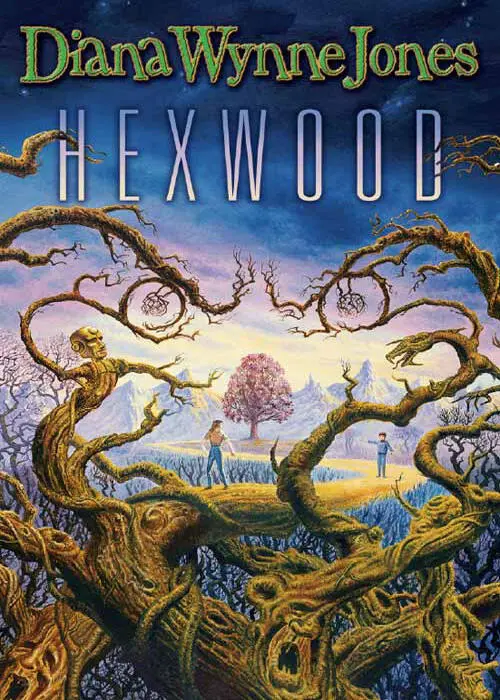
- Название:Hexwood
- Автор:
- Жанр:
- Год:неизвестен
- ISBN:нет данных
- Рейтинг книги:4 / 5. Голосов: 1
-
Избранное:Добавить в избранное
- Отзывы:
-
Ваша оценка:
Hexwood: краткое содержание, описание и аннотация
Предлагаем к чтению аннотацию, описание, краткое содержание или предисловие (зависит от того, что написал сам автор книги «Hexwood»). Если вы не нашли необходимую информацию о книге — напишите в комментариях, мы постараемся отыскать её.
Hexwood — читать онлайн ознакомительный отрывок
Ниже представлен текст книги, разбитый по страницам. Система сохранения места последней прочитанной страницы, позволяет с удобством читать онлайн бесплатно книгу «Hexwood», без необходимости каждый раз заново искать на чём Вы остановились. Поставьте закладку, и сможете в любой момент перейти на страницу, на которой закончили чтение.
Интервал:
Закладка:
Ann led Hume away, hoping that the weirdness of this place would cause Hume to grow older once Mordion was out of sight. It would be confusing, but she knew she would prefer it. Small Hume kept asking questions, questions. If she did not answer, he tugged her hand and shouted the question. Ann was not sure she should tell him the answers to some of the things he asked. She wished she knew more about small children. She ought to, she supposed, having a brother two years younger than she was, but she could not remember what Martin had been like at this age at all. Surely Martin had never kept asking things this way?
They crunched their way up a hillside of dry bracken, littered with twisted small thorn trees and, before they were anywhere near the top, Ann found she had explained to Hume in detail the way babies were made.
“And that was how I was made, was it?” asked Hume.
This was one of the times he pulled Ann’s arm and kept shouting the question. “No” Ann said at last, mostly out of pure harassment. “No. You were made out of a spell Mordion worked out of my blood and his blood.” Then Hume pulled her arm and shouted again, until she described it to him, just as it had happened. “So you got up and ran away without noticing either of us,” she finished, as they came to the top of the hill. By this time she was resigned to the paratypical field keeping Hume as he was.
As they entered woodland again, Hume thought about what he had been told. “Aren’t I a proper person then?” he asked mournfully.
Now she had damaged Hume’s mind! Ann wished all over again that the field had made Hume older. “Of course you are!” she told Hume, with the huge heartiness of guilt. “You’re very particularly special, that’s all.” Since Hume was still looking tearful and dubious, Ann went on in a hurry, “Mordion needs you badly, to kill some terrible people called Reigners for him when you grow up. He can’t kill them himself, you see, because they’ve banned him from it. But you can.”
Hume was interested in this. He cheered up. “Are they dragons?”
“No,” said Ann. Hume really was obsessed with dragons. “People.”
“I shall bang their heads on a stone, then, like Mordion does with the fish,” Hume said. Then he let go of Ann and ran ahead through the trees, shouting, “Here’s the place! Hurry up, Ann! It’s inciting!”
When Ann caught him up, Hume was forcing his way through a giant thicket of those whippy bushes that fruit squishy white balls in summer. Snowball bushes, Ann always called them. They were almost bare now, except for a few green tips. She could clearly see the stones of an old wall beyond them.
Now what’s this? she wondered. Has the field made the castle a ruin?
“Come on !” Hume screeched from inside the bushes. “I can’t get it open!”
“Coming!” Ann forced her way in among the thicket, ducking and pushing, until she arrived against the wall. Hume was impatiently jumping up and down in front of an old, old wooden door.
“Open it!” he commanded.
Ann put her hand on the old rusty knob, turned it, pulled, rattled, and was just deciding the door was locked when she discovered it opened inwards. She put her shoulder to the blistered panels and pushed. Hume hindered in a helping way. And the door groaned and scraped and finally came half open, which was enough to let them both slip through. Hume shot inside with a squeal of excitement. Ann stepped after more cautiously.
She stopped in astonishment. There was an ancient farmhouse beyond, standing in a walled garden of chest-high weeds. The house was derelict. Part of its roof had fallen in, and a dead tree had toppled across the empty rafters. The chimney at the end Ann could see was smothered in ivy, which had pulled a pipe away from the wall. When her eyes followed the pipe down, they found the waterbutt it had drained into broken and spread like a mad wooden flower. The place was full of damp, hot silence, with just a faint cheeping of birds.
Ann knew the shape of that roof and the shape the chimney should be inside the ivy. She had looked at both every day for most of her life – except that the roof was not broken and there were no trees near enough to fall on it. Now look here ! she thought What’s Hexwood Farm doing here ? It should be on the other side of the stream – river – whatever. And why is it all so ruined?
Hume meanwhile charged into the high weeds, shouting, “This is a real place !” Shortly, he was yelling at Ann to come and see what he had found. Ann shrugged. It had to be the paratypical field again. She went to see the rusty kettle Hume had found. It had a robins nest in it. After that, she went to see the old boot he had found, then the clump of blue irises, then the window that was low enough for Hume to look through, into the farmhouse. That find was more interesting. Ann lingered, staring through the cracked, dusty panes at the rotted remains of red and white check curtains, past a bottle of detergent swathed in cobwebs, to a stark old kitchen. There were empty shelves and a table with what looked like the mortal remains of a loaf on it – unless it was fungus.
Does it really look like this? she wondered. Or newer?
Hume was yelling again. “Come and see what I’ve found!”
Ann sighed. This time Hume was rooting in the tall tangle of green briars over by the main gate. When Ann made her way over, he was on tiptoe, hanging on to two green briar-whips that had thorns on them like tiger claws. “You’ll get scratched,” she said.
“There’s a window in here too!" Hume said, hauling on the briars excitedly.
Ann did not believe him. To prove he must be wrong, she wrapped her sweater over her fist and shoved a swathe of green thorny branches aside. Inside, to her great surprise, there was the rusty remains of a white car bonnet, and a tall windscreen dimly glinting beyond. Too tall for a car. A van of some kind. Wait a minute! She went further along the tangle and used both fists, wrapped in both sweater sleeves, to heave more green whips aside.
“What is it?” Hume wanted to know.
“Er – a kind of cart, I think,” Ann said as she heaved.
“Stupid. Carts don’t have windows,” Hume told her scornfully, and wandered off, disappointed in her.
Ann stared at the side of a once-white van. It was covered with running trickles of brown rust. Further, redder rust erupted through the paint like boils. But the blue logo was still there. A weighing scale with two round pans, one higher than the other.
It is a balance , she said to her four imaginary people.
There was no reply. After a moment when she felt hurt, angry and lost, Ann remembered that they had lost her this morning when she went into the wood. Ridiculous! she thought Behaving as if they were real! But I can tell them later when I come out So—
Using forearms and elbows as well as fists, she heaved away more briars until she could stamp them down underfoot. Words came into view, small and blue and tasteful. RAYNER HEXWOOD INTERNATIONAL and, in smaller letters, MAINTENANCE DIVISION (EUROPE).
“Well, that leaves me none the wiser!” Ann said. Yet, for some reason, the sight of that name made her feel cold. Cold, small and frightened. “Anyway, how did it get this way in just a fortnight?” she said.
“Ann! Ann !” Hume screamed from round the house somewhere.
Something was wrong! Ann jumped clear of the van and the briars and raced off in Hume’s direction. He was in the corner of the garden walls beyond the waterbutt, jumping up and down. So sure was Ann that something was wrong that she grabbed Hume’s shoulders and turned him this way and that, looking for blood, or a bruise, or maybe a snakebite. “Where do you hurt? What’s happened?”
Читать дальшеИнтервал:
Закладка:
Похожие книги на «Hexwood»
Представляем Вашему вниманию похожие книги на «Hexwood» списком для выбора. Мы отобрали схожую по названию и смыслу литературу в надежде предоставить читателям больше вариантов отыскать новые, интересные, ещё непрочитанные произведения.




Обсуждение, отзывы о книге «Hexwood» и просто собственные мнения читателей. Оставьте ваши комментарии, напишите, что Вы думаете о произведении, его смысле или главных героях. Укажите что конкретно понравилось, а что нет, и почему Вы так считаете.