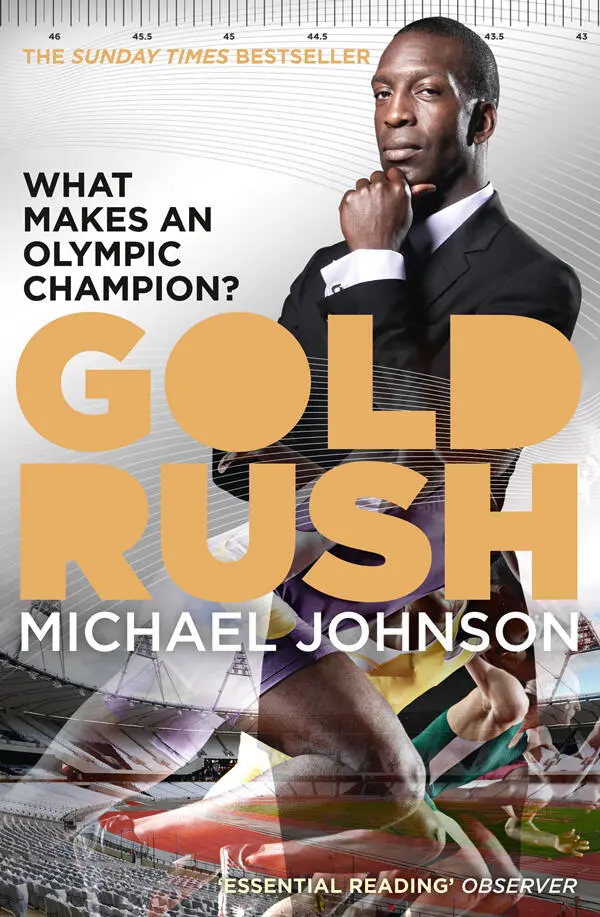
Michael Johnson - Gold Rush
Здесь есть возможность читать онлайн «Michael Johnson - Gold Rush» — ознакомительный отрывок электронной книги совершенно бесплатно, а после прочтения отрывка купить полную версию. В некоторых случаях можно слушать аудио, скачать через торрент в формате fb2 и присутствует краткое содержание. Жанр: unrecognised, на английском языке. Описание произведения, (предисловие) а так же отзывы посетителей доступны на портале библиотеки ЛибКат.
- Название:Gold Rush
- Автор:
- Жанр:
- Год:неизвестен
- ISBN:нет данных
- Рейтинг книги:4 / 5. Голосов: 1
-
Избранное:Добавить в избранное
- Отзывы:
-
Ваша оценка:
Gold Rush: краткое содержание, описание и аннотация
Предлагаем к чтению аннотацию, описание, краткое содержание или предисловие (зависит от того, что написал сам автор книги «Gold Rush»). Если вы не нашли необходимую информацию о книге — напишите в комментариях, мы постараемся отыскать её.
Gold Rush — читать онлайн ознакомительный отрывок
Ниже представлен текст книги, разбитый по страницам. Система сохранения места последней прочитанной страницы, позволяет с удобством читать онлайн бесплатно книгу «Gold Rush», без необходимости каждый раз заново искать на чём Вы остановились. Поставьте закладку, и сможете в любой момент перейти на страницу, на которой закончили чтение.
Интервал:
Закладка:
‘My parents wanted me to stop swimming, figuring it wasn’t good for me. But by the time I was ten or eleven I was pretty much winning everything in the pool in the age group competitions. By the time I was 14 I made the national team. I missed every development team on the way because I didn’t meet the criteria. I was usually too young. At 14 I went away on my first trip, which was the Pan Pacific Championships in Japan, and came second. Then, the following year, I was world champion. The year after that I set four world records in four days. Then, the following year, I was Olympic champion.
‘As a pre-teen, my goal was to become an Olympic athlete. I dreamed of winning Olympic gold. At that point, however, I thought maybe Athens would be the first place that I could go and then look at the Olympics after that. My winning the World Championships at 15 was a shock to everyone around the world, and it was a shock to me as well. I’d done things in training that no one else had done, and I was the deserved winner at that race. At the time, however, I just thought I was doing these laps. I didn’t know how it would equate to a performance that meant that I was world champion. I didn’t realise that that win probably meant that I would be favoured to win at the 2000 Olympics. I didn’t even realise I’d make the team.’
TAPPING ONE’S GIFTS
Mark and Ian may have fallen into their sports, but they sure made the most of the opportunity. I believe that everyone, no matter who, is blessed with a natural talent and ability to do something well. It may be running fast like me, it may be overall athletic ability in all sports, it may be mathematics, it may be teaching, it may be an incredible ability to remember and recall things. Maybe it’s something that one can use to make a living with. Maybe it’s something that you love to do, especially since as Steve Redgrave points out, ‘the better that you find you do something, the more you enjoy it, and the more you like doing it, the more you get success from it. It’s self-propelling in some ways.’ In the case of most Olympians, including me, it is a combination of both.
Some people never find their inborn gifts, some find them late in life, and some, like me, are fortunate to find them early on. I was very lucky that when I was growing up we spent most of our free time in my neighbourhood playing games and sports with the other kids. That’s how I discovered that I was fast. Even then, however, had I just followed what my friends did, I would have only played football, which is like a religion in Texas. I would never have found my love for track as a sport and never would have discovered just how good I could be, which ultimately turned out to be the best in the world.
That is why I encourage my own son, and any young people I talk to, to try different things. But that’s not the national trend. Instead of competing in after-school pick-up games, most kids these days grow up playing organised sports as part of youth teams and leagues which have become big business. As a result, most of the kids who come into my sports performance training centre, Michael Johnson Performance, have already started to specialise in one sport as early as age ten, so they lack the athleticism that we kids from the seventies developed from playing multiple sports. I developed my speed from sprinting, for example. But I also developed explosive power, which helped me to be a better sprinter, from playing basketball. I developed my quickness – the ability to make short bursts of speed in different directions – from playing football.
The kids who specialise early also never get to search out what really stirs them. I want my son to play a sport, to learn to play an instrument, and to try new things, so that he can discover what he is passionate about and in what areas he is gifted. Of course everyone believes that because he is my son he must be fast, and they immediately ask about his speed and whether he’s going to be a sprinter. But the fact that he’s my son doesn’t automatically make him naturally gifted at athletics or any sport. And it certainly doesn’t guarantee that he will be passionate about – or even like – athletics or sports. I understand that, so the last thing I would do is push him to participate in athletics or try to become an Olympic athlete. It is his life, and it’s up to him to decide what he wants to do with it and to discover what he enjoys and what talent he is blessed with.
At this point in his life (he’s 11) I do mandate that he participate in some sport, since I know that there are incredible lessons to be learned from taking part in sports. But I give him the right to choose which sport. If he decides to get serious, I’ll make sure he has the coaching support that he needs. But we won’t be talking about the Olympics or any other top-level competition right off the bat.
Unfortunately, too many parents and/or coaches these days do exactly that, telling students that they can aspire to the Olympics or the NBA or the Premier League the moment they show any promise. As a result kids are aiming for the Olympics or professional sports before they’ve even won their school’s championship.
NOT SO FAST
Even those high school athletes who are highly sought after by the Colleges start getting ahead of themselves. Right away they start thinking Olympics, they start thinking professional career, they start thinking endorsement contracts and deals. There’s a danger to that, which we’ll explore at length in Chapter 4. Conversely, focusing on how to improve performance instead of where that performance might lead seems to contribute to the kind of success that builds Olympic champions.
As a teenage competitor, I just wanted to be the fastest 16-year-old in Dallas. To my benefit, I didn’t think beyond that. I’m far from being the only Olympic late bloomer. For many Olympic champions the notion of even participating in – let alone winning – the Olympics took a while to set in.
‘I think I ought to say something to you,’ Sebastian Coe’s father and coach Peter said to his son on a rain-soaked night in the late 1970s as they walked off the training field. The middle-distance runner readied himself to hear a message about the training session he had just completed or his upcoming race. Instead, his father said, ‘I think you’re going to go to the Olympic Games. I’ve watched people get to Olympic Games and not deal with it that well, and I’ll just guess maybe it’s something we ought to start thinking about.’ Seb just smiled. Although the notion seemed too improbable to take seriously at the time, he would go on to set eight outdoor and three indoor world records in middle-distance track events and win four Olympic medals, including the 1500 metres gold medal at the Olympic Games in 1980 and 1984.
Even though I didn’t see myself as an Olympian at first, I always thought I would do something special. Although my family didn’t have a lot when I was growing up, I figured I would be successful. I assumed, however, that my dream of controlling my own situation, having the things I wanted and travelling would come from having my own business. I had no dream of being a professional athlete. And since I spent most of my time playing outside rather than watching a lot of television, I really knew nothing about the Olympics.
Until well into high school, sport was just something I did for fun. Sure I liked being the fastest. But there was no strategy involved. I just went out to competitions and started running when the gun went off. Then in my final year of high school, as the best on my high school team, people started to talk about my potential to be district champion, regional champion, or maybe even state champion. The biggest prize for a high school athlete is being a state champion. In order to compete to be a state champion you have to finish in the top two in your district. Then you advance to your region and must finish in the top two in the regional competition. I lived and competed in the hardest district in the country, so just advancing out of district was extremely difficult. There would be kids that I was a lot faster than who would get to state because they came from an area where there weren’t many fast athletes. I had to learn how to compete when you are up against athletes who are similarly or equally talented.
Читать дальшеИнтервал:
Закладка:
Похожие книги на «Gold Rush»
Представляем Вашему вниманию похожие книги на «Gold Rush» списком для выбора. Мы отобрали схожую по названию и смыслу литературу в надежде предоставить читателям больше вариантов отыскать новые, интересные, ещё непрочитанные произведения.










Обсуждение, отзывы о книге «Gold Rush» и просто собственные мнения читателей. Оставьте ваши комментарии, напишите, что Вы думаете о произведении, его смысле или главных героях. Укажите что конкретно понравилось, а что нет, и почему Вы так считаете.