Gordon Stevens - Moscow USA
Здесь есть возможность читать онлайн «Gordon Stevens - Moscow USA» — ознакомительный отрывок электронной книги совершенно бесплатно, а после прочтения отрывка купить полную версию. В некоторых случаях можно слушать аудио, скачать через торрент в формате fb2 и присутствует краткое содержание. Жанр: unrecognised, на английском языке. Описание произведения, (предисловие) а так же отзывы посетителей доступны на портале библиотеки ЛибКат.
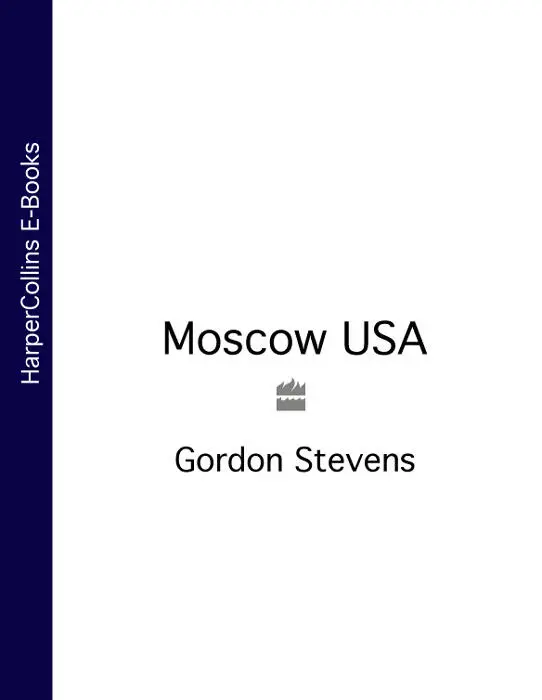
- Название:Moscow USA
- Автор:
- Жанр:
- Год:неизвестен
- ISBN:нет данных
- Рейтинг книги:3 / 5. Голосов: 1
-
Избранное:Добавить в избранное
- Отзывы:
-
Ваша оценка:
Moscow USA: краткое содержание, описание и аннотация
Предлагаем к чтению аннотацию, описание, краткое содержание или предисловие (зависит от того, что написал сам автор книги «Moscow USA»). Если вы не нашли необходимую информацию о книге — напишите в комментариях, мы постараемся отыскать её.
Moscow USA — читать онлайн ознакомительный отрывок
Ниже представлен текст книги, разбитый по страницам. Система сохранения места последней прочитанной страницы, позволяет с удобством читать онлайн бесплатно книгу «Moscow USA», без необходимости каждый раз заново искать на чём Вы остановились. Поставьте закладку, и сможете в любой момент перейти на страницу, на которой закончили чтение.
Интервал:
Закладка:
They finished the preliminaries and moved to the short and medium term stages of the investigation.
‘Background checks on the key players, both American and Russian. Whether any of them are in financial trouble or show indications in the past of sudden jumps in wealth.’ Gerasimov spoke in shorthand, Kincaid thought; the delivery clear-cut but staccato. Or perhaps it was the way he himself heard it, the combination of tiredness and the fact that he hadn’t listened to someone speaking Russian for five years. ‘Whether any of them are screwing, or being screwed by, anyone who might be a security leak. Jack, you run one set of checks through ISS’s offices in London and Washington. Nik, you run a second set through Igor Lukyanov, see if the computers at the FSB have anything to offer. You also check the morgues. Start this evening, show ConTex in Houston that we’re already moving.’
Five years ago this week he stood in the morgue at Belle Vue … it was a wisp in Kincaid’s subconscious.
‘Jack, you arrange interviews with ConTex personnel. Nik, you do the same with the security company personnel. Electronic sweep of ConTex offices and examination of their communication systems. Questions to airline and airport staff, plus interviews with VIP lounge staff and Border Guard personnel for a description of the bogus team which met Whyte.’
Gerasimov looked round the table. ‘Questions?’
Sherenko raised his hand. ‘How much time do we have and how long and how far do we go?’
‘I’ll tell you after Grere and I have talked.’
‘But what’s the bottom line?’
‘We want the main security contract for ConTex, therefore we’ll pursue this enquiry as far as we can, but the bottom line is that we don’t stand a snowball’s chance in hell of getting the money back.’
‘And ConTex know that?’
‘Grere has already warned them that the chances of getting the money back are zero. ConTex aren’t virgins. If we come up with anything more than a detailed report, they’ll be happy.’
He closed the meeting and they returned to the main offices, Sherenko to his desk in one corner of the main office, and Kincaid to one opposite which had been cleared for him. Brady was waiting patiently. Couple of things to set up, then they’d be gone, Kincaid told him.
Igor Lukyanov crossed the room and slipped the photograph on to Sherenko’s desk. ‘Zak Whyte. Just come through from London.’
Sherenko studied it and passed it to Kincaid. Better get it out the way, his expression said. He lifted the telephone and punched the number. ‘This is Nikolai Sherenko at Omega. We’re looking for someone who went missing yesterday. Okay if we come now?’ He put the phone down. ‘You ready?’
My first time in Moscow since Joshua, Kincaid thought, and the first thing we do is go to a morgue. ‘Yeah, I’m ready.’ He turned to Brady. ‘Get Riley to arrange transport for you back to the apartment. We’ll pick you up when we’re through.’
They ran off copies of the photograph, took the stone stairs to the ground floor and collected Sherenko’s BMW from the courtyard at the rear. The evening was busy, the pavements crowded.
Kincaid settled in the passenger seat. ‘So where are we going?’
‘The central criminal morgue. Anybody goes missing, that’s where they turn up.’
‘If they turn up,’ Kincaid suggested.
Sherenko laughed.
They crossed the river, drove along Leninski Prospekt, and turned left down Profsojuznaja Ulica. It was early evening, warm and pleasant, Sherenko driving with the window open and children playing on the green areas between the apartment blocks. They approached the junction with Krasikova Ulica and the entrances to Profsojuznaja metro station. The buildings here were more grey and featureless, arcades of shops along the street and brightly painted kiosks selling liquor, food, vegetables and bread along the pavements on each of the roads leading into the junction, men and women milling around them. Sherenko turned left at the lights, stopped in a pull-in for buses and trams in front of a line of kiosks, and got out, Kincaid behind him.
Most of the kiosks on this stretch of road were selling alcohol or cigarettes; the doors were locked and the vendors were seated inside behind a small window. Sherenko checked along the line, stopped at the third, crouched slightly because the windows were low, examined the bottles on display, and pointed.
Stolichnaya.
Small bottle.
The woman inside took a bottle from a shelf, and placed it on the wooden ledge inside the window. Sherenko counted out nine 1000-rouble notes, passed them through, and the woman passed him the bottle. Sherenko checked that the seal on the top was intact, checked the writing on the label, checked the number stamp on the back of the label, turned the bottle over and checked that the glue on the back of the label ran in wide even lines, shook the bottle and watched for the vortex of bubbles. When he was satisfied the vodka wasn’t counterfeit he turned back to the car and put the bottle in the glove compartment. The evening was still warm, still sunny. They drove up the hill and turned into C’urupy Ulica.
Kincaid left the subway and crossed to Belle Vue hospital. Manhattan was noisy around him, a helicopter in the sky above and the wail of police sirens from the other side of the block .
Washing hung from the balconies of apartment blocks on the right and children played on the grass in front. A woman pushed a pram and a young couple walked together, holding hands. They passed a tennis court, also on the right, two thin girls playing with one ball and broken rackets. Silver birches lay on the ground where they had been cut down during the winter but not sawn up or hauled away, foliage still clinging to them and children playing in them. A dog crossed the road in front of them.
Kincaid stepped through the reception area. Time running out already, he knew. And he shouldn’t be here anyway .
The building to the left was new and low. Beyond it was another, set back from the road and grey, seven storeys high. Sherenko passed the modern building, passed the grey building, and turned left down the rough earth track along its far side. The link metal fencing on either side was torn, grass and weeds growing up through it, and the security gate at the bottom was hanging off its hinges. Beyond it was a second grey-brick building, two storeys high though the height and shape of the wide doors in front suggested there was only one level. Two policemen lounged in the doorway and a rubbish skip lay in the weeds to the right. A young man with blond hair, blood splashed over his surgical greens and white boots, fetched something from one of the three cars parked on a dust patch in front.
Sherenko parked, got out, nodded at the policemen and shook hands with the attendant. A bird was singing in a tree behind the grey-brick building. Kincaid left the car and glanced inside. The building was dark and cavernous, high ceiling, no upper levels, and a large concrete floor with a tarpaulin over something in the centre. No bodies, though. The attendant went into an office on the right and returned with two pairs of surgical gloves. ‘I’ll see you down there.’
The corridors smelt of antiseptic and the hospital bustled around him. Kincaid picked up the signs, turned left, then right. Checked his watch and hurried on .
Sherenko took one pair of gloves, gave Kincaid the other, and walked past the building. The area was rough and overgrown, grass and weeds growing on mounds and through a tangle of metal to the right. In front of them and to their left a ramp dropped underground towards the block on the road at an angle of around twenty degrees. The surface had been tarmacked at some stage but now it was torn and rough, and the sides were red brick, washed over with concrete. It was some fifty metres long, the last ten under the overhang of the ground above.
Читать дальшеИнтервал:
Закладка:
Похожие книги на «Moscow USA»
Представляем Вашему вниманию похожие книги на «Moscow USA» списком для выбора. Мы отобрали схожую по названию и смыслу литературу в надежде предоставить читателям больше вариантов отыскать новые, интересные, ещё непрочитанные произведения.






Обсуждение, отзывы о книге «Moscow USA» и просто собственные мнения читателей. Оставьте ваши комментарии, напишите, что Вы думаете о произведении, его смысле или главных героях. Укажите что конкретно понравилось, а что нет, и почему Вы так считаете.